
What Is Tile Dust and Is It Harmful to Your Health?
TL;DR: Tile dust is the fine particulate released when tile, grout, and thinset mortar are broken or ground during removal, and it contains crystalline silica, a documented respiratory hazard. Silica dust can remain suspended in the air for hours and, in poorly ventilated spaces, potentially for days, meaning exposure risk continues well after the visible demolition work is done. Long-term exposure is linked to silicosis, occupational asthma, and other serious respiratory conditions, which is why dust control during tile removal matters beyond simple cleanliness.

Key Takeaways
Tile dust is generated when tile, grout, and thinset mortar are chipped or ground, and it contains crystalline silica, a mineral that becomes hazardous once broken down into respirable particle size.
Fine silica particles are small enough to remain suspended in the air for extended periods, and disturbing settled dust can render it airborne again for hours afterward.
OSHA regulates airborne crystalline silica in construction environments, setting a permissible exposure limit of 50 micrograms per cubic meter of air averaged over an 8-hour period.
Long-term exposure to tile dust is linked to occupational asthma, silicosis, and other chronic respiratory conditions, with occupational asthma affecting a meaningful share of construction workers and DIY renovators.
Source-capture removal equipment is the most effective way to limit tile dust exposure, since it prevents dust from becoming airborne in the first place rather than relying on cleanup after the fact.
Tile dust is one of those renovation byproducts that looks like ordinary household dust but is chemically and biologically different in ways that matter for health. Understanding what tile dust actually contains, how long it lingers in a home's air, and what the documented health risks are helps homeowners make informed decisions about how a tile removal project should be handled.
DustFree PNW's dust-free tile removal service is built specifically around limiting tile dust exposure throughout a project. Here is what tile dust is, why it matters, and what actually reduces the risk during a remodel.
What Tile Dust Is Actually Made Of
Tile dust forms when tile, grout, and the thinset mortar beneath tile are broken, chipped, or ground during removal. Ceramic and porcelain tile are fired clay products that contain crystalline silica as part of their mineral composition. Grout and thinset mortar are cement-based materials, and cement is also a significant silica source. When these materials are mechanically disturbed, they release fine particulate that includes respirable crystalline silica, meaning particles small enough to be inhaled deep into the lungs.

This distinction matters because not all dust behaves the same way. Larger dust particles settle relatively quickly and are generally captured by the body's upper respiratory defenses before reaching the lungs. Respirable crystalline silica particles are small enough to bypass these defenses and reach deep into lung tissue, which is the mechanism behind the long-term health risks associated with silica exposure specifically, as opposed to household dust in general.
How Long Tile Dust Stays in the Air
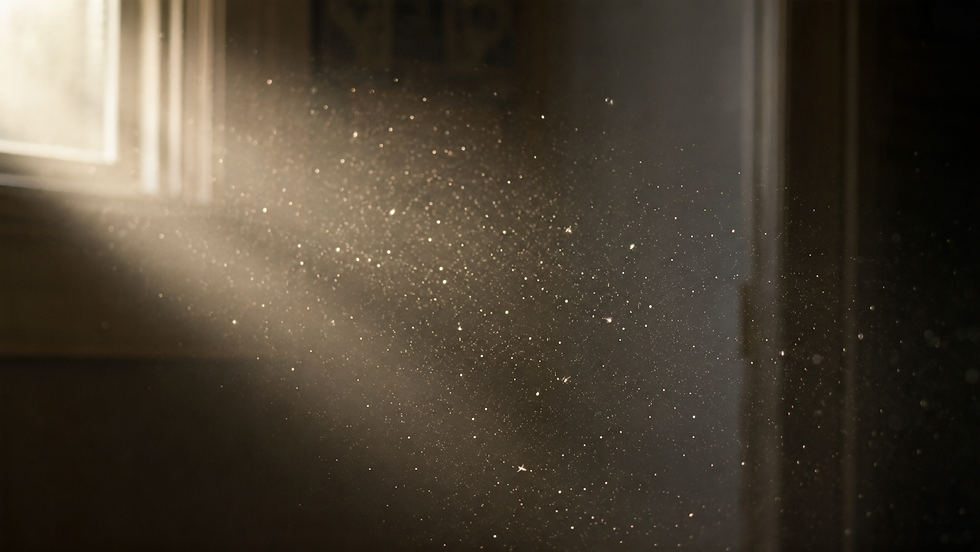
Because silica particles are so fine, they remain suspended in the air far longer than larger dust particles. In still air with limited ventilation, silica dust can remain airborne for several hours. Some sources describing similar fine silica particulate note that it can potentially remain suspended for extended periods measured in days rather than hours, particularly in poorly ventilated spaces. Disturbing dust that has already settled, such as walking through a work area or reopening a sealed room, can render the dust airborne again for a period afterward.
Condition | Approximate Time Dust Remains Airborne |
Well-ventilated space, good airflow | Dissipates more quickly, often within a shorter window |
Still air, limited ventilation | Several hours or longer |
Poorly ventilated, enclosed space | Potentially extended periods, in some cases measured in days |
Disturbed after settling (walking, reopening a room) | Additional hours of renewed airborne suspension |
This extended airborne window is one of the most underappreciated aspects of tile dust exposure. Homeowners sometimes assume the exposure risk ends when the visible demolition work stops for the day, but fine silica particulate can continue circulating in a room's air well after the crew has left, particularly if the space has not been properly ventilated or cleaned with HEPA equipment.
Documented Health Effects of Tile Dust Exposure
The health concerns associated with tile dust are well documented and regulated. OSHA classifies airborne crystalline silica as a workplace health hazard and has set a permissible exposure limit of 50 micrograms per cubic meter of air, averaged over an eight-hour period, specifically because of its established link to serious respiratory illness. Long-term exposure to crystalline silica is a documented cause of silicosis, a chronic and irreversible scarring of lung tissue. It is also associated with chronic obstructive pulmonary disease, commonly known as COPD, which causes progressive breathing difficulty.
Beyond these more severe conditions, tile dust exposure is also linked to occupational asthma, a condition affecting a meaningful percentage of construction workers and do-it-yourself renovators according to industry allergy and immunology research. Nose, throat, and eye irritation are common shorter-term symptoms that worsen with repeated or prolonged exposure.
Why Tile Dust Is More Than Just Silica
Tile dust released during removal can also carry bacteria, fungi, and other particulate that has accumulated beneath the tile over years of the flooring's service life. Household dust in general contains a wide variety of biological material, and disturbing tile that has been in place for decades releases whatever has settled and been trapped beneath it, in addition to the crystalline silica from the tile and mortar themselves. This compounding effect is part of why proper dust control during removal matters even beyond the silica-specific health concerns.
How to Limit Tile Dust Exposure During a Remodel

The most effective way to limit tile dust exposure is preventing it from becoming airborne in the first place, rather than relying on cleanup after a job is finished. Source-capture equipment, using a vacuum integrated directly into the demolition tool, captures dust at the point it is created before it has a chance to disperse into the room's air. This is a fundamentally different approach than containment methods like plastic sheeting, which limit where dust travels once it is already airborne but do not prevent that initial release.
For homeowners planning any tile removal project, confirming that a contractor uses tool-integrated source capture, rather than a nearby shop vacuum or plastic sheeting alone, is the single most impactful question to ask before booking. Given how long fine silica particulate can remain suspended in a home's air once released, preventing that release is far more effective than any cleanup strategy applied afterward.
DustFree PNW uses source-capture equipment across all tile and stone removal projects in Central Oregon. You can review our work on our Google Business Profile or get a free quote for your tile removal project.
Final Thoughts
Tile dust is not just an aesthetic nuisance during a remodel. It contains crystalline silica, a documented respiratory hazard that can remain airborne for hours or longer, with health effects ranging from occupational asthma to silicosis with prolonged exposure. Choosing a tile removal method that captures dust at the source, rather than after it has entered your home's air, is the most effective protection available. Get a free quote from DustFree PNW.
FAQ
Is tile dust harmful?
Yes. Tile dust contains crystalline silica, a documented respiratory hazard regulated by OSHA. Long-term exposure is linked to silicosis, COPD, and occupational asthma, making dust control during tile removal a genuine health consideration.
How long does tile dust stay in the air?
Fine silica particles can remain airborne for several hours in still air, and potentially longer in poorly ventilated spaces. Disturbing settled dust can render it airborne again for additional hours afterward.
What is ceramic tile dust made of?
Ceramic tile dust contains crystalline silica from the fired clay tile body, along with silica from cement-based grout and thinset mortar, plus any bacteria or debris trapped beneath the tile over its service life.
What does OSHA say about silica dust exposure?
OSHA sets a permissible exposure limit of 50 micrograms of respirable crystalline silica per cubic meter of air, averaged over an eight-hour workday, reflecting the documented health risks of silica exposure.
How can I reduce tile dust exposure during a remodel?
Use a contractor with source-capture equipment integrated into the demolition tool, which prevents dust from becoming airborne rather than relying on cleanup after the fact.
Does DustFree PNW use source-capture equipment to limit tile dust in Central Oregon?
Yes. DustFree PNW captures tile dust at the source throughout removal, keeping airborne silica exposure to a minimum across Bend, Redmond, Sisters, Tumalo, Madras, and surrounding communities. Contact us for a free quote.


Comments