
Dustless Tile Removal: What It Actually Means Before You Hire
TL;DR: "Dustless tile removal" isn't a regulated term, and it means different things depending on which contractor you ask. Most "dustless" methods use a nearby vacuum to filter dust after it's already in the air, while certified dust-free equipment captures it at the source before it ever spreads.

Key Takeaways
"Dustless tile removal" has no industry-wide standard or certification behind it, so the quality varies significantly from one contractor to the next.
Most dustless methods attach a shop-style vacuum near the tool rather than integrating dust capture directly into the chisel or chipping head.
Source-capture, DustRam-certified equipment is a documented, independently tested standard, not a self-reported marketing claim.
Homeowners and contractors comparing quotes should ask specific equipment and certification questions rather than relying on the word "dustless" alone.
The difference matters most for occupied homes, vacation rentals, and high-end remodels where post-demo cleanup time and dust exposure carry real cost.
Searching for dustless tile removal turns up dozens of contractors using the term, but it doesn't mean the same thing twice. Some companies use it interchangeably with "dust-free." Others use it to describe a shop vac running near the work area. A few use both terms on the same page without ever explaining the difference. For homeowners comparing quotes in Bend, Redmond, or anywhere else in Central Oregon, that ambiguity makes it hard to know what you're actually paying for.
This matters beyond convenience. Tile removal releases crystalline silica dust, a substance OSHA classifies as a serious respiratory hazard with prolonged exposure. The method a contractor actually uses, not just the word on their website, determines how much of that dust ends up in your home's air, your HVAC system, and your lungs. DustFree PNW's dust-free tile removal service is built around the DustRam certified standard, which is the benchmark this article uses to explain what "dustless" usually falls short of.
What "Dustless" Usually Means in Practice
In most cases, a contractor advertising "dustless tile removal" is using one of a few approaches: a shop vac positioned near the chisel or grinder, plastic sheeting around the work zone, or a combination of both. These methods reduce dust compared to doing nothing at all, and that's a fair amount of credit to give them.
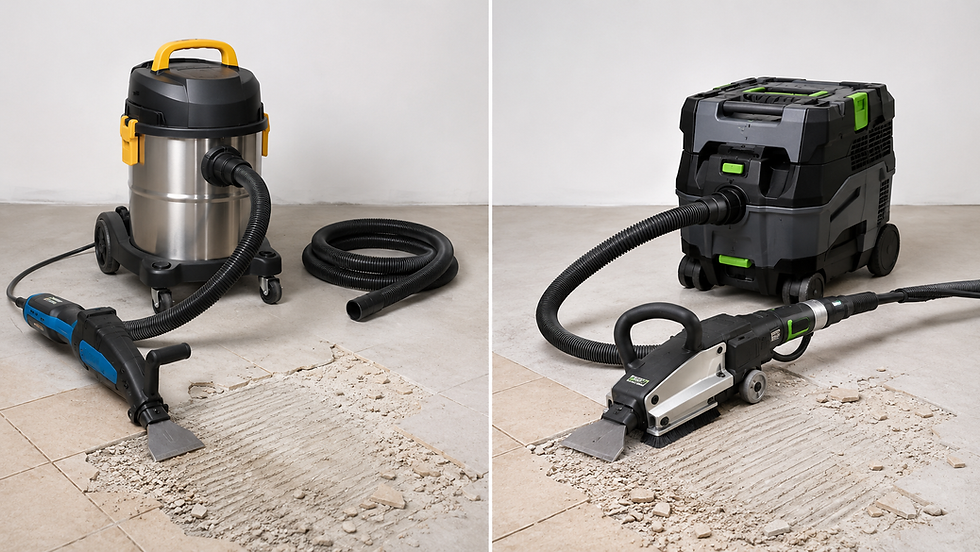
What these methods don't do is integrate the vacuum directly into the removal tool itself. The dust is created first, then chased by a vacuum that's physically separate from where the dust originates. That gap, however small it looks on a job site, is the difference between managing dust after it exists and preventing it from becoming airborne in the first place.
Dustless vs. Source-Capture Dust-Free: The Real Difference
This is the comparison most homeowners are actually trying to understand when they search for dustless tile removal. The terms get used interchangeably online, but the equipment behind them isn't the same.
Method | Dust capture point | Containment needed | Typical cleanup |
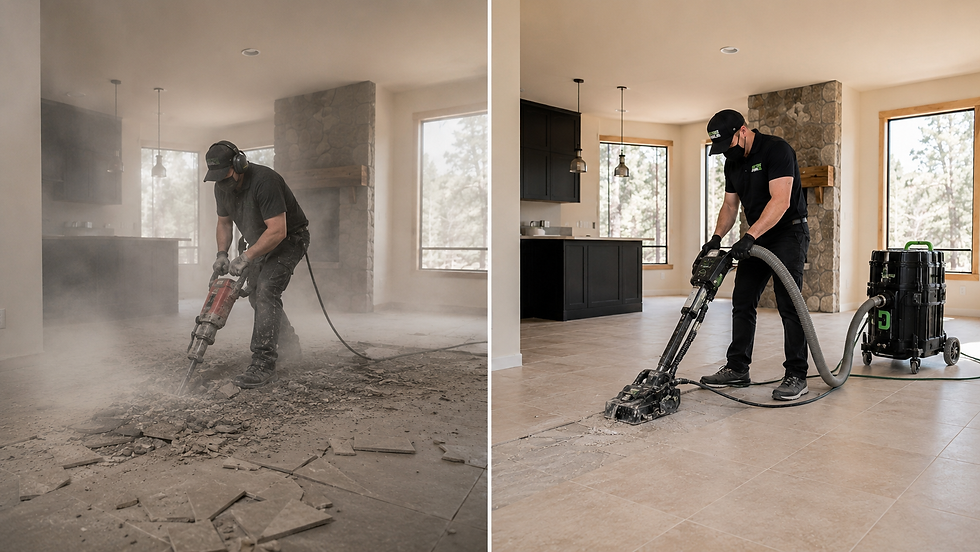
Traditional demo | None — dust released freely | Plastic sheeting, taped-off rooms | Days, often professional cleaning |
"Dustless" (shop vac based) | Nearby vacuum, partial capture | Some plastic sheeting still common | Hours, some residual dust on surfaces |
DustRam certified dust-free | Integrated at the tool, captured at source | None required | Minimal, same-day |
DustRam certified equipment captures dust at the exact moment it's created, with the vacuum physically built into the removal tool rather than running nearby. That source-capture approach is independently tested, not a self-reported figure, which is why it's treated as a verifiable performance standard rather than a marketing label. Our thinset removal page covers how this same source-capture process handles the mortar layer underneath the tile, which is often the messiest part of the job.
Is Dustless Tile Removal Completely Dust-Free?
Generally, no. Shop vac and plastic-sheeting based "dustless" methods reduce visible dust significantly compared to traditional demo, but they don't reach the near-total capture rate of integrated source-capture equipment. Dust that's filtered after it's already airborne has already had a chance to settle on counters, drift into HVAC returns, and circulate through the rest of the home before it's caught.
This is also why the manual cleaning process matters. Shop vacs used in dustless methods typically require manual filter purging on-site, and that process itself can release some of the previously captured dust back into the room. Source-capture systems with automatic self-cleaning vacuums avoid this step entirely.
How Long Does Dustless or Dust-Free Tile Removal Take?
Job duration depends mainly on square footage and material type rather than which dust-control method is used, but dust-free methods often finish faster overall once containment setup and extended cleanup are factored in. A traditional or dustless job that requires hanging plastic and running negative air machines adds setup and teardown time that source-capture equipment skips entirely.
Most residential tile removal jobs in Central Oregon are completed in a single day when using source-capture, DustRam certified equipment, with the subfloor exposed and ready for the next phase of the project that same day.
Can Any Tile Be Removed Dustlessly?
Most common flooring materials, including ceramic, porcelain, natural stone, and older materials like saltillo, can be removed using source-capture dust-free equipment. The right approach depends on the material and what's underneath it, which is why a walkthrough before the job starts matters more than the marketing term on a quote.
How to Tell the Difference When Comparing Quotes
Ask each contractor the same specific questions rather than taking "dustless" at face value. Is the dust capture system physically integrated with the removal tool, or is it a separate vacuum running nearby? Is the contractor DustRam certified, and can they provide documentation of independently tested dust capture performance?
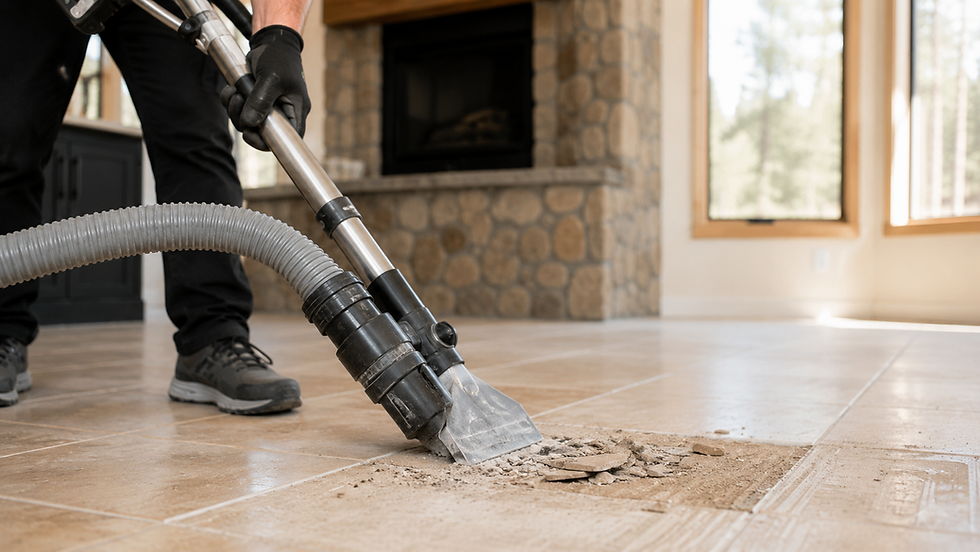
A contractor who answers both questions specifically, and who holds DustRam certification, is operating at a meaningfully different standard than one who simply says "we're dustless" and moves on. This question matters just as much for contractors and flooring companies vetting a demo subcontractor as it does for homeowners, since a crew that can't produce documentation is a liability risk on an occupied job site, not a verified partner. Our contractor support page covers how DustFree PNW works with flooring companies and remodelers who need that documentation up front.
What This Means Before You Book a Quote
If you're comparing tile removal quotes anywhere across our Central Oregon service areas, treat the word "dustless" as a starting point for questions, not an answer in itself. The fastest way to cut through the ambiguity is to ask for equipment details and certification documentation before the quote stage, not after the crew shows up.
FAQ
What does "dustless tile removal" actually mean?
It typically refers to tile removal methods that use a vacuum, usually positioned near the cutting tool rather than integrated into it, to reduce airborne dust compared to traditional demolition.
Is dustless tile removal the same as dust-free tile removal?
No. Dustless methods filter some dust after it's already airborne, while certified dust-free equipment captures dust at the point of removal, before it spreads into the room.
How long does dustless or dust-free tile removal take?
Most residential jobs are completed in a single day. Source-capture dust-free methods are often faster overall since they skip containment setup and extended post-demo cleanup.
Can any type of tile be removed using dustless or dust-free methods?
Most common flooring materials, including ceramic, porcelain, and natural stone, can be removed this way. The right equipment and approach depends on the material and what's underneath it.
What questions should I ask before hiring a dustless tile removal contractor?
Ask whether the dust capture system is integrated into the removal tool or a separate nearby vacuum, and whether the contractor holds DustRam certification with documented testing results.
Does DustFree PNW offer dustless tile removal in Central Oregon?
Yes, DustFree PNW is Central Oregon's certified DustRam contractor, using source-capture equipment that goes beyond standard "dustless" methods. You can review our reviews and service area on our Google Business Profile, or contact us for a free quote.
Final Thoughts
"Dustless" sounds like a finished standard, but it's really a starting point for the right questions. The contractors who can answer those questions specifically, with documentation to back it up, are operating at a different level than the ones who just rely on the word itself. Want documentation before you book? Get a free quote from DustFree PNW.

Comments