
Concrete Floor Grinding: When and Why It's Part of Dust-Free Demo
TL;DR: Concrete floor grinding removes thinset mortar, adhesive residue, and high spots from a concrete subfloor after the surface flooring has been removed. It's a necessary step before new flooring installation whenever thinset or adhesive is bonded to the slab, and it generates significant silica dust that requires proper source-capture control.

Key Takeaways
Concrete floor grinding is not always required after flooring removal, but it is almost always required after tile or stone removal where thinset mortar was used as the adhesive.
New flooring installed over unground thinset residue will bond poorly, develop high spots, and often fail within months of installation.
Grinding a concrete subfloor generates significant crystalline silica dust, more per square foot than most other demo tasks, and requires source-capture dust control.
Diamond grinding equipment is the professional standard for thinset removal from concrete slabs, not manual scraping alone.
A properly ground concrete subfloor is flat, clean, and porous enough for the next flooring system to bond correctly.
Most homeowners and contractors think of concrete floor grinding as something that only happens in industrial or commercial settings. In reality, it's a standard part of flooring removal and remodel prep in any home where tile or stone was installed using thinset mortar directly over a concrete slab. Once the tile is up, there's almost always a layer of hardened thinset bonded to the concrete below it, and that layer has to come off before new flooring can go down.
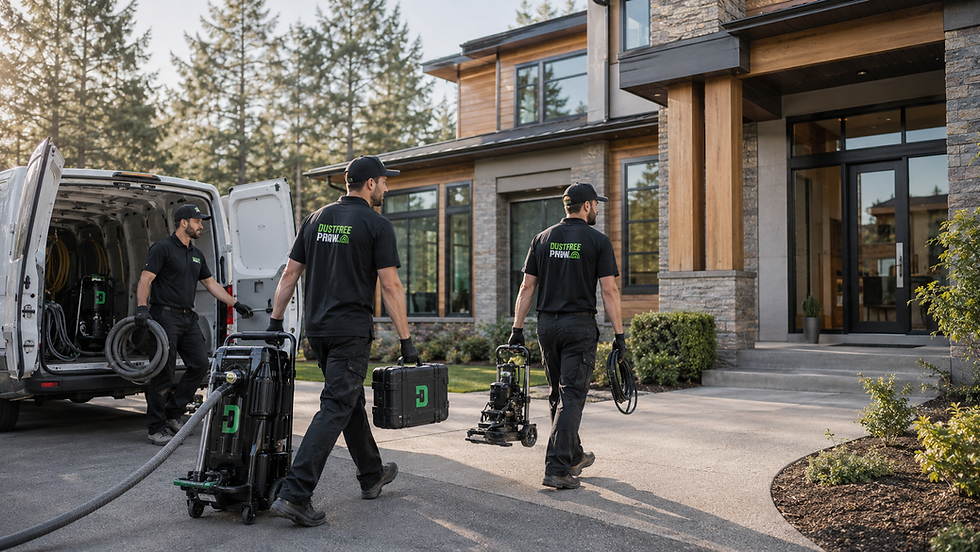
DustFree PNW's thinset removal service covers this phase of the process for residential and commercial projects across Central Oregon, using source-capture equipment that controls the significant dust generated during concrete grinding.
When Concrete Floor Grinding Is Needed
Not every flooring removal job requires concrete grinding. The need depends on what the old flooring was and how it was installed.

Previous Flooring Type | Adhesive Used | Grinding Usually Needed? | Notes |
Ceramic or porcelain tile | Thinset mortar | Yes, almost always | Thinset bonds hard to concrete and must be ground off |
Natural stone (slate, travertine, marble) | Thinset or mortar bed | Yes | Mortar beds can be thick and require aggressive grinding |
Sheet vinyl or VCT | Adhesive or mastic | Sometimes | Mastic may dissolve with solvents; stubborn residue needs grinding |
Glue-down hardwood or engineered wood | Flooring adhesive | Sometimes | Adhesive residue must be removed before new flooring bonds |
Floating laminate or LVP | None (floating) | Rarely | No adhesive used; grinding only needed if subfloor has damage |
Carpet (glue-down) | Carpet adhesive | Sometimes | Adhesive residue may require grinding in commercial spaces |
The most common scenario requiring grinding is tile removal over a concrete slab. Thinset cures to a hardness close to concrete itself, which means chiseling and scraping alone often cannot remove it cleanly enough for new flooring to bond correctly. Diamond grinding equipment removes thinset evenly across the surface while maintaining the slab's structural integrity.
Why New Flooring Cannot Go Over Unground Thinset
Thinset residue left on a concrete slab after tile removal creates two problems for the next flooring installation. First, uneven thinset patches create high spots that prevent new flooring from lying flat, leading to lippage in tile installations or hollow spots in vinyl and laminate. Second, the smooth surface of cured thinset prevents new adhesive or thinset from bonding correctly to the slab, which causes new flooring to fail within months rather than years.
Most flooring manufacturers require a clean, flat concrete surface as a condition of their product warranty. Skipping the grinding step does not just risk poor results, it voids the warranty on the new material and installation labor. Concrete grinding preparation is 80 percent of the job on any flooring installation over a concrete slab, and any installer who skips it will tell you so after the job fails.
Why Concrete Floor Grinding Creates So Much Dust
Thinset is a cement-based material, which means grinding it off a concrete slab releases the same crystalline silica dust that tile and stone removal does, and in some cases more of it per square foot. OSHA identifies crystalline silica as a serious respiratory hazard with prolonged exposure, and concrete grinding without source-capture dust control is one of the most significant silica exposure scenarios in flooring and demo work.
Traditional grinding setups use a floor grinder with a shop vacuum nearby, which captures some dust but allows a significant amount to become airborne before it can be collected. Source-capture equipment integrates the vacuum directly into the grinding head, capturing dust at the point of contact before it spreads into the room's air or HVAC system. For occupied homes or commercial spaces where work is happening around other people or near sensitive systems, this distinction matters significantly more than it does on a vacant construction site.
How the Concrete Grinding Process Works
Diamond grinding equipment uses rotating diamond-segment heads to abrade thinset and adhesive residue off the concrete surface evenly. The process removes the residue without cutting into the slab itself, which preserves the structural integrity of the concrete while achieving a flat, clean, and slightly profiled surface that allows new flooring adhesive to bond correctly.
On most residential tile removal jobs, grinding happens in one or two passes. Thicker mortar beds, such as those used under natural stone or in older tile installations, may require additional passes before the slab is clean. Corner areas and edges near baseboards typically require a smaller handheld angle grinder to reach spots that a walk-behind floor grinder cannot access.
What Concrete Floor Grinding Leaves Behind
A properly ground concrete subfloor is flat within the tolerance required by the new flooring manufacturer, free of adhesive or thinset residue, and slightly open-pored from the grinding process itself. That open surface texture is what allows new adhesive or self-leveling compound to bond correctly to the slab.

After grinding, the slab is inspected for cracks, divots, or uneven sections that need repair before new flooring goes down. This is also the point at which any moisture issues in the slab become visible, since grinding reveals the concrete surface without the masking effect of the old adhesive layer. Our dust-free tile removal service covers the tile removal phase that precedes concrete grinding, with the same source-capture approach applied throughout the full scope of the job.
When to Ask If Grinding Is Included in Your Demo Quote
Concrete grinding is frequently excluded from base flooring removal quotes, even when the scope clearly requires it. Ask your demo contractor whether thinset or adhesive grinding is included in the quote before signing, not after the tile comes up. A crew that removes tile but leaves thinset behind has completed only half the job the installation crew needs to proceed.
DustFree PNW covers this full scope across our Central Oregon service areas. You can review our work on our Google Business Profile or get a free quote to confirm what is included in the scope for your project.
Final Thoughts
Concrete floor grinding is not an optional step when thinset or adhesive residue remains after flooring removal. It determines whether the new flooring installation performs correctly or fails prematurely. Getting it done right, with proper dust control, is the difference between a subfloor that the next crew can walk in and start on immediately, and one that delays the whole project. Get a free quote from DustFree PNW.
FAQ
What is concrete floor grinding used for in flooring removal?
Concrete floor grinding removes thinset mortar, adhesive residue, and high spots from a concrete subfloor after old flooring has been removed, leaving a clean, flat surface ready for new installation.
Is concrete floor grinding always needed after tile removal?
Almost always, when tile was installed over a concrete slab using thinset mortar. Thinset cures hard and cannot be fully removed by scraping alone, requiring diamond grinding equipment to clean the slab properly.
Why can't new flooring be installed over remaining thinset?
Unground thinset residue creates uneven high spots that prevent new flooring from lying flat, and its smooth surface prevents new adhesive from bonding correctly. This causes new flooring to fail and typically voids the installation warranty.
Does concrete floor grinding create a lot of dust?
Yes. Grinding thinset off concrete releases crystalline silica dust, which OSHA classifies as a serious respiratory hazard. Source-capture equipment captures this dust at the grinding head before it becomes airborne.
Is concrete floor grinding included in a standard flooring removal quote?
Not always. It is frequently excluded from base removal quotes and billed separately. Always confirm in writing whether thinset or adhesive grinding is included before booking any flooring removal job.
Does DustFree PNW provide concrete floor grinding services in Central Oregon?
Yes. DustFree PNW handles thinset removal and concrete subfloor preparation as part of the full flooring demo scope across Central Oregon. Contact us for a free quote.

Comments