
Vinyl Tile Removal: VCT, Asbestos, and Mastic — What to Know
TL;DR: Vinyl tile removal covers two distinct product types and a critical pre-removal check. Modern vinyl tile removes easily with minimal dust. Older VCT from pre-1984 installations frequently has cut-back mastic adhesive that may contain asbestos and is one of the most difficult adhesives to remove from concrete. Testing before removal is the step that determines the correct approach for the entire job.

Key Takeaways
Vinyl tile and VCT (Vinyl Composition Tile) are not the same product. Modern vinyl tile is a luxury product with multiple wear layers; VCT is a commercial-grade composite tile that has been installed since the mid-twentieth century.
VCT adhesive in pre-1984 installations is almost always cut-back asphaltic mastic that may contain asbestos. Oregon DEQ requires testing before disturbing this material in buildings where it may be present.
Modern vinyl tile removal over concrete is a low-difficulty, low-dust job. VCT mastic removal after the tile is up is a medium-to-high difficulty job depending on the adhesive age and type.
Cut-back mastic is not compatible with modern flooring adhesives and must be fully removed or encapsulated before new flooring can go down over the same slab.
For residential applications, vinyl tile is less common than VCT, which appears primarily in utility rooms, laundry rooms, basements, and older kitchens from mid-century construction.
Vinyl tile removal shows up in Central Oregon remodels across two very different contexts. Modern luxury vinyl tile installed in the past decade lifts easily, creates minimal dust, and leaves the slab in workable condition quickly. VCT from older residential and commercial installations tells a different story: the tile lifts, but the cut-back adhesive that remains on the slab is one of the most stubborn materials to remove from concrete, and in many installations from before 1984 it carries an asbestos flag that changes the regulatory approach entirely.
DustFree PNW's flooring removal service covers vinyl tile and VCT removal across Central Oregon. Here is how to distinguish the two scenarios and what each removal approach involves.
Modern Vinyl Tile vs VCT: Two Different Products

Product | Common Era | Adhesive Type | Asbestos Risk | Removal Difficulty |
Modern luxury vinyl tile (LVT) | Post-2000 | Pressure-sensitive or click-lock | None | Low |
VCT (Vinyl Composition Tile) | 1950s to present | Cut-back mastic (pre-1984) or tan latex (post-1984) | High in pre-1984 mastic | Medium (tile) to high (mastic) |
Older resilient vinyl tile (9x9) | 1950s to 1970s | Cut-back or organic mastic | High in tile and adhesive | High — abatement may be required |
The 9x9 inch resilient vinyl tile installed in homes and buildings from the 1950s through the early 1970s is the scenario with the highest asbestos risk: the tile itself may contain asbestos fibers, and the adhesive beneath it almost certainly does if it was installed before 1984. These tiles should not be removed without testing first. Oregon DEQ requires an asbestos survey before demolition in pre-2004 buildings where asbestos-containing materials may be present.
The Cut-Back Mastic Problem
Once VCT tiles are lifted, the cut-back asphaltic mastic that remains on the slab is the main challenge. This adhesive was designed to bond permanently and cures to a material that resists most chemical solvents. Diamond grinding is the professional standard for cut-back removal. The grinding generates silica dust from the concrete surface being abraded and requires source-capture equipment throughout.
Cut-back mastic is not compatible with modern flooring adhesives. New flooring installed over it will fail to bond and delaminate within months. The mastic must be completely removed or, in some regulated situations, encapsulated with an approved cementitious overlay before new flooring is installed over the same slab.
Modern LVT and Click-Lock Vinyl Tile: The Easy Scenario
Modern luxury vinyl tile installed with pressure-sensitive adhesive lifts with a floor scraper and leaves minimal residue. Click-lock vinyl tile lifts without any adhesive to manage. Both scenarios generate low dust compared to ceramic tile or stone, making them among the easier residential flooring removal jobs. The main scope consideration is whether the tile was installed over a subfloor requiring repair, and whether transition strips and baseboards need to be removed and reinstalled.
What Vinyl Tile Removal Looks Like When Complete
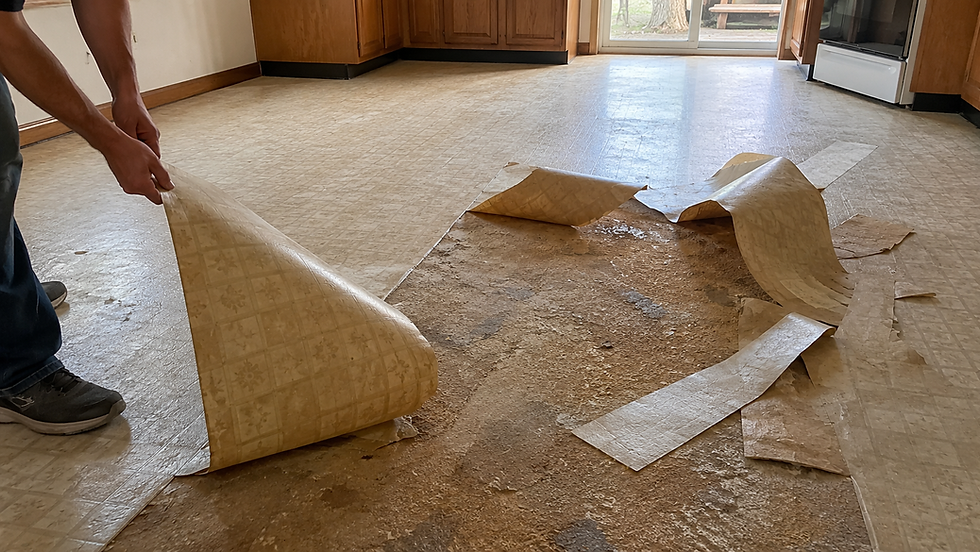
For modern LVT, a complete removal leaves the slab clean with minimal adhesive residue and ready for the next flooring system. For VCT with cut-back mastic, a complete removal leaves the slab uniformly clean of all adhesive, confirmed bondable for new flooring adhesive, and free of all tile and debris. All material leaves the property as part of the completed scope.

DustFree PNW covers vinyl tile and VCT removal across our Central Oregon service areas. Review our work on our Google Business Profile or get a free quote.
Final Thoughts
Vinyl tile removal is either one of the easiest flooring removal jobs or one of the more complex ones depending entirely on what adhesive is beneath the tile and what era the installation dates from. Testing before removal in any pre-1984 installation is the step that determines the correct approach for the entire project. Get a free quote from DustFree PNW.
FAQ
Is vinyl tile the same as VCT?
No. Modern luxury vinyl tile (LVT) is a multi-layer product with a wear layer and design film. VCT is a different commercial-grade composite tile used since the mid-twentieth century. They use different adhesives and present very different removal scenarios.
Does older vinyl tile or VCT adhesive contain asbestos?
Frequently, yes. Cut-back asphaltic mastic used under VCT installed before approximately 1984 is a known asbestos-containing material. The 9x9 inch resilient vinyl tile from the same era may also contain asbestos in the tile itself. Test before any removal in pre-2004 buildings.
How is cut-back mastic removed from concrete?
Diamond grinding is the professional standard. Chemical solvents do not dissolve cured cut-back mastic effectively. Grinding also generates silica dust from the concrete surface and requires source-capture equipment.
Does DustFree PNW handle vinyl tile and VCT removal in Central Oregon?
Yes. DustFree PNW handles vinyl tile, LVT, and VCT removal including mastic cleanup across Central Oregon. Contact us for a free quote.


Comments