
Sheet Vinyl Removal: The Dust-Free Way to Prep for New Flooring
TL;DR: Sheet vinyl removal involves two separate steps: removing the vinyl surface layer in strips, then addressing the felt backing and adhesive that remain bonded to the subfloor. The surface layer is usually manageable; the backing and adhesive underneath is where the job becomes more demanding, especially in older installations.
Key Takeaways
Sheet vinyl is typically installed with perimeter adhesive only, making the center section easy to pull up, but edge sections and the felt backing underneath require more effort.
Felt backing bonded to the subfloor is the part of sheet vinyl removal that most homeowners underestimate before starting the project.
Sheet vinyl installed before approximately 1980 may have backing paper or adhesive that contains asbestos, and testing before removal is the responsible approach in older Oregon homes.
Subfloor type matters during removal: wood subfloors require more caution to avoid water damage during adhesive cleanup, while concrete slabs allow more aggressive removal methods.
A complete sheet vinyl removal scope includes backing and adhesive cleanup, not just lifting the vinyl surface, since leftover backing prevents new flooring from lying flat.
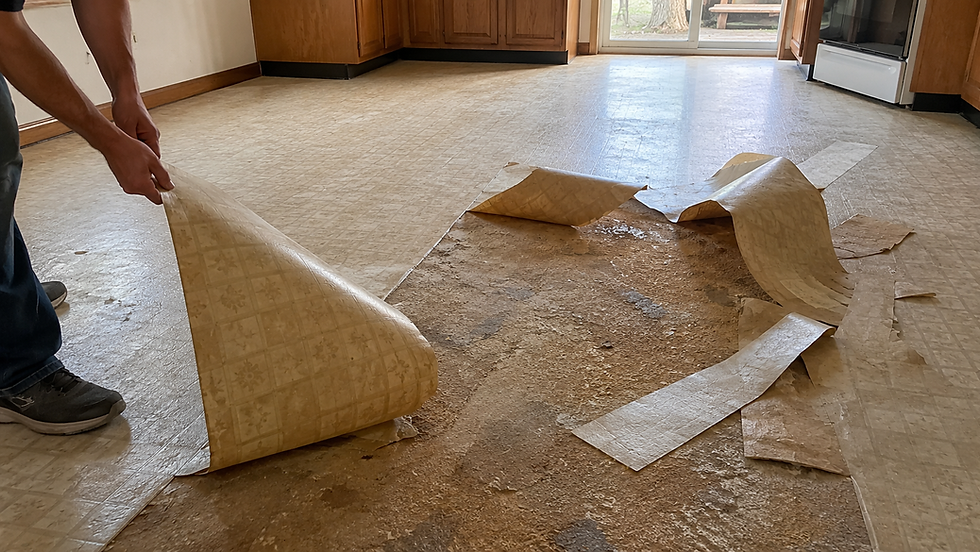
Sheet vinyl has been a kitchen and bathroom staple in Central Oregon homes since the mid-twentieth century, and it shows up regularly in remodel projects as the flooring being replaced. What makes sheet vinyl removal more involved than it looks is that the material is typically installed in two bonded layers. The top vinyl surface layer comes up in strips with moderate effort. The felt paper backing that stays behind, still bonded to the subfloor, is a different story.
DustFree PNW's flooring removal service covers sheet vinyl and backing removal across Central Oregon with dust-controlled equipment and full adhesive cleanup. Here is what the process actually looks like and what to confirm before any removal job begins.
How Sheet Vinyl Is Installed Affects How It Comes Out
Most sheet vinyl installations use a perimeter adhesive method: the adhesive is applied around the edges of the room, roughly five to eight inches from the walls, while the center of the sheet lays loose. This means the center of a perimeter-glued floor pulls up relatively easily once cut into strips, but the edge sections are bonded and require more effort to release.
Some installations, particularly in commercial or high-traffic applications, used full adhesive coverage across the entire floor. These jobs are more demanding than perimeter-glued residential sheet vinyl and require more time on the backing and adhesive cleanup stage.
Why Sheet Vinyl Often Leaves Behind More Than One Layer
Sheet vinyl is manufactured with a vinyl wear surface on top and a felt or paper backing beneath. When the vinyl is pulled up, the backing layer frequently separates from the vinyl surface and stays bonded to the subfloor. This is the most common situation that surprises homeowners who pull up the visible vinyl layer and expect to find a clean subfloor underneath.

Layer | What It Is | Removal Difficulty | Notes |
Vinyl surface layer | Top wear surface, cut into strips and peeled | Low to medium | Center section usually pulls up without much resistance |
Felt or paper backing | Backing layer that often separates and stays on subfloor | Medium | Scrapes off with a floor scraper; may require heat or solvent for stubborn spots |
Adhesive residue | Glue bonded to subfloor under backing | Medium to high | Depends on adhesive type and age; older mastic is the hardest to remove |
The adhesive removal approach also depends on the subfloor type. Concrete slabs allow the use of water-based adhesive removers, heat guns, and in stubborn cases, grinding equipment without worrying about moisture damage. Wood subfloors require more caution: excess water or aggressive chemical removers can soak into the plywood and cause swelling, warping, or mold growth, which creates a bigger problem than the adhesive itself.
The Asbestos Question in Older Sheet Vinyl
Sheet vinyl installed before approximately 1980 may contain asbestos in the felt or paper backing layer, not in the vinyl surface itself. This is a meaningful distinction because the backing is the layer that tends to tear and remain behind during removal, meaning it is the layer most likely to be disturbed during the demo process. Oregon DEQ recommends testing before any removal in homes built before 2004. If asbestos is confirmed in the backing, the proper removal sequence requires a licensed abatement contractor to address that layer before standard demo proceeds. More information is available on the Oregon DEQ Asbestos Information for Homeowners page.
Dust Control During Sheet Vinyl Removal
Sheet vinyl removal generally produces less dust than tile or stone demo. However, scraping felt backing and dried adhesive off a subfloor does create fine particles, and on concrete slabs where adhesive grinding is needed, silica dust from the concrete surface is also generated. Source-capture equipment used throughout the backing and adhesive cleanup phase prevents this dust from spreading through the home's HVAC system, which matters especially on jobs in occupied kitchens and bathrooms where the HVAC return is often nearby.
What a Complete Sheet Vinyl Removal Looks Like
A finished sheet vinyl removal job leaves the subfloor clean, flat, and free of felt backing, adhesive residue, and paper fragments. For wood subfloors, the surface should be dry and undamaged from the removal process. For concrete slabs, the surface should be clean enough for new flooring adhesive to bond correctly without intermediate leveling work from backing remnants causing high spots.

A quote that includes only the vinyl surface removal and not the backing and adhesive cleanup is a partial scope. Confirm in writing what is included before any work begins, particularly on older perimeter-glued installations where the backing is the majority of the cleanup work. DustFree PNW covers the full scope across our Central Oregon service areas. You can review our work on our Google Business Profile or get a free quote for your sheet vinyl project.
Final Thoughts
Sheet vinyl removal is a two-stage job in most cases, and the second stage, the backing and adhesive cleanup, is typically the more time-consuming part. A subfloor with felt backing remnants stuck to it is not ready for new flooring installation, regardless of how cleanly the top vinyl layer came up. Getting both stages done correctly, with dust under control throughout, is what leaves the installation crew with a surface they can start on immediately. Get a free quote from DustFree PNW.
FAQ
What is involved in professional sheet vinyl removal?
Professional sheet vinyl removal includes cutting the vinyl into strips, removing the surface layer, scraping the felt backing and adhesive residue off the subfloor, and haul-away of all removed material.
Why is there backing left on the subfloor after vinyl removal?
Sheet vinyl is manufactured with a felt or paper backing layer that often separates from the vinyl surface during removal and stays bonded to the subfloor, requiring separate scraping or treatment to remove.
Can sheet vinyl backing contain asbestos?
Yes. Sheet vinyl installed before approximately 1980 may have asbestos in the paper or felt backing layer. Oregon DEQ recommends testing before removal in homes built before 2004.
How does the subfloor type affect sheet vinyl removal?
Concrete slabs allow more aggressive adhesive removal methods including water-based removers, heat, and grinding. Wood subfloors require more caution to avoid moisture damage and warping from excessive water or solvent use.
Does sheet vinyl removal include the backing and adhesive, or just the surface?
A complete scope should include backing and adhesive cleanup. Removing only the vinyl surface and leaving felt backing or adhesive residue prevents new flooring from lying flat or bonding correctly.
Does DustFree PNW remove sheet vinyl in Central Oregon?
Yes. DustFree PNW handles sheet vinyl removal including backing and adhesive cleanup, serving homeowners and contractors throughout Central Oregon. Contact us for a free quote.


Comments