
Vinyl Floor Removal: What Homeowners Should Know Before Starting
Updated: Jul 27
TL;DR: Vinyl floor removal ranges from one of the easiest flooring projects to one of the most stubborn, depending almost entirely on how the floor was installed. Floating vinyl lifts in minutes. Fully glued-down vinyl on a concrete slab can require grinding equipment to remove the adhesive cleanly. Knowing which type you have before starting prevents most of the frustration.

Key Takeaways
The installation method determines everything about vinyl floor removal: floating floors come up easily, perimeter-glued floors are moderate, and full glue-down floors can require grinding to clean the adhesive off the slab.
Older vinyl installed before approximately 1980 may contain asbestos in the material or its adhesive, and testing before removal is the responsible step in any home of that age.
Vinyl adhesive, particularly older mastic-based products, strengthens with age and can become one of the most difficult adhesives to remove from a concrete slab.
A complete vinyl floor removal scope includes adhesive cleanup, not just lifting the vinyl itself, since adhesive residue prevents new flooring from bonding or lying flat.
Floating LVP and LVT removal is generally a low-dust job; full glue-down removal over concrete can involve significant dust when adhesive grinding is needed.
Vinyl floor removal is one of the most variable flooring demo tasks a homeowner encounters. The same material type, whether it is luxury vinyl plank or sheet vinyl, can be a straightforward afternoon project or a multi-day job requiring professional equipment, depending entirely on how that floor was attached to the subfloor. Understanding the difference before any tool touches the floor is the most useful thing a homeowner or contractor can know going into a vinyl removal project.
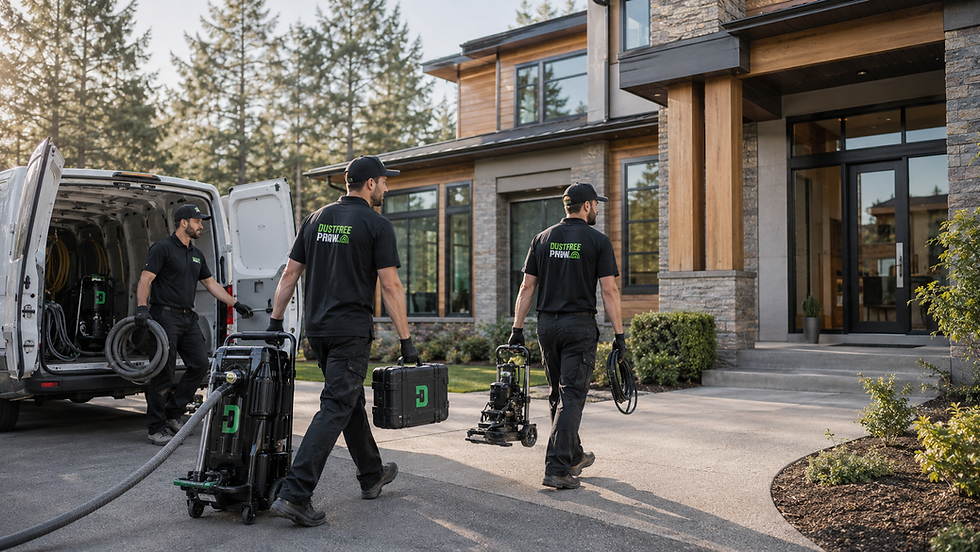
DustFree PNW's flooring removal service covers vinyl and LVP removal across Central Oregon. Here is what the process looks like for each installation type and what to confirm before booking any removal job.
The Three Types of Vinyl Floor Installation and How Each Affects Removal
Before any vinyl removal begins, the first question is how the floor was installed. This single factor determines the tools, timeline, and difficulty of the entire job.

Installation Type | How It Is Secured | Removal Difficulty | Adhesive Cleanup Needed? |
Floating (click-lock LVP or LVT) | Not adhered; locked planks rest on subfloor | Low | No |
Perimeter-glued sheet vinyl | Adhesive only at edges, center is loose | Low to medium | Minimal, at edges only |
Full glue-down vinyl or LVT | Adhesive across entire floor surface | Medium to high | Yes, significant adhesive remains on slab |
Glue-down over wood subfloor | Adhesive bonded to plywood or OSB | Medium | Yes, requires careful scraping to avoid damaging wood |
Floating vinyl plank, the most common installation in homes built or renovated after approximately 2000, comes up by unlocking individual planks or sheets with no adhesive to contend with. This is the easiest and fastest vinyl removal scenario. Full glue-down vinyl, more common in older installations and in commercial spaces, is the most demanding, particularly when older mastic-based adhesive has cured hard against a concrete slab over decades.
Why Vinyl Adhesive Is Harder to Remove Than It Looks
Vinyl flooring adhesives were designed to form a permanent bond. The most challenging adhesive type in older homes is asphalt-based mastic, a dark, rubbery material that was widely used from the mid-twentieth century through the 1980s. This adhesive cures into a material that resists most chemical removers, softens slightly with heat, and sometimes requires grinding to remove completely from a concrete slab.
Modern pressure-sensitive adhesives used in newer glue-down LVP are somewhat easier to remove, but even these leave residue that has to come off before new flooring can bond correctly. The older the installation, the harder the adhesive removal tends to be, which is why professional-grade equipment handles glue-down vinyl removal more efficiently than DIY scraping tools alone.
The Asbestos Consideration in Older Vinyl
Vinyl flooring installed before approximately 1980 may contain asbestos in the tile material, the paper backing, or the adhesive. This includes both resilient vinyl tiles and sheet vinyl products. Oregon DEQ recommends testing before any removal in homes built before 2004, and friable asbestos-containing material requires a licensed abatement contractor. If asbestos is suspected, the correct step is to test before starting, not to proceed and discover the issue partway through the job.
Dust Control During Vinyl Floor Removal
Floating vinyl removal produces minimal dust. Sheet vinyl removal involves some dust from the paper backing and adhesive, but is generally lower-risk than tile or stone demo. The dust risk increases significantly when adhesive grinding is required on a concrete slab for full glue-down installations. Grinding older mastic off a concrete slab can generate the same silica dust as concrete floor grinding from tile removal, which requires source-capture equipment to control properly rather than a nearby shop vacuum.
What Complete Vinyl Floor Removal Looks Like
A completed vinyl floor removal should leave the subfloor or slab clean and flat, with no adhesive residue, paper backing fragments, or debris remaining. For concrete slabs, the surface should be clean enough for new flooring adhesive to bond correctly. For wood subfloors, the surface should be free of adhesive and flat enough to avoid telegraphing through the new flooring material.

A quote that includes only the vinyl removal and not the adhesive cleanup is a partial scope. Confirm in writing what is included before booking, particularly on older glue-down installations where the adhesive cleanup is often the majority of the work. DustFree PNW covers this full scope across our Central Oregon service areas. You can review our work on our Google Business Profile or get a free quote for your vinyl removal project.
Final Thoughts
Vinyl floor removal is not one job. It is three different jobs depending on installation type, and the adhesive removal phase determines whether the project takes a few hours or a full day of professional equipment. Knowing which scenario you are dealing with before requesting quotes saves time, sets expectations, and avoids the frustration of discovering a different scope than expected after the work has already started. Get a free quote from DustFree PNW.
FAQ
Is vinyl floor removal difficult?
It depends on how the floor was installed. Floating click-lock vinyl is easy. Full glue-down vinyl on a concrete slab is significantly more demanding, particularly when older mastic adhesive has cured hard over decades.
Does vinyl floor removal include adhesive cleanup?
A complete scope should include it, but many quotes cover only the vinyl itself. Always confirm whether adhesive removal is included before booking, especially on older or full glue-down installations.
Can old vinyl floors contain asbestos?
Yes. Vinyl flooring installed before approximately 1980 may contain asbestos in the tile, paper backing, or adhesive. Oregon DEQ recommends testing before any removal in homes built before 2004.
Does vinyl floor removal create a lot of dust?
Floating vinyl removal creates minimal dust. Grinding older mastic adhesive off a concrete slab generates significant silica dust and requires source-capture equipment to control properly.
What is the difference between removing floating LVP and glue-down vinyl?
Floating LVP unlocks and lifts with no adhesive to manage. Glue-down vinyl requires separating the material from cured adhesive, then cleaning the adhesive residue off the slab, which is where most of the time and difficulty comes from.
Does DustFree PNW remove vinyl floors in Central Oregon?
Yes. DustFree PNW handles vinyl and LVP removal including adhesive cleanup and debris haul-away across Central Oregon. Contact us for a free quote.


Comments