
Historic Home Tile Removal: Special Considerations
TL;DR: Tile removal in a historic home carries considerations beyond standard demolition: testing for asbestos in materials predating the 1980s, deciding whether partial preservation is possible versus full removal, and understanding that period tile patterns are frequently difficult or impossible to match exactly if only part of a floor needs replacing. These factors shape both the removal approach and the realistic expectations for what comes next.

Key Takeaways
Tile in homes built or last renovated before approximately 1980 should be tested for asbestos before any removal begins, given the prevalence of asbestos-containing materials from that era.
Preservation guidance generally favors repair over full replacement when a historic tile floor holds architectural or design significance, since exact pattern and color matching becomes increasingly difficult over time as original tile lines are discontinued.
Even small dimensional differences, sometimes as little as a sixteenth of an inch, between original and replacement tile can prevent a partial repair from fitting cleanly within an existing pattern or border.
Prior remodeling projects, particularly plumbing and electrical updates, are a common source of damage or gaps in historic tile floors that complicate later removal or repair decisions.
Full removal, when it is the right choice, still requires the same source-capture dust control and mortar cleanup standards as any other tile removal project.
Historic and older homes across Central Oregon sometimes carry original or early-era tile installations that add character and historical value to the property. When these floors need attention, whether due to damage, a full remodel, or simply reaching the end of their service life, the decision-making process involves more than a standard tile removal project would, starting with whether removal is even the right call in the first place.
DustFree PNW's dust-free tile removal service handles historic and older home tile projects across Central Oregon with the additional care this work requires. Here is what to consider before removing tile from a historic property.
Testing for Asbestos Before Any Removal Begins
The first and most important step for any tile removal in a home built or last renovated before approximately 1980 is testing for asbestos. Vinyl floor tile, certain adhesives including cut-back mastic, and some older tile-setting materials from this era may contain asbestos, and disturbing these materials without proper testing and, if necessary, licensed abatement creates a genuine health and legal exposure. Oregon DEQ recommends testing before any demolition work in structures where these materials may be present, and this step should happen before any other decision about the tile floor is made.
Deciding Between Partial Replacement and Full Removal

Approach | When It Applies | Key Challenge |
Partial repair or replacement | Isolated damage in an otherwise intact historic floor with design significance | Matching original tile size, color, and pattern precisely; even minor dimensional differences can disrupt fit |
Full-field restoration | Widespread deterioration across a historically significant floor | Requires substrate reconstruction and documentation-based reproduction tile sourcing |
Full removal and replacement | Floor has no significant historic value, or damage is too extensive to restore practically | Standard tile removal process applies once the decision to remove is made |
Preservation guidance generally favors repair and restoration over full removal when a historic tile floor carries genuine architectural or design significance, since original building material is difficult or impossible to replace exactly once it is gone. However, this guidance also acknowledges that matching original tile can be a real practical obstacle: variations in size, shape, and pattern between original tile and available reproduction tile, sometimes as small as a sixteenth of an inch, can prevent a patched section from fitting cleanly within an existing border or pattern.
Common Sources of Damage in Historic Tile Floors
A frequent source of damage or gaps in historic tile floors traces back to earlier remodeling projects, particularly plumbing and electrical updates that required removing sections of tile to access pipes or wiring beneath the floor. These earlier interventions sometimes left mismatched patches, cement fill in place of tile, or differently sized fixtures that exposed areas never intended to be visible. Understanding this history, when it is available, helps clarify whether a full removal is genuinely the most practical path forward or whether a more targeted repair could address the specific damaged areas.
When Full Removal Is the Right Choice
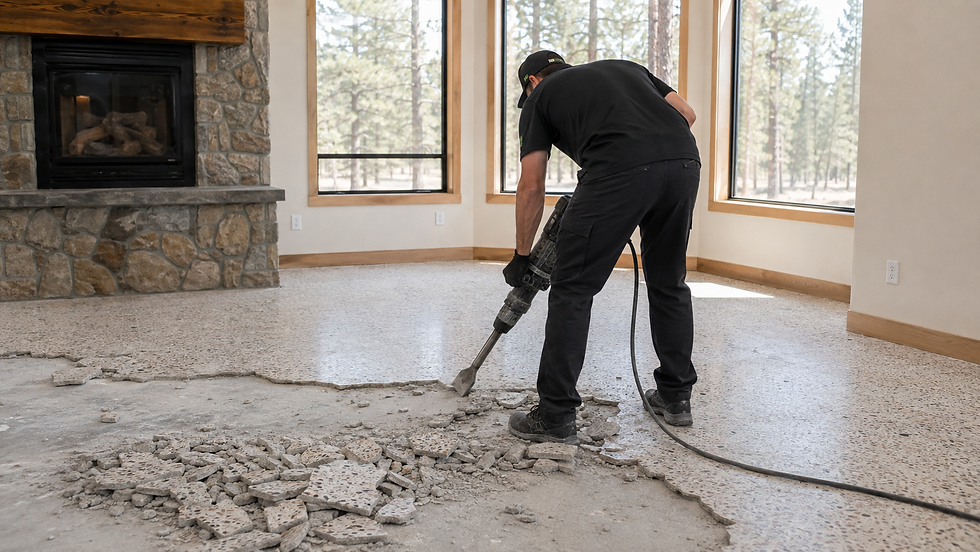
When a historic tile floor does not carry significant design value, or when damage is extensive enough that partial repair is impractical, full removal proceeds using the same professional standards as any other tile removal project. This includes source-capture dust control throughout the demolition, complete thinset or mortar cleanup, and a subfloor left flat and ready for the next flooring installation. The historic consideration at this stage shifts from preservation of the tile itself to careful handling of any other original architectural elements in the room, such as trim, baseboards, or built-in fixtures that should remain undisturbed during the tile work.
What Complete Historic Tile Removal Delivers

A properly completed historic tile removal project delivers a clean, flat subfloor, with all original architectural elements outside the tile removal scope left undisturbed, and any asbestos testing completed and documented before demolition began. Whether the outcome is a full replacement or the floor is restored as part of a preservation effort, the underlying standard of careful, well-documented work should apply throughout.
DustFree PNW handles historic and older home tile removal across our Central Oregon service areas. You can review our work on our Google Business Profile or get a free quote for your project.
Final Thoughts
Historic home tile removal starts with a question standard tile removal does not raise: should this tile be preserved rather than removed at all. Testing for asbestos, honestly assessing whether the floor carries genuine historic value, and understanding the practical challenges of matching original tile are the considerations that should come before any demolition begins. Get a free quote from DustFree PNW.
FAQ
Should historic tile floors be repaired instead of removed?
Preservation guidance generally favors repair over full replacement when a historic floor holds genuine architectural or design significance, though matching original tile precisely can be a real practical challenge.
Does historic home tile need asbestos testing before removal?
Yes, if the home was built or last renovated before approximately 1980. Vinyl tile, certain adhesives, and some older setting materials from that era may contain asbestos and require testing before disturbance.
Why is it hard to match replacement tile in an older home?
Original tile lines are frequently discontinued over time, and even small dimensional differences, sometimes as little as a sixteenth of an inch, can prevent a replacement section from fitting cleanly within an existing pattern.
What commonly causes damage in historic tile floors?
Earlier remodeling projects, particularly plumbing and electrical updates that required removing tile sections to access pipes or wiring, are a frequent source of damage, gaps, or mismatched patches in older tile floors.
Does removing historic tile use the same process as standard tile removal?
Once the decision to fully remove is made, yes. Source-capture dust control, thinset cleanup, and debris haul-away apply the same way, with additional care taken to protect other original architectural elements in the room.
Does DustFree PNW handle historic home tile removal in Central Oregon?
Yes. DustFree PNW removes tile from historic and older homes with the additional care this work requires across Central Oregon. Contact us for a free quote.


Comments