
Terrazzo Removal: What Makes It Different From Tile
TL;DR: Terrazzo is a composite material made of marble, quartz, granite, or other stone chips embedded in a cement or resin binder, then ground and polished smooth. It is significantly thicker and heavier than standard tile, requiring a hammer drill or chisel approach rather than the chipping methods used on ceramic or porcelain. Because terrazzo's aggregate includes multiple silica-containing stone types, removal generates substantial dust and requires source-capture equipment throughout the job.
Key Takeaways
Terrazzo is a composite flooring material embedding marble, quartz, or granite chips in a cement or resin binder, making it thicker and heavier than standard ceramic or porcelain tile.
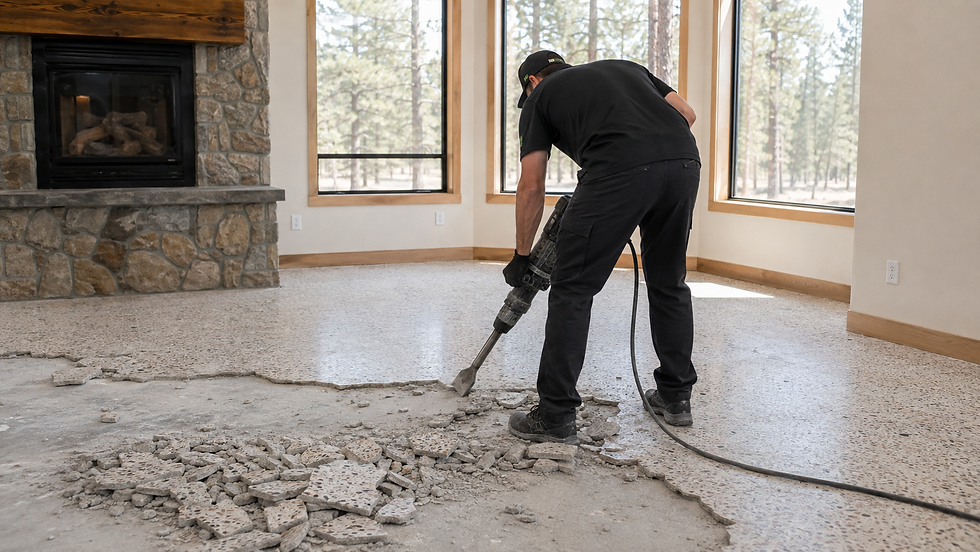
Removal typically requires a hammer drill functioning as a mini jackhammer, since terrazzo's thickness resists the standard chiseling methods used on thinner tile products.
Terrazzo's stone aggregate contains silica from multiple sources simultaneously, including quartz, granite, and the cement binder, generating significant dust during removal.
In some cases, tile was installed directly over an existing terrazzo floor rather than the terrazzo being removed, meaning the tile removal process must be handled carefully to avoid damaging a terrazzo floor that could potentially be restored instead.
A complete terrazzo removal delivers a clean, flat subfloor, with all debris, which is heavier than standard tile debris, hauled from the property.
Terrazzo floors appear in a range of Central Oregon properties, from mid-century homes to some commercial and institutional buildings, valued for their durability and distinctive polished appearance. When a terrazzo floor needs to come out, whether for a full remodel or because a homeowner prefers a different flooring style, the removal process is meaningfully more demanding than standard tile removal, both in physical effort and in dust generation.
DustFree PNW's dust-free tile removal service covers terrazzo removal across Central Oregon with source-capture equipment built for this level of material density. Here is what makes terrazzo different from standard tile and what the removal process actually involves.
What Makes Terrazzo Different From Standard Tile

Characteristic | Terrazzo | Standard Ceramic Tile |
Composition | Marble, quartz, or granite chips in cement or resin binder | Fired clay body with glaze |
Thickness | Significantly thicker, often poured in place or set as thick precast slabs | Thin, uniform manufactured thickness |
Removal tool | Hammer drill or jackhammer-style equipment | Standard chisel or floor scraper |
Silica sources during removal | Multiple: quartz and granite aggregate plus cement binder | Single: clay body and thinset mortar |
Weight per square foot | Heavier due to thickness and stone aggregate density | Lighter, standard tile weight |
The thickness difference is the most immediately obvious distinction during removal. Where standard tile responds to a chisel working under the edges, terrazzo's thickness and hardness typically require a hammer drill functioning essentially as a mini jackhammer, breaking the material into manageable sections rather than lifting it in one piece the way thinner tile often comes up.
Why Terrazzo Removal Generates More Dust
Terrazzo's composition means silica dust comes from multiple sources during removal simultaneously. The quartz and granite aggregate embedded in the material are both high-silica minerals in their own right. The cement binder holding the aggregate together is also a significant silica source. When terrazzo is broken and chipped during removal, all of these components release dust at the same time, making terrazzo removal one of the more silica-intensive demo tasks in a residential or commercial setting.
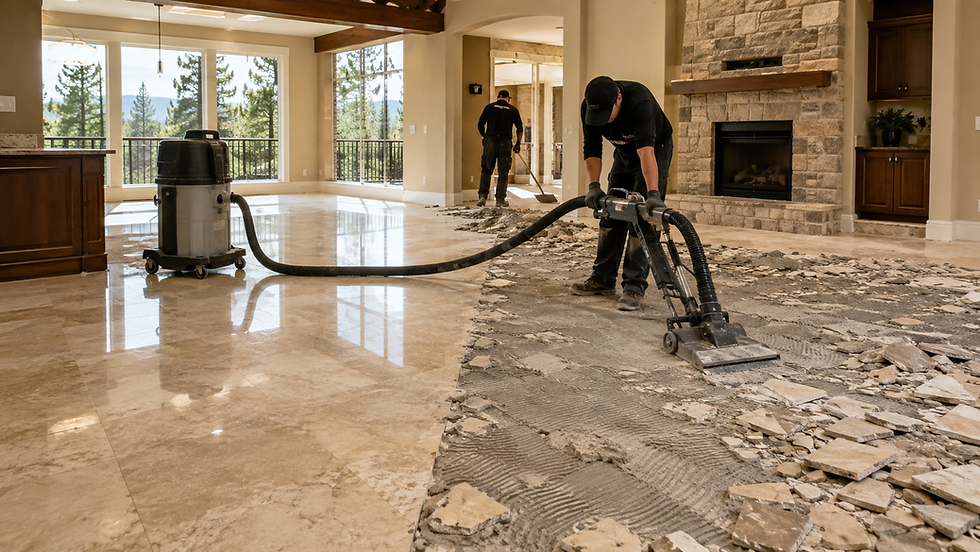
This combined dust load is why source-capture equipment matters as much for terrazzo removal as it does for any natural stone removal project. A vacuum system integrated into the hammer drill or chisel attachment captures this multi-source dust at the point of creation, preventing it from spreading through the work area and into the home's HVAC system.
The Tile-Over-Terrazzo Scenario
One consideration unique to terrazzo is that in some older properties, tile was installed directly over an existing terrazzo floor rather than the terrazzo itself needing removal. This sometimes happened as a cost-effective update in earlier decades, covering a terrazzo floor that had gone out of style at the time rather than removing it. When this is the case, the tile removal process must be handled with more care than a standard tile job, since chipping hammers used carelessly can gouge and permanently damage the terrazzo underneath.
If a homeowner discovers terrazzo beneath a layer of tile during a remodel, it is worth pausing to consider whether the terrazzo itself could be restored and polished rather than removed entirely, since terrazzo restoration can sometimes deliver a distinctive, durable finished floor at lower overall cost and effort than full terrazzo removal followed by an entirely new flooring installation.
What Complete Terrazzo Removal Delivers

When full terrazzo removal is the correct choice, a complete job leaves the subfloor clean and flat, with all terrazzo debris, which is heavier than standard tile debris given the material's density, hauled from the property. Any adhesive or setting bed material remaining after the terrazzo itself is removed should be addressed as part of the same scope, similar to the thinset cleanup phase required after standard tile removal.
DustFree PNW covers terrazzo removal across our Central Oregon service areas. You can review our work on our Google Business Profile or get a free quote for your terrazzo removal project.
Final Thoughts
Terrazzo removal is more demanding than standard tile removal because of the material's thickness, weight, and multi-source silica content from its stone aggregate and cement binder. Source-capture equipment throughout the job, and a careful check for whether tile might be covering a restorable terrazzo floor beneath it, are the two considerations that matter most before starting a terrazzo project. Get a free quote from DustFree PNW.
FAQ
Is terrazzo harder to remove than regular tile?
Yes. Terrazzo is significantly thicker and denser than standard ceramic or porcelain tile, typically requiring a hammer drill or jackhammer-style tool rather than a standard chisel.
Does terrazzo removal create more dust than tile removal?
Yes. Terrazzo's aggregate includes quartz and granite, both high-silica minerals, in addition to a cement binder, meaning multiple silica sources release dust simultaneously during removal.
Could there be terrazzo hidden under my tile floor?
In some older properties, yes. Tile was sometimes installed directly over existing terrazzo as a cost-effective update. If discovered, it is worth considering whether the terrazzo could be restored rather than removed.
What tools are used to remove terrazzo?
A hammer drill functioning as a mini jackhammer is the standard tool, breaking the thick material into manageable sections. Chisels and floor scrapers may be used for edges and detail work.
Is terrazzo debris heavier than standard tile debris?
Yes. Terrazzo's thickness and stone aggregate density make it heavier per square foot than standard tile, requiring appropriately sized equipment for debris haul-away.
Does DustFree PNW remove terrazzo floors in Central Oregon?
Yes. DustFree PNW handles terrazzo removal with source-capture equipment across Central Oregon. Contact us for a free quote.


Comments