
Quarry Tile Removal in Kitchens and Commercial Spaces
TL;DR: Quarry tile is an unglazed, hard-fired tile prized for its durability and low absorption rate, which makes it a common choice for commercial kitchens and heavy-traffic residential areas. That same density and low absorption make quarry tile more demanding to remove than standard glazed tile, since it typically weighs more than five pounds per square foot and is often set with a thick, heavy-duty mortar bed designed to hold up under equipment loads and constant foot traffic.

Key Takeaways
Quarry tile is unglazed and hard-fired at high temperatures, giving it a low absorption rate and exceptional durability that makes it a common choice for commercial kitchens and other high-traffic environments.
Because quarry tile typically weighs more than five pounds per square foot, industry standards classify it under large and heavy tile installation requirements, meaning it is often set with a heavy-duty, "H"-rated mortar.
The heavier mortar bed used under quarry tile takes longer to grind off during removal than a standard thinset installation, adding time to the subfloor preparation phase.
Commercial kitchen quarry tile removal often needs to work around equipment, drains, and sloped floor sections designed for drainage, requiring careful sequencing during demo.
A complete quarry tile removal delivers a flat, clean subfloor with all tile and mortar debris hauled from the property, ready for the next flooring or coating system.
Quarry tile shows up frequently in Central Oregon restaurants, commercial kitchens, and some older residential entryways and mudrooms, valued for its resistance to heavy traffic, grease, and constant cleaning with harsh chemicals. When that tile needs to come out for a renovation or equipment upgrade, the removal process reflects exactly the qualities that make quarry tile so durable in the first place: it is dense, heavy, and typically set into a mortar system built to hold up under serious load.
DustFree PNW's commercial floor removal service covers quarry tile removal for restaurants, commercial kitchens, and residential spaces across Central Oregon. Here is what makes quarry tile removal more demanding than standard tile and what the process involves.
Why Quarry Tile Removal Is More Demanding Than Standard Tile

Characteristic | Quarry Tile | Standard Glazed Ceramic Tile |
Surface finish | Unglazed, natural clay-fired finish | Glazed surface |
Absorption rate | Low (vitreous, up to approximately 3 percent) | Varies, generally higher than quarry tile |
Weight per square foot | Typically over 5 lbs, classified as heavy tile | Lighter, standard installation weight |
Typical mortar | Heavy-duty "H"-rated mortar for large and heavy tile | Standard thinset mortar |
Common setting | Commercial kitchens, high-traffic entries | Residential floors and walls broadly |
The classification of quarry tile as a large and heavy tile, per industry mortar standards, is not incidental. Manufacturers specifically recommend "H"-rated mortars for quarry tile installations precisely because standard thinset is not engineered to support the combined weight of the tile and the loads it will bear in service, particularly in commercial kitchens where rolling equipment and constant foot traffic place ongoing stress on the installation. This same heavier mortar bed is what makes the removal phase take longer than a standard tile job.
The Removal Process for Quarry Tile
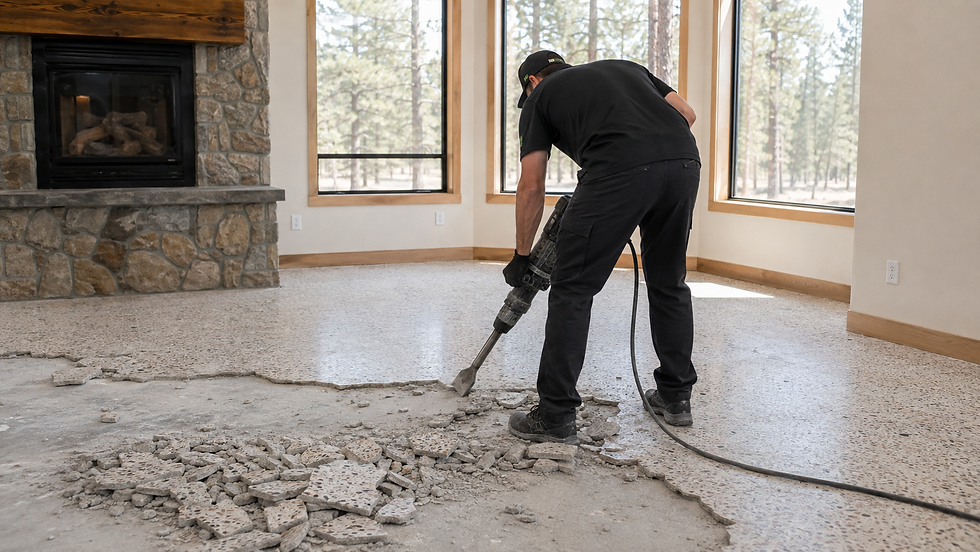
Quarry tile removal follows the same general sequence as other tile removal projects, chipping or breaking the surface tile, then grinding the mortar bed off the slab, but each phase typically takes longer given the material's density and the mortar's heavier specification. The tile itself, being unglazed and hard-fired, tends to be more resistant to chipping than a standard glazed ceramic tile, requiring more sustained impact to break each piece free from the substrate.
Once the tile surface is cleared, the mortar bed grinding phase addresses whatever heavy-duty setting material was used during installation. Because commercial installations frequently used a thicker mortar bed than a typical residential thinset application, this phase generates a proportionally larger amount of dust and debris, making source-capture equipment especially important throughout the grinding process.
Special Considerations for Commercial Kitchen Removal
Removing quarry tile from an active or recently active commercial kitchen carries additional planning considerations beyond the tile and mortar removal itself. Commercial kitchen floors are frequently sloped toward floor drains for sanitation and drainage purposes, which means the demo crew needs to work around and preserve these drainage features rather than disrupting them during removal. Equipment that may still be in place, including heavy appliances, stainless steel fixtures, and utility connections, also requires careful coordination during the demo phase to avoid damage.
For restaurants and commercial kitchens needing to minimize downtime, scheduling quarry tile removal during off-hours or planned closure periods is a common approach, similar to the scheduling considerations that apply to other commercial floor removal projects.
What Complete Quarry Tile Removal Delivers

A complete quarry tile removal leaves the subfloor flat, clean of mortar residue, and free of debris, with the heavier weight of quarry tile and its mortar bed properly accounted for in the debris haul-away plan. Any drainage slopes or floor features that need to be preserved or reconstructed as part of the new installation should be identified and communicated clearly before the next phase of work begins.
DustFree PNW handles quarry tile removal for restaurants, commercial kitchens, and residential spaces across our Central Oregon service areas. You can review our work on our Google Business Profile or get a free quote for your quarry tile removal project.
Final Thoughts
Quarry tile removal is more demanding than standard tile removal because of the material's density, weight, and the heavy-duty mortar systems commonly used to install it, particularly in commercial kitchen settings. Planning for the mortar grinding phase, coordinating around drainage features and equipment, and using source-capture dust control throughout are the considerations that keep a quarry tile removal project on schedule. Get a free quote from DustFree PNW.
FAQ
Is quarry tile harder to remove than regular tile?
Yes. Quarry tile is unglazed, hard-fired, and typically heavier than five pounds per square foot, often set with a heavy-duty mortar that takes longer to grind off than standard thinset.
Why is quarry tile so common in commercial kitchens?
Its low absorption rate and resistance to heavy traffic, grease, and harsh cleaning chemicals make quarry tile a durable choice for commercial kitchen environments specifically.
What mortar is used under quarry tile?
Industry standards classify quarry tile as a large and heavy tile, requiring an "H"-rated mortar designed to support its weight and the loads it will bear in service, particularly in commercial settings.
Do drains and slopes complicate quarry tile removal in kitchens?
Yes. Commercial kitchen floors are often sloped toward drains for sanitation, and these features need to be preserved or carefully addressed during the removal and any subsequent installation.
How is quarry tile debris different from standard tile debris?
Quarry tile and its heavy-duty mortar bed weigh more per square foot than standard tile installations, requiring debris haul-away equipment sized appropriately for the additional load.
Does DustFree PNW remove quarry tile in Central Oregon?
Yes. DustFree PNW removes quarry tile from restaurants, commercial kitchens, and residential spaces using source-capture equipment across Central Oregon. Contact us for a free quote.


Comments