
Hardwood Floor Removal: What to Expect From a Dust-Free Process
TL;DR: Hardwood floor removal creates more dust than most homeowners expect, particularly when the floors were glue-down installed or when adhesive residue remains on the subfloor after the wood is up. A dust-free removal process captures dust at the source rather than relying on plastic sheeting and shop vacuums to manage it after it is already airborne.

Key Takeaways
Hardwood floor removal produces wood dust and, when adhesive is involved, can also generate silica dust from concrete subfloor contact during adhesive removal.
How the hardwood was originally installed determines how complex the removal is and how much adhesive cleanup follows.
Cutting hardwood into sections before removal is the standard method for nail-down floors, but it generates significant dust that needs to be captured at the source.
Glue-down hardwood removal typically involves adhesive residue on the slab that requires scraping or grinding after the wood is up.
A complete hardwood floor removal scope should include adhesive cleanup and debris haul-away, not just the wood itself.
Hardwood floor removal is not as dusty as tile removal, but it is dustier than most homeowners expect going in. The process of cutting boards into sections, prying them up, and cleaning the adhesive or staple residue underneath generates enough airborne particles to coat surrounding surfaces and HVAC returns if dust control is not in place before the first cut is made.
DustFree PNW's flooring removal service covers hardwood and engineered wood removal across Central Oregon with the same source-capture approach used for tile and stone removal. Here is what the process actually looks like at each stage.
How Hardwood Is Installed Determines How Hard It Is to Remove
There are three main installation methods for hardwood flooring, and each one creates a different removal scenario in terms of difficulty, dust generation, and how much cleanup is needed afterward.
Nail-down hardwood is the most common installation on wood subfloors. The planks are fastened with cleats or staples shot through the tongue of each board. Removal involves cutting the floor into manageable sections with a saw, then prying the sections up and pulling the remaining fasteners. The sawing step is where most of the dust is generated, and it happens quickly across large areas.
Floating hardwood or laminate is the easiest to remove. The planks lock together without fasteners or adhesive and simply unlock and lift out. Dust generation is minimal and cleanup is straightforward.
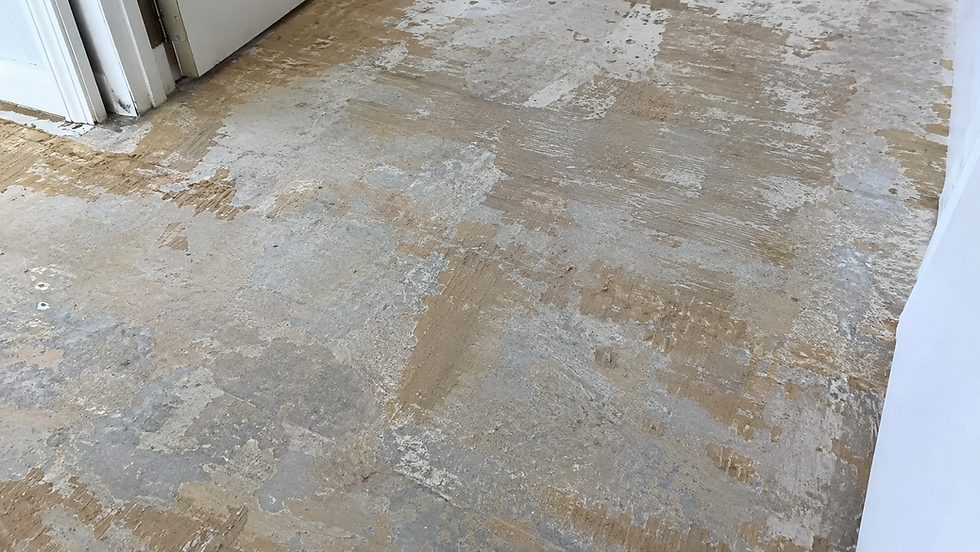
Glue-down hardwood is the most complex removal scenario. The planks are bonded directly to a concrete slab with flooring adhesive, and removing them often means breaking or prying the boards away from the adhesive layer, which stays behind on the slab. The adhesive removal step that follows is a significant phase of the job in its own right.
Glue-Down vs Nail-Down: How Installation Affects Removal
Installation Type | Removal Method | Adhesive Cleanup After? | Dust Level |
Nail-down (on wood subfloor) | Cut sections, pry up, pull fasteners | No, unless adhesive also used | Medium, generated by saw cuts |
Floating (click-lock) | Unlock and lift planks | No | Low |
Glue-down (on concrete slab) | Break or pry boards from adhesive | Yes, significant adhesive residue remains | Medium during removal, high during adhesive grinding |
Engineered wood, glue-down | Similar to glue-down solid hardwood | Yes | Medium to high |
Glue-down hardwood on a concrete slab is particularly common in homes with slab-on-grade construction, which is a standard build type across many Central Oregon neighborhoods. In these cases, the adhesive removal step after the wood is up requires either a floor scraper for softer adhesives or, for harder adhesive that has cured into the slab surface, a floor grinder. Our thinset removal service covers this adhesive and residue cleanup phase on concrete slab jobs where the flooring adhesive has bonded deeply to the surface.
Why Hardwood Removal Creates More Dust Than People Expect
Most homeowners assume tile removal is dusty and hardwood removal is not. In practice, hardwood removal generates meaningful dust in two places. The saw cuts that divide nail-down floors into sections produce fine wood dust that spreads quickly in an enclosed space. And on glue-down jobs over concrete, grinding the adhesive residue off the slab generates silica dust from the concrete surface itself, which carries the same respiratory hazard as tile demo dust.
A professional removal crew that uses source-capture equipment captures wood dust and concrete dust at the point of generation rather than allowing it to spread through the room and settle on cabinets, surfaces, and HVAC returns before a shop vacuum can catch it. This matters especially on hardwood removal jobs in occupied homes, where the rest of the house needs to stay livable through the project.
What the Hardwood Floor Removal Process Looks Like Step by Step
For nail-down hardwood over a wood subfloor, the process starts with removing baseboards, then cutting the flooring into sections roughly one to two feet wide perpendicular to the board direction. Each section is pried up using a flat bar, and the remaining staples or cleats are pulled from the subfloor before the new flooring can go down. The subfloor is then inspected for damage, squeaks, or uneven areas that need repair.
For glue-down hardwood over a concrete slab, the boards are broken away from the adhesive layer using scrapers or chisels, then the adhesive residue on the slab is scraped, ground, or chemically treated depending on adhesive type. The slab is then inspected and leveled as needed before new flooring installation begins.
What a Complete Hardwood Floor Removal Looks Like
A complete hardwood floor removal leaves the subfloor or slab clean, flat, and free of adhesive residue or fasteners, with all removed wood and debris hauled from the property. For nail-down floors on wood subfloors, this means a subfloor that is structurally sound, flat, and ready for new installation. For glue-down floors on concrete slabs, it means a slab with adhesive fully removed and the surface ready for new flooring adhesive or underlayment to bond correctly.

DustFree PNW covers this full scope across our Central Oregon service areas. You can review our work on our Google Business Profile or get a free quote to confirm the scope for your specific floor type.
Final Thoughts
Hardwood floor removal is more involved than it looks, and the dust it generates deserves the same respect as any other flooring demo task. A crew that captures dust at the source keeps your home cleaner through the project and gets the subfloor ready for new installation without a follow-up cleaning step in between. Ready to plan your hardwood floor removal? Get a free quote from DustFree PNW.
FAQ
How is hardwood floor removal different from tile removal?
Hardwood removal is generally less dusty than tile removal and does not involve thinset mortar in most cases. However, glue-down hardwood on concrete slabs produces significant adhesive residue that requires grinding or scraping after the wood is up.
Does hardwood floor removal create a lot of dust?
More than most homeowners expect. Saw cuts during nail-down removal generate wood dust, and grinding adhesive off a concrete slab on glue-down jobs generates silica dust with the same respiratory risk as tile demo.
Can glue-down hardwood be removed without damaging the concrete slab?
Yes, with the right equipment. Floor scrapers, pry bars, and low-impact methods remove the wood without damaging the slab itself. The adhesive residue that remains is then addressed separately.
Does hardwood floor removal include adhesive cleanup?
A complete scope should include it, but it is often quoted separately. Always confirm whether adhesive removal is part of the quote before signing, particularly on glue-down installations.
How long does hardwood floor removal take?
Most residential nail-down jobs are completed in a single day depending on square footage. Glue-down jobs may take longer depending on how hard the adhesive has cured and how much area needs to be scraped or ground.
Does DustFree PNW remove hardwood floors in Central Oregon?
Yes. DustFree PNW handles hardwood and engineered wood floor removal including adhesive cleanup and debris haul-away, serving homeowners and contractors throughout Central Oregon. Contact us for a free quote.


Comments