
Dustless Flooring Removal: What It Means and How It Works
TL;DR: Dustless flooring removal is a process that uses vacuum systems integrated directly into grinding and chipping tools to capture dust at the point of creation, rather than allowing it to spread into a room's air. The process follows three phases: containment setup, source-capture removal, and final HEPA vacuum cleanup. No process captures 100 percent of dust, but a properly equipped dustless removal keeps airborne particulate low enough that adjacent rooms and HVAC systems stay clean throughout the project.

Key Takeaways
Dustless flooring removal relies on three core components working together: vacuum systems with high suction, dust shrouds that surround the cutting or grinding point, and HEPA filters that capture the finest silica particles.
The process follows three phases in order: sealing off the work area with containment, removing the flooring with source-capture tools, and a final HEPA vacuum pass before the space is handed off.
No dustless method captures 100 percent of dust, but properly equipped systems can capture over 99 percent, a meaningful difference compared to traditional demo methods.
Dustless removal applies to most flooring types, including tile, hardwood, vinyl, and carpet with glue-down adhesive, though the specific approach varies by material.
A complete dustless flooring removal includes debris haul-away and a subfloor left clean and ready for new installation, not just a visually dust-free room.
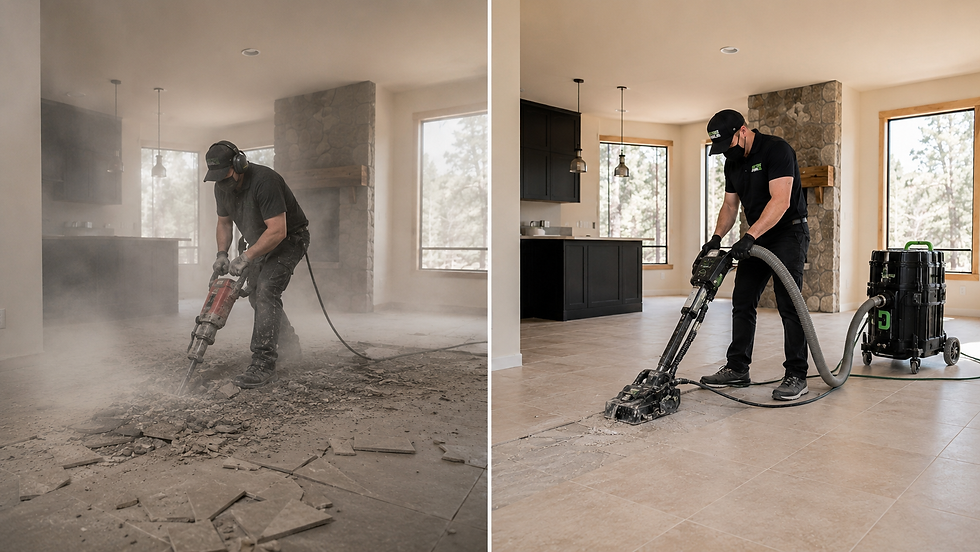
Dustless flooring removal has become the standard homeowners look for when planning a remodel, and for good reason. Traditional flooring removal, using a hammer and chisel with no dust control, can leave a fine layer of silica dust throughout a home that persists for weeks after the visible debris is cleared away. Dustless flooring removal exists to prevent that outcome, using specific equipment and a defined process rather than just careful cleanup after the fact.
DustFree PNW provides dustless flooring removal across Central Oregon as part of our flooring removal service. Here is exactly how the process works, what equipment makes it possible, and what a complete job should leave behind.
The Three Components That Make Removal Dustless
Dustless flooring removal depends on three pieces of equipment working together as a sealed system. Vacuum systems provide the suction power needed to pull dust away from the work surface continuously during grinding or chipping. Dust shrouds and hoods wrap around the cutting or grinding point itself, containing particles at the exact moment they are created rather than after they have already dispersed. HEPA filters then capture the fine crystalline silica particles before the filtered air is released, preventing recirculation of the smallest and most harmful particulate.
Each component depends on the others. A powerful vacuum without a properly sealed shroud still allows dust to escape around the edges of the tool. A well-designed shroud without HEPA filtration captures dust into the vacuum but can recirculate the finest particles back into the air through the exhaust. The combination of all three is what defines true dustless removal, as opposed to a standard shop vacuum running nearby.
The Dustless Flooring Removal Process Step by Step

Phase | What Happens | Why It Matters |
1. Containment setup | Plastic sheeting and tape seal the work area from the rest of the home before any tool touches the floor | Limits where any residual dust could travel, even with source capture in use |
2. Source-capture removal | Vacuum-shrouded grinders and chisels remove the flooring material, capturing dust at the tool head throughout | Prevents dust from becoming airborne in the first place, rather than cleaning it up afterward |
3. Final HEPA cleanup | HEPA-filtered vacuums pass over every surface in the work area, checking for and removing any lingering fine dust | Confirms the space is genuinely clean before handoff to the next trade |
The final cleanup phase is often overlooked in casual descriptions of dustless removal, but it matters. Even with excellent source capture during the removal itself, a small amount of fine dust can settle nearby. A thorough final pass with a HEPA vacuum, followed by a visual and tactile inspection of surfaces, is what confirms the room is genuinely ready for the next phase rather than assumed clean based on the equipment used.
Why Standard Shop Vacuums Do Not Qualify as Dustless
A common point of confusion for homeowners is the difference between a contractor using a shop vacuum during demo and a contractor using true dustless equipment. A standard shop vacuum, even a good one, is designed for general debris pickup rather than continuous fine-particulate capture during active grinding. When a shop vacuum sits several feet from the work area rather than being integrated into the tool itself, a significant portion of dust disperses into the room before the vacuum has any chance to capture it.
The distinction is not about vacuum power alone. It is about where the capture point sits relative to where the dust is created. Tool-integrated shrouds capture dust within inches of its origin. A standalone vacuum, regardless of how strong its motor is, is capturing dust after it has already traveled through the room's air.
What Materials Dustless Removal Applies To
Dustless methods apply across most common flooring types, though the specific technique varies by material. Ceramic and porcelain tile require chipping and thinset grinding. Natural stone follows a similar pattern with a typically thicker mortar bed underneath. Glue-down hardwood and engineered wood require adhesive grinding after the surface material is lifted. Vinyl composition tile and sheet vinyl leave mastic residue that also requires grinding. Carpet with glue-down installation follows the same adhesive grinding pattern once the carpet itself is removed.
Floating flooring types, including click-lock laminate and luxury vinyl plank, generate minimal dust regardless of method since no adhesive grinding is required. For these installations, the dustless distinction matters less because there is little dust to control in the first place.
Is Dustless Flooring Removal Really Dust-Free?
No dustless process captures 100 percent of dust, and any contractor claiming absolute zero dust is overstating the reality of grinding and chipping materials. What a properly equipped dustless system does deliver is capture rates that meaningfully change the outcome, keeping the vast majority of dust from ever reaching the air in adjacent rooms or the home's HVAC system. The honest comparison is not perfect versus imperfect, but a controlled process versus an uncontrolled one.
This is why the equipment specification matters more than the marketing language when evaluating a contractor. A company that is transparent about capturing the vast majority of dust, rather than claiming impossible perfection, is generally the more trustworthy source for an accurate expectation of the job.
What Dustless Flooring Removal Leaves Behind
A complete dustless flooring removal delivers more than a visually clean room. The subfloor should be flat, free of adhesive or mortar residue, and inspected for any condition that would affect the next installation. All debris, which for tile and stone can weigh several pounds per square foot, should be hauled from the property as part of the completed scope. Adjacent rooms should show no measurable dust accumulation on surfaces, and the home's HVAC system should not require servicing as a result of the project.

DustFree PNW provides dustless flooring removal across our Central Oregon service areas, including Bend, Redmond, Sisters, Tumalo, and Madras. You can review our work on our Google Business Profile or get a free quote for your flooring removal project.
Final Thoughts
Dustless flooring removal is a defined process built around three pieces of equipment working together, not a general description of a tidy job site. Understanding the containment, source-capture, and final cleanup phases helps homeowners recognize what a genuinely dustless process looks like and ask the right questions before booking any flooring removal project. Get a free quote from DustFree PNW.
FAQ
What is dustless flooring removal?
Dustless flooring removal is a process that uses vacuum-integrated tools with dust shrouds and HEPA filtration to capture dust at the point it is created, following a three-phase process of containment, removal, and final cleanup.
Is dustless flooring removal completely dust-free?
No process captures 100 percent of dust, but properly equipped dustless systems can capture over 99 percent of dust generated, a significant difference compared to traditional removal with no dust control.
How long does dustless flooring removal take?
Timelines vary by project size and material type, but dustless removal is generally faster overall than traditional methods once reduced cleanup time is factored into the total project timeline.
Can any flooring type be removed dustlessly?
Most flooring types can be removed using dustless methods, including tile, stone, hardwood, vinyl, and glue-down carpet. Floating flooring types generate minimal dust regardless of method since no adhesive grinding is needed.
Why is a standard shop vacuum not considered dustless removal?
A shop vacuum captures dust after it disperses into the room's air, since it is not integrated into the tool itself. True dustless removal captures dust within inches of where it is created, using a shroud attached directly to the tool.
Does DustFree PNW provide dustless flooring removal in Central Oregon?
Yes. DustFree PNW uses source-capture equipment for dustless flooring removal across Bend, Redmond, Sisters, Tumalo, Madras, and surrounding Central Oregon communities. Contact us for a free quote.


Comments