
Church and Religious Facility Floor Removal Scheduling

Church and Religious Facility Floor Removal Scheduling
TL;DR: Church flooring renovation projects genuinely benefit from completing the sanctuary first, then moving sequentially through foyer, classrooms, and fellowship hall, with worship services temporarily relocated to a fellowship hall, gym, or nearby rented space during sanctuary-specific work. This phased sequencing, combined with weekday scheduling around a congregation's concentrated Sunday and midweek service times, allows most churches to continue regular worship activities throughout a flooring renovation rather than requiring a complete facility closure.
Key Takeaways
Completing the sanctuary first, then moving through foyer, classrooms, and fellowship hall in sequence, is the recommended phasing approach for church flooring renovation.
Temporarily relocating services to a fellowship hall, gym, or nearby rented space allows congregations to maintain regular worship throughout even a multi-week sanctuary project.
Weekday daytime hours outside a congregation's Sunday and midweek service windows typically represent genuine low-activity periods for scheduling demolition work.
Older church buildings should have flooring tested for asbestos following the same standard applied to any pre-1980s structure.
Clear, repeated communication about renovation timelines helps maintain congregational patience and goodwill throughout an extended project.
Church and religious facility flooring removal presents a genuinely distinct scheduling challenge compared to a standard commercial project, since congregational activity concentrates heavily into specific, predictable windows, Sunday mornings and midweek evening services chief among them, while the remainder of the week often sees considerably lighter facility use. Understanding how to schedule around this concentrated activity pattern, and which spaces need sequential rather than simultaneous attention, helps church facilities teams plan flooring projects that respect both the congregation's worship schedule and the building's practical needs.
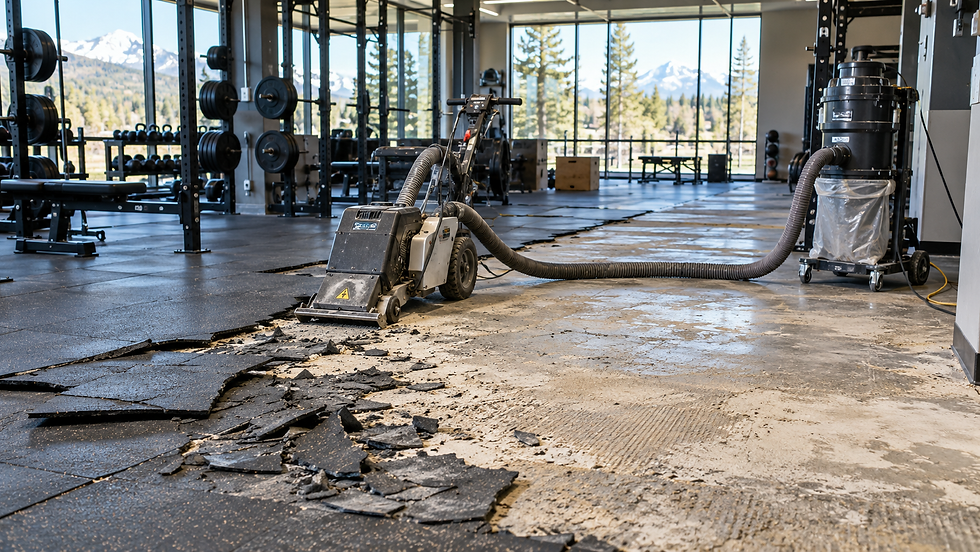
DustFree PNW provides dust-free flooring removal for churches and religious facilities across Central Oregon, scoped around a congregation's actual service schedule. Here is how this project type should be planned.
Why Church Facility Scheduling Differs From Standard Commercial Projects

Scheduling Consideration | Church-Specific Reality | Practical Implication |
Concentrated peak-use windows | Sunday mornings and midweek evening services draw the heaviest attendance | Weekday work outside these specific windows minimizes disruption to core worship activity |
Sequential space phasing | Complete the sanctuary first, then foyer, classrooms, and fellowship hall | Allows temporary relocation of services to an unaffected space during sanctuary work |
Temporary worship relocation | Services move to fellowship hall, gym, or nearby rented space during sanctuary renovation | Maintains congregational continuity throughout even a multi-week sanctuary project |
Historic and architectural sensitivity | Many church buildings carry genuine historic or architecturally significant character | Flooring removal near original woodwork, plaster, or historic elements requires extra care |
This combination of predictable peak-use timing and a genuine willingness among congregations to temporarily relocate services makes church flooring projects more schedulable around normal operations than many other commercial facility types, provided the sequencing and communication happen thoughtfully.
Why Sanctuary-First Sequencing Makes Practical Sense
Completing sanctuary flooring work first, before moving to the foyer, classrooms, and fellowship hall in sequence, reflects the sanctuary's status as both the space requiring the most specialized care, given its typically higher architectural and historic significance, and the space around which temporary relocation planning needs to happen most deliberately. Once the sanctuary itself is complete, remaining phases in secondary spaces generally involve less disruption to core worship activity, since these areas don't require the same relocation planning that a sanctuary renovation does.
Why Temporary Relocation Keeps Services Running Through Longer Projects
For flooring projects spanning multiple weeks in the sanctuary specifically, relocating services to a fellowship hall, gym, or a nearby rented space is a genuinely common and workable solution that allows a congregation to maintain its regular worship schedule throughout the renovation rather than pausing services entirely. Communicating this relocation plan clearly and repeatedly to the congregation, explaining both the temporary inconvenience and the visible progress toward completion, helps maintain congregational patience and engagement through what can be a multi-week or even multi-month project timeline.
Why Weekday Scheduling Fits Most Church Facility Use Patterns
Because most churches concentrate their heaviest facility use into Sunday mornings and specific midweek evening programs, weekday daytime hours frequently represent genuine low-activity windows well suited to active demolition and flooring removal work. Confirming a specific congregation's actual weekly schedule, rather than assuming a generic pattern, helps identify the real low-activity windows a particular facility offers, since midweek programming varies considerably between congregations.
Why Fellowship Hall Flooring Faces Genuinely Different Demands Than the Sanctuary
Fellowship halls function as genuinely multi-use spaces, hosting everything from potluck dinners and coffee hours to community events and children's programming, and this diverse use pattern calls for flooring materials suited to spill resistance and easy maintenance rather than the more formal, often carpeted approach common in a sanctuary. Luxury vinyl tile is frequently identified as a practical starting point for fellowship hall flooring specifically, given its water and stain resistance for spill-heavy events and straightforward standard commercial maintenance requirements.
Why Historic Church Buildings Require Extra Care During Removal
Many church buildings, particularly older congregations, carry genuine historic and architectural significance, original woodwork, plaster detailing, and long-standing flooring materials that may themselves hold sentimental or historic value to the congregation. Flooring removal in these buildings needs to proceed with genuine care around adjacent historic elements, and older flooring specifically should be tested for asbestos before removal begins, the same standard applying to any structure predating the early 1980s regardless of its religious or historic status.
Why Storage and Staging Space Needs Advance Planning
Church renovation projects frequently require temporarily storing pews, furniture, hymnals, and other movable items during active flooring work, and identifying adequate storage or staging space, often the fellowship hall or another secondary area not yet under renovation, needs to happen during the planning phase rather than becoming a scramble once demolition is already scheduled to begin. This logistics planning matters particularly for larger congregations with substantial sanctuary furnishings that need safekeeping throughout an extended project.
Why Clear, Repeated Communication Matters for Congregational Patience
Church renovation guidance consistently emphasizes communicating project timelines clearly and repeatedly to the congregation, rather than a single initial announcement, helping members understand both the temporary inconvenience and the visible progress being made toward completion. This ongoing communication, sometimes paired with small dedication or milestone moments marking each completed phase, helps maintain congregational goodwill and patience through what can be a genuinely extended renovation timeline for a larger sanctuary project.
Why HVAC Scheduling Intersects With Flooring and Building Care
Church buildings that run air handling systems only on service days specifically, rather than continuously, sometimes experience elevated humidity throughout the rest of the week, a condition that can affect newly installed flooring materials and adjacent finishes if not addressed as part of the broader renovation conversation. Facilities teams planning a flooring project benefit from reviewing HVAC scheduling alongside the flooring work itself, since a humidity issue mistaken for a cleaning or maintenance problem is sometimes actually a mechanical scheduling issue that a flooring contractor alone can't resolve, but which genuinely affects how well new flooring performs over time.
Why Sensitive Areas Deserve the Same Respect a Congregation Member Would Expect
Beyond the practical scheduling and material considerations, crews working in a church building, particularly near an altar, memorial space, or other area holding genuine significance to the congregation, should handle these spaces with the same care and respect a member of the congregation would expect, regardless of whether that specific area is part of the active flooring scope. This attention to the building's broader character, not just the immediate work zone, reflects an understanding that a church renovation project operates within a genuinely different relationship between the space and the people who use it compared to a typical commercial facility.
Why Starting the Planning Process Early Protects the Overall Timeline
Church renovation guidance consistently identifies early planning, thorough scope definition, and starting the permitting and scheduling process well ahead of the desired renovation window, as key to keeping a project on schedule and within budget. This is particularly relevant for church facilities specifically, since a congregation's own decision-making process, board or committee approval, member communication, and budget planning, often adds genuine time before a flooring contractor's actual work can begin, making early engagement with the planning process worth building into the overall project timeline from the outset.
What a Well-Planned Church Flooring Project Delivers

A properly sequenced and scheduled church flooring renovation delivers work completed with minimal disruption to the congregation's regular worship schedule, appropriate care around historic architectural elements, and clear communication that maintains congregational trust throughout the project's duration.
DustFree PNW provides dust-free flooring removal for churches and religious facilities across our Central Oregon service areas. You can review our work on our Google Business Profile or get a free quote for your facility.
Final Thoughts
Church and religious facility flooring removal benefits genuinely from sanctuary-first sequencing, temporary service relocation for longer projects, and weekday scheduling around a congregation's actual peak-use patterns. Careful attention to historic architectural elements and clear, repeated communication with the congregation together deliver a renovation that respects both the building's significance and the community it serves. Get a free quote from DustFree PNW.
FAQ
Can a church continue holding services during a sanctuary flooring renovation?
Yes, commonly through temporary relocation to a fellowship hall, gym, or nearby rented space, allowing regular worship to continue throughout even a multi-week sanctuary project.
Why does sanctuary-first sequencing make sense for church renovations?
The sanctuary typically carries the most architectural and historic significance and requires the most deliberate relocation planning, so completing it first allows subsequent phases to proceed with less disruption to core worship activity.
When is the best time to schedule church flooring removal work?
Weekday daytime hours, outside a specific congregation's Sunday and midweek service windows, typically represent genuine low-activity periods well suited to active demolition work.
What flooring works best for a church fellowship hall?
Luxury vinyl tile is frequently a practical choice given its water and stain resistance for spill-heavy events like potlucks, along with straightforward standard commercial maintenance.
Do historic church buildings need special care during flooring removal?
Yes. Original woodwork, plaster, and other architectural elements need genuine care during removal, and older flooring should be tested for asbestos following the same standard applied to any pre-1980s structure.
Should furniture and pews be stored somewhere during a church flooring project?
Yes. Identifying adequate storage or staging space, often a fellowship hall or other secondary area, should happen during planning rather than becoming a last-minute scramble once demolition begins.
Could HVAC scheduling affect how new church flooring performs?
Yes. Buildings running air handling only on service days can experience elevated humidity the rest of the week, which can affect flooring and finishes if not reviewed alongside the renovation itself.
Why does early planning matter so much for church renovation timelines?
Church decision-making, including board or committee approval and budget planning, often adds genuine time before contractor work can begin, so starting the planning process early protects the overall schedule.
Does DustFree PNW provide flooring removal for churches and religious facilities in Central Oregon?
Yes. DustFree PNW provides dust-free flooring removal for churches and religious facilities across Central Oregon. Contact us for a free quote.


Comments