
Auto Dealership Showroom Floor Removal

Auto Dealership Showroom Floor Removal
TL;DR: Auto dealership showroom flooring projects typically target one to five days of downtime, with contractors regularly using fast-curing products or phased scheduling specifically because dealerships have genuinely few days where the showroom sits unused. Removal and prep, tearing out old tile or VCT, stripping adhesive residue, and filling joints before any new coating goes down, represents a meaningful share of that timeline and total project cost, making this phase worth planning as carefully as the finish material selection itself.
Key Takeaways
Showroom flooring downtime typically targets one to five days, achieved through fast-cure products and phased scheduling around continued sales activity.
Polished concrete overlays, metallic epoxy coatings, and seamless self-leveling epoxy systems are the three most popular showroom flooring choices.
Epoxy generally offers better slip and chemical resistance than polished concrete for cold-climate dealerships dealing with tracked-in snow and salt.
Phased or after-hours scheduling typically adds 15 to 35 percent to project cost, reflecting the value of maintaining continuous sales floor access.
Thorough removal and prep work directly affects how well a new coating system bonds and performs over its expected lifespan.
A dealership showroom functions as one of a car dealer's most important marketing assets, and flooring condition directly shapes the perceived value and quality of the vehicles displayed on it. A cracked, stained, or dated showroom floor undercuts even the newest, highest-end inventory, which is exactly why showroom flooring removal and replacement projects carry genuine business weight beyond simple maintenance.
DustFree PNW provides commercial floor removal for auto dealership showrooms across Central Oregon, scoped to fit a dealership's genuinely limited downtime windows. Here is what makes this project type distinct and how to plan it effectively.
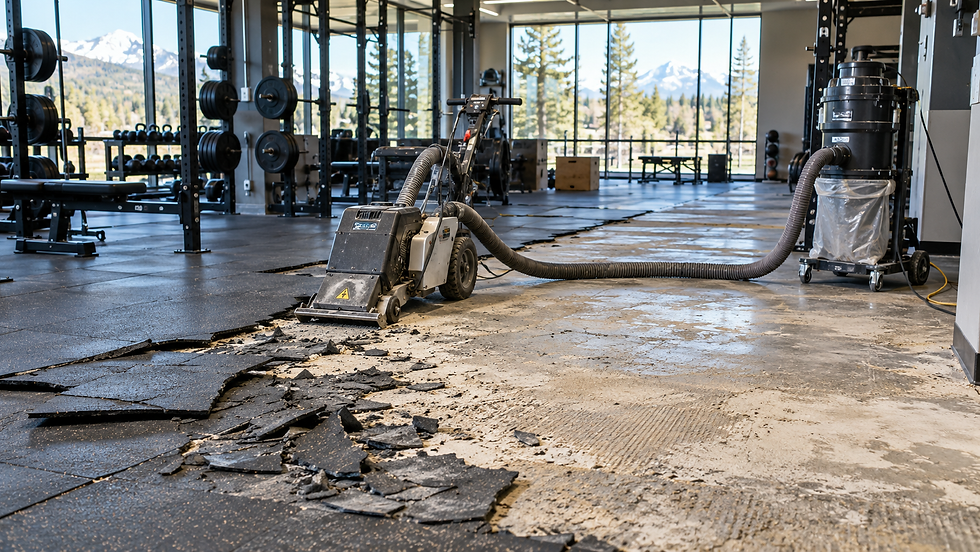
Why Removal and Prep Represents Real Project Time and Cost

Project Phase | What It Involves | Why It Adds Genuine Time |
Removal of existing flooring | Tearing out old tile, VCT, or carpet tile down to bare slab | Required before any new polished concrete or epoxy system can be applied |
Adhesive stripping | Clearing residual mastic or adhesive left behind on the slab | Old adhesive prevents proper bond for new coating systems |
Concrete condition assessment | Checking for cracks, prior coatings, or damage requiring repair | Directly affects whether standard prep is sufficient or additional repair work is needed |
Joint filling and surface prep | Filling control joints and preparing the surface for the chosen finish system | Final step before polished concrete or epoxy application can begin |
Concrete condition specifically, cracks, old adhesive residue, or a previous coating requiring grinding and repair, adds genuine prep labor beyond a straightforward removal scope, and confirming this condition during an initial walkthrough helps set realistic expectations for both timeline and cost before a dealership commits to a specific project schedule.
Why Polished Concrete and Epoxy Dominate This Specific Application
Polished concrete overlays, metallic epoxy coatings, and seamless self-leveling epoxy systems consistently top the list of preferred flooring choices for automotive showrooms, each offering the high-shine, reflective finish that showcases displayed vehicles effectively while withstanding the combined foot and vehicle traffic, oil, and fuel exposure a showroom floor genuinely experiences. The specific choice between these options typically comes down to a tradeoff between epoxy's greater design flexibility and chemical resistance versus polished concrete's lower long-term maintenance and more sustainable profile.
Why Slip Resistance Matters More in Cold-Climate Showrooms
In regions experiencing regular winter snow and ice, polished concrete alone can lack adequate slip and chemical resistance compared to epoxy systems specifically, since customers tracking in salt, snow, and moisture create genuine slip risk that a purely polished concrete surface handles less effectively than a properly formulated epoxy coating. For a Central Oregon dealership dealing with winter conditions, this slip-resistance consideration deserves genuine weight in the material selection conversation, not just the visual appeal comparison between the two systems.
Why Phased Scheduling Protects Ongoing Sales Activity
Given how few genuinely low-traffic days most dealerships have, phased scheduling, completing one showroom section while keeping the remainder open for customer traffic and vehicle display, or scheduling work after hours and over weekends, is the standard approach experienced commercial flooring contractors use for this project type. This phased or after-hours approach typically adds 15 to 35 percent to overall project cost compared to standard business-hours scheduling, a premium that reflects the genuine value of maintaining continuous sales floor access throughout the renovation.
Why Fast-Cure Products Matter for This Specific Timeline
Many showroom flooring systems are specifically formulated for fast cure times, becoming walkable within 24 to 48 hours of application, precisely because dealerships need the showroom returned to full customer traffic as quickly as possible after each work phase. Confirming a contractor's proposed materials include this fast-cure characteristic, rather than defaulting to standard-cure products that would extend downtime unnecessarily, matters directly for a dealership's realistic project timeline planning.
Why Removal Prep Quality Directly Affects Coating Longevity
Because polished concrete and epoxy systems bond directly to the prepared slab surface, inadequate removal and prep work, leftover adhesive, unaddressed cracks, or insufficient surface roughening, genuinely compromises the new coating's long-term adhesion and durability regardless of how high-quality the finish system itself might be. This is precisely why the removal and prep phase deserves the same quality standard and attention as the visible finish coating that follows it, even though prep work is considerably less visually dramatic than watching a polished or epoxy finish go down.
Why Vehicle Weight and Rolling Loads Factor Into System Selection
Beyond foot traffic, showroom flooring needs to handle the weight of displayed vehicles along with rolling loads from moving cars in and out of the space during regular showroom operations. Commercial-grade epoxy systems with a polyaspartic or urethane topcoat are specifically rated for this kind of rolling load and cart traffic, and confirming a proposed system's rated load capacity against a dealership's actual vehicle movement patterns protects against premature wear from an underspecified finish system.
Why Cost Per Square Foot Varies So Widely Between Projects
Commercial epoxy flooring costs range from roughly $3 to $14 per square foot installed, with most commercial projects landing between $5 and $9 per square foot, a range that reflects genuine differences in project scope rather than inconsistent pricing. A large showroom needing only standard prep and a solid-color finish sits at the lower end of this range, while a smaller space requiring extensive concrete repair, a decorative metallic finish, or custom logo inlay work moves considerably higher, making an accurate walkthrough assessment essential for a realistic quote rather than relying on a generic per-square-foot estimate.
Why Grout Lines in Traditional Tile Present a Genuine Drawback for Showrooms
Beyond the removal effort itself, traditional tile flooring with grout lines presents an ongoing maintenance drawback specific to showroom use, since grout joints can absorb bacteria, dirt, and spilled automotive fluids in ways a seamless epoxy or polished concrete surface simply doesn't. This is part of why seamless systems have become the dominant choice for new dealership showroom flooring, eliminating this specific maintenance vulnerability entirely rather than requiring ongoing grout sealing and cleaning to manage it.
Why a Written Phasing Plan Protects Both the Dealership and the Contractor
Given the complexity of coordinating a multi-phase showroom flooring project around continued sales activity, a detailed written schedule and phasing plan, confirmed before work begins, protects both parties from miscommunication about which sections will be inaccessible on which specific days. This documentation should specify exactly when each phase begins and ends, which areas remain open to customers throughout, and the expected timeline for each section becoming walkable and ready for vehicle display again.
What a Well-Executed Showroom Flooring Project Delivers

A properly planned dealership showroom flooring project delivers thorough removal and prep work supporting long-term coating adhesion, a finish system matched to the dealership's climate and traffic demands, and scheduling that protects as much continuous sales floor access as the project's realistic timeline allows.
DustFree PNW provides commercial floor removal for auto dealership showrooms across our Central Oregon service areas. You can review our work on our Google Business Profile or get a free quote for your dealership.
Final Thoughts
Auto dealership showroom flooring removal and prep represents genuine project time and cost that directly affects new coating longevity, and choosing between polished concrete and epoxy should account for a Central Oregon dealership's real winter slip-resistance needs alongside visual preference. Phased or after-hours scheduling, while adding cost, protects the continuous sales floor access a dealership genuinely needs throughout the project. Get a free quote from DustFree PNW.
FAQ
How long does dealership showroom flooring downtime typically take?
About one to five days is the typical target, with contractors using fast-cure products or phased scheduling specifically to accommodate how few low-traffic days dealerships have.
What flooring options are most common for auto dealership showrooms?
Polished concrete overlays, metallic epoxy coatings, and seamless self-leveling epoxy systems are the three most popular choices, each offering a durable, reflective finish suited to displaying vehicles.
Is polished concrete or epoxy better for a cold-climate dealership?
Epoxy generally offers better slip and chemical resistance for showrooms dealing with tracked-in snow, salt, and moisture, a genuine consideration for Central Oregon winters beyond visual preference alone.
Does phased or after-hours scheduling cost more?
Yes, typically 15 to 35 percent more than standard business-hours scheduling, reflecting the value of maintaining continuous sales floor access throughout the project.
Why does removal and prep quality matter for showroom coating longevity?
New coatings bond directly to the prepared slab, so leftover adhesive, unaddressed cracks, or insufficient surface prep genuinely compromises long-term adhesion regardless of finish system quality.
Do showroom flooring systems need to handle vehicle weight and rolling loads?
Yes. Commercial-grade epoxy systems with a polyaspartic or urethane topcoat are specifically rated for rolling loads and cart traffic from vehicles moving through the showroom.
Why does showroom flooring cost vary so much per square foot?
Costs range from roughly $3 to $14 per square foot depending on project scope, with concrete condition, finish system complexity, and decorative work all affecting where a specific project falls in that range.
Should a dealership get a written phasing plan before starting a showroom flooring project?
Yes. A detailed schedule confirming which sections close on which days, and when each phase becomes ready for vehicle display again, protects both the dealership and contractor from scheduling miscommunication.
Does DustFree PNW provide flooring removal for auto dealership showrooms in Central Oregon?
Yes. DustFree PNW provides commercial floor removal for auto dealership showrooms across Central Oregon. Contact us for a free quote.


Comments