
Basement Floor Removal and Moisture Considerations
TL;DR: Basement concrete slabs are in constant contact with the surrounding soil, which makes moisture vapor transmission a persistent consideration that most above-grade rooms never have to address. Removing old basement flooring is the point at which this moisture condition becomes fully visible for the first time, and testing the exposed slab before installing anything new is the step that prevents flooring failure, mold growth, and musty odors down the line.

Key Takeaways
Basement concrete slabs sit in direct contact with surrounding soil, and water vapor can migrate upward through the porous concrete regardless of whether the surface appears dry.
Moisture testing after old flooring is removed, before new flooring goes down, is the standard practice for protecting a flooring investment in any basement application.
Most flooring manufacturers specify a maximum acceptable moisture vapor emission rate, commonly around three to five pounds per 1,000 square feet over 24 hours, that the slab must meet before installation.
If moisture levels exceed acceptable thresholds, options include running dehumidification equipment to dry the slab or applying a moisture barrier or vapor-blocking primer before new flooring is installed.
Musty odors that develop after a basement flooring installation often indicate mold or mildew growth beneath the floor, frequently tracing back to inadequate moisture testing or barrier installation before the project.
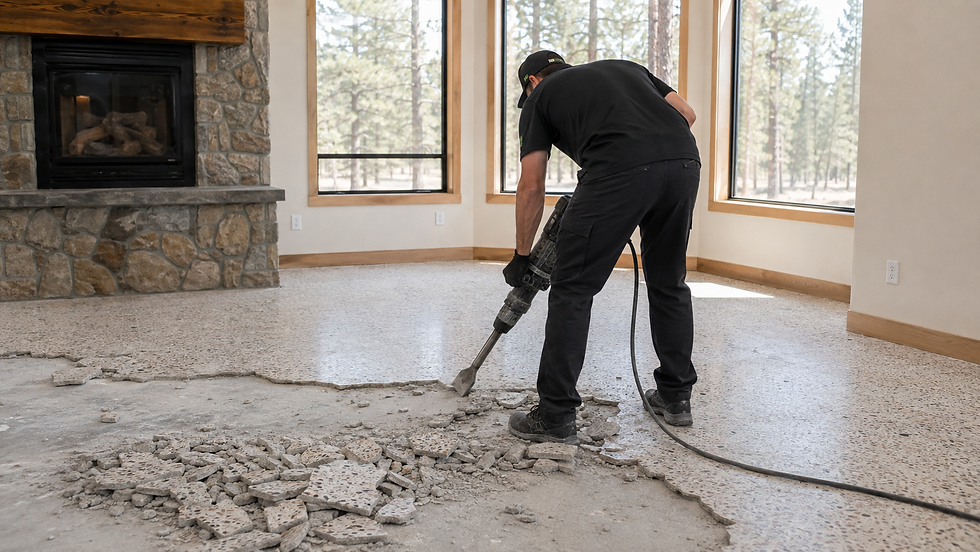
Basement flooring removal projects in Central Oregon homes reveal a condition that most other rooms in the house never have to contend with directly: a concrete slab in constant contact with the soil beneath and around it. This proximity to the ground means water vapor can migrate upward through the concrete over time, even in a basement that looks and feels completely dry on the surface, and this moisture condition becomes fully visible and testable only once the old flooring comes off the slab.
DustFree PNW's flooring removal service covers basement projects across Central Oregon, and we recommend moisture testing as a standard step before any new flooring goes down. Here is why basement moisture matters and what to do about it.
Why Basement Floor Removal Moisture Issues Are So Common

Concrete is a naturally porous material, and even a slab that has been in place for decades and appears visually dry can still allow water vapor to travel upward from the soil beneath the home, particularly where the local water table sits close to the surface or drainage around the foundation is inadequate. This upward vapor movement, sometimes called hydrostatic pressure, is invisible without testing and unrelated to whether the basement has ever experienced standing water or a flooding event.
Testing Method | What It Measures | Typical Duration |
Plastic sheet test | Visual indicator of condensation or darkening beneath a sealed plastic sheet | 24 to 48 hours |
Calcium chloride test | Moisture vapor emission rate (MVER) in pounds per 1,000 sq ft per 24 hours | 60 to 72 hours |
Relative humidity (RH) probe test | In-situ relative humidity within the concrete slab | Varies; often faster than calcium chloride method |
Handheld moisture meter | Surface-level moisture reading, useful for a quick initial check | Immediate, less precise than lab-style testing |
The plastic sheet test is a simple, low-cost first check: a section of clear plastic is taped down over the concrete for one to two days, and condensation or visible darkening underneath signals that moisture is present and further, more precise testing is warranted. The calcium chloride test and relative humidity probe methods provide the quantified data that flooring manufacturers actually reference in their installation specifications.
What Happens If Moisture Levels Are Too High
Most flooring manufacturers specify a maximum acceptable moisture vapor emission rate, commonly in the range of three to five pounds per 1,000 square feet over a 24-hour period, or a maximum in-situ relative humidity threshold, before their product can be installed. Exceeding these limits creates a real risk of tile tenting and cracking, adhesive failure, wood floor cupping or buckling, and mold or mildew growth beneath the new flooring, none of which are easily corrected once the new floor is in place.
If testing reveals moisture levels above the acceptable threshold, industrial dehumidification equipment can often dry the slab down to an acceptable level over a period of days. Alternatively, or in addition, a moisture barrier or vapor-blocking primer coating applied directly to the concrete surface can prevent excess moisture from reaching the new flooring, even if the underlying slab moisture level cannot be fully resolved through drying alone.
Why This Matters More After Removal Than Before
Moisture testing is most meaningful once old flooring has been removed and the bare slab is exposed, since the existing flooring and any adhesive residue can mask or distort surface-level readings. This is part of why basement flooring projects benefit from treating removal and moisture testing as sequential, connected steps rather than separate concerns: the removal crew clears the old material and any residual adhesive down to bare concrete, and moisture testing follows on that clean, exposed surface before any new material selection or installation timeline is finalized.
Musty Odors: A Sign of a Moisture Problem Missed Earlier
A musty smell developing in a basement after a flooring installation is a common and telling sign that moisture was not adequately addressed before the new floor went down. This odor typically indicates mold or mildew growth occurring beneath the flooring, in conditions the new material has trapped rather than caused. When this happens, the affected flooring generally needs to be removed again to access, treat, and properly address the underlying moisture source, which is a far more disruptive and costly outcome than testing correctly the first time around.
What a Properly Prepared Basement Subfloor Looks Like

A properly prepared basement subfloor is clean, flat, and confirmed dry through appropriate moisture testing before any new flooring installation begins. If testing indicates elevated moisture, the appropriate remediation, whether dehumidification, a vapor barrier, or both, should be completed and verified before proceeding, rather than assumed adequate based on how the space feels or looks.
DustFree PNW handles basement flooring removal across our Central Oregon service areas, delivering a clean slab ready for moisture testing and the next installation phase. You can review our work on our Google Business Profile or get a free quote for your basement project.
Final Thoughts
Basement flooring removal is the point where a slab's moisture condition finally becomes visible and testable. Treating moisture testing as a required step after removal and before new flooring installation, rather than an optional precaution, is what protects the flooring investment and avoids the far more disruptive scenario of tearing out a new floor to address a problem that should have been caught earlier. Get a free quote from DustFree PNW.
FAQ
Why do basements have more moisture issues than other rooms?
Basement concrete slabs sit in direct contact with the surrounding soil, allowing water vapor to migrate upward through the porous concrete, a condition that above-grade rooms typically do not experience to the same degree.
When should a basement slab be tested for moisture?
After old flooring is fully removed and the bare concrete is exposed, and before any new flooring material or installation timeline is finalized.
What moisture level is acceptable for new basement flooring?
Most manufacturers specify a maximum moisture vapor emission rate around three to five pounds per 1,000 square feet over 24 hours, though the exact threshold varies by flooring type and manufacturer.
What can be done if a basement slab tests too wet?
Industrial dehumidification equipment can dry the slab over several days, and a moisture barrier or vapor-blocking primer can be applied to protect new flooring even where the underlying moisture level cannot be fully resolved.
What does a musty smell after basement flooring installation usually mean?
It typically indicates mold or mildew growth beneath the new flooring, usually because moisture was not adequately tested or addressed before installation, often requiring the flooring to be removed again to treat the source.
Does DustFree PNW handle basement flooring removal in Central Oregon?
Yes. DustFree PNW removes basement flooring and delivers a clean, tested-ready slab across Central Oregon. Contact us for a free quote.


Comments