
What to Expect on Flooring Demo Day
TL;DR: A typical flooring demo day begins with a brief walkthrough where the crew lead confirms scope and any specific concerns, followed by containment setup, the actual removal and thinset grinding, subfloor inspection, and debris haul-away. Most residential flooring projects complete this entire sequence within a single day, ending with a final walkthrough where the crew reviews the completed work and any subfloor conditions before leaving.

Key Takeaways
Demo day starts with a walkthrough where the crew lead confirms which rooms are included, points out utility shutoff locations, and discusses any specific concerns the homeowner has already noticed.
Containment setup, sealing off the work zone from the rest of the home, happens before any demolition tool touches the floor.
The removal and thinset grinding phase is the loudest and most active part of the day, generating the noise and dust that dust-free equipment is specifically designed to manage.
Subfloor inspection follows removal, checking for uneven spots, moisture damage, or structural issues that need to be documented before the project can be considered complete.
The day typically ends with debris haul-away and a final walkthrough, where the crew reviews the completed subfloor condition with the homeowner before leaving.
Understanding the real sequence of a flooring demo day helps homeowners know what to expect at each stage, rather than treating the entire appointment as an unpredictable block of noise and activity. Most residential flooring demo projects follow a consistent pattern from arrival to completion, and knowing this sequence in advance makes the day considerably less stressful.
DustFree PNW's flooring removal service follows this same structured sequence across every project in Central Oregon. Here is what actually happens, phase by phase, on a typical demo day.
The Demo Day Sequence Step by Step

Phase | What Happens |
1. Arrival walkthrough | Crew lead confirms scope, points out utility shutoffs, and discusses any specific concerns the homeowner has noted |
2. Containment setup | Work zone sealed off from the rest of the home before any demolition begins |
3. Surface removal and thinset grinding | Tile, flooring, and mortar removed using dust-free, source-capture equipment; the loudest and most active phase of the day |
4. Subfloor inspection | Crew checks for uneven spots, moisture damage, or structural issues once the surface is fully cleared |
5. Debris haul-away | All removed material cleared from the property as part of the same visit |
6. Final walkthrough | Crew reviews the completed subfloor condition and any findings with the homeowner before leaving |
The initial walkthrough is a genuinely useful step that homeowners should not rush through. This is the moment to mention anything specific noticed beforehand, such as a crack in the slab, a suspected water damage spot, or a section of tile that sounds hollow underfoot. The more information the crew has upfront, the better they can plan the day's work and flag any conditions that might affect the project scope.
Why Containment Happens Before Any Tool Touches the Floor
Setting up containment, whether through panel systems, plastic sheeting, or sealed barriers depending on the project scope, is a deliberate first step rather than something addressed as an afterthought once demolition is already underway. This sequencing ensures the work zone is properly isolated from the rest of the home before any dust or debris has the opportunity to spread, rather than trying to contain a mess that has already begun.
The Removal Phase: What to Expect on Flooring Demo Day
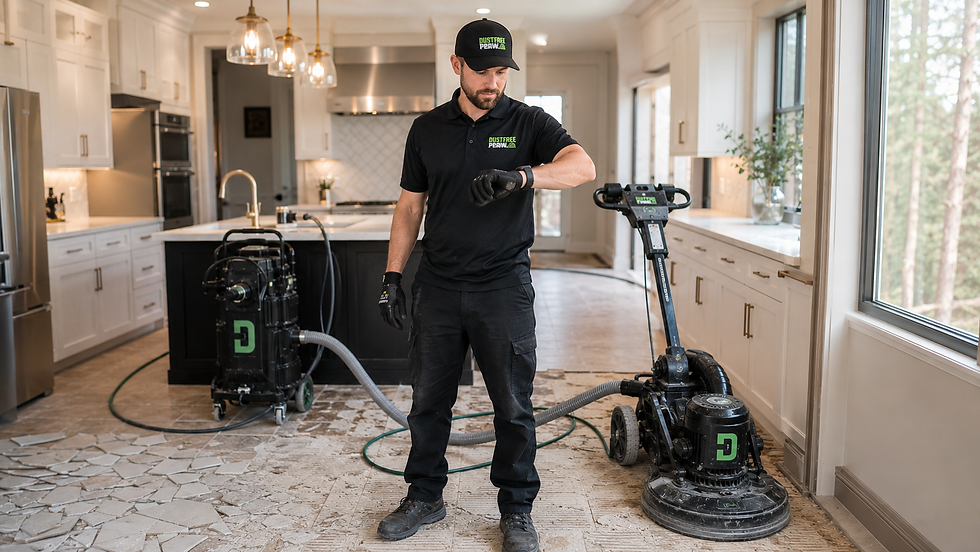
The removal and grinding phase is the most active and noisiest part of the day, and it is also where dust-free equipment does its most important work. Source-capture tools integrated with vacuum systems capture dust at the point of creation throughout this phase, whether the crew is chipping tile, grinding thinset, or removing adhesive residue. For most residential rooms, this phase, combined with the walkthrough and containment setup that precede it, fits comfortably within a single working day.
Why Subfloor Inspection Matters as Much as the Removal Itself
Once the old flooring and any adhesive residue are cleared, the subfloor becomes fully visible for the first time, often revealing conditions that were not apparent before the project began. This is when the crew checks for uneven spots, loose or squeaking sections, and any signs of moisture damage. A professional crew will not consider a job complete until this inspection has happened, since installing new flooring over an unaddressed subfloor issue simply defers a bigger problem to a later date.
What the Final Handoff Looks Like

The day typically closes with debris haul-away, clearing all removed material from the property as part of the same visit, followed by a final walkthrough where the crew reviews the completed subfloor condition with the homeowner. This is the appropriate time to discuss any findings from the subfloor inspection, confirm the space is ready for the next phase of the project, and address any remaining questions before the crew departs.
DustFree PNW follows this structured demo day sequence across every project in our Central Oregon service areas. You can review our work on our Google Business Profile or get a free quote for your project.
Final Thoughts
A flooring demo day follows a consistent, predictable sequence: walkthrough, containment, removal, subfloor inspection, debris haul-away, and final review. Knowing this pattern in advance helps homeowners understand what is happening at each stage of the appointment, rather than experiencing the entire day as an unpredictable block of noise and activity. Get a free quote from DustFree PNW.
FAQ
What happens first on a flooring demo day?
A brief walkthrough where the crew lead confirms which rooms are included, points out utility shutoff locations, and discusses any specific concerns the homeowner has already noticed.
Why does containment happen before demolition begins?
Sealing off the work zone before any tool touches the floor ensures dust and debris are properly isolated from the start, rather than trying to contain a mess after demolition is already underway.
What is the loudest part of a flooring demo day?
The surface removal and thinset grinding phase, when tile, flooring, and mortar are actively being demolished using source-capture equipment.
Why is subfloor inspection part of demo day?
Once old flooring is cleared, the subfloor becomes visible for the first time, revealing conditions like moisture damage or uneven spots that need to be documented before the project is considered complete.
Does debris haul-away happen the same day as removal?
Yes, for most residential projects. Debris is typically cleared from the property as part of the same visit, followed by a final walkthrough before the crew leaves.
Does DustFree PNW follow a consistent demo day sequence in Central Oregon?
Yes. DustFree PNW follows this structured walkthrough-to-handoff sequence for every flooring demo project across Central Oregon. Contact us for a free quote.


Comments