
What to Ask a Tile Removal Contractor Before You Hire
TL;DR: The most important questions to ask a tile removal contractor aren't about price — they're about dust control method, thinset removal scope, licensing and insurance, and how they handle mid-job surprises. These questions determine whether you get a clean, ready-to-install subfloor or a mess that delays your whole project.

Key Takeaways
Dust control method is the most consequential question to ask a tile removal contractor, since tile demo creates silica dust that spreads through HVAC systems and surfaces throughout the home.
Thinset removal is a separate step from tile removal and is frequently excluded from base quotes — confirm it's included before signing anything.
License verification in Oregon takes less than two minutes and is publicly available through the Oregon CCB database — there's no reason to skip this step.
A contractor who can't explain their dust control system in specific terms is likely using a shop vac nearby rather than source-capture equipment at the tool.
How a contractor handles unexpected subfloor conditions mid-job tells you more about their professionalism than their initial pitch does.
Finding a tile removal contractor is easy. Finding one who handles the full scope correctly — dust control, thinset removal, debris haul-away, and proper subfloor prep — takes a little more screening. Most homeowners don't ask the right questions before booking, and then discover mid-job (or after it) that the contractor's idea of "tile removal" was narrower than theirs.
This guide is specifically about tile removal, not general tile installation. Tile removal contractors and tile installers are different specialists with different equipment, and the questions that matter for hiring one don't always apply to the other. DustFree PNW's dust-free tile removal service covers the full scope described here across Central Oregon.
Start With License and Insurance — Before Anything Else
In Oregon, contractors performing construction work are required to hold a valid CCB (Construction Contractors Board) license. This is verifiable online in seconds, and any tile removal contractor should provide their CCB number without hesitation. If they resist or hedge on this question, that's a significant red flag before any other discussion happens.
Insurance is the second half of the same check. General liability insurance covers property damage if the crew damages something during the job. Workers' compensation covers you from liability if a crew member is injured on your property. Both should be current, and documentation should be provided before the job starts. DustFree PNW holds CCB license #150612 and carries full insurance documentation available on request.
Ask About Their Dust Control System Specifically
This is the most important question you can ask a tile removal contractor, and most homeowners don't ask it at all. Tile removal generates crystalline silica dust — OSHA classifies this as a serious respiratory hazard with prolonged exposure. Traditional tile demo can release up to one pound of this dust per square foot of flooring removed. Where that dust goes determines whether your HVAC system, cabinetry, and home air stay clean through the project.
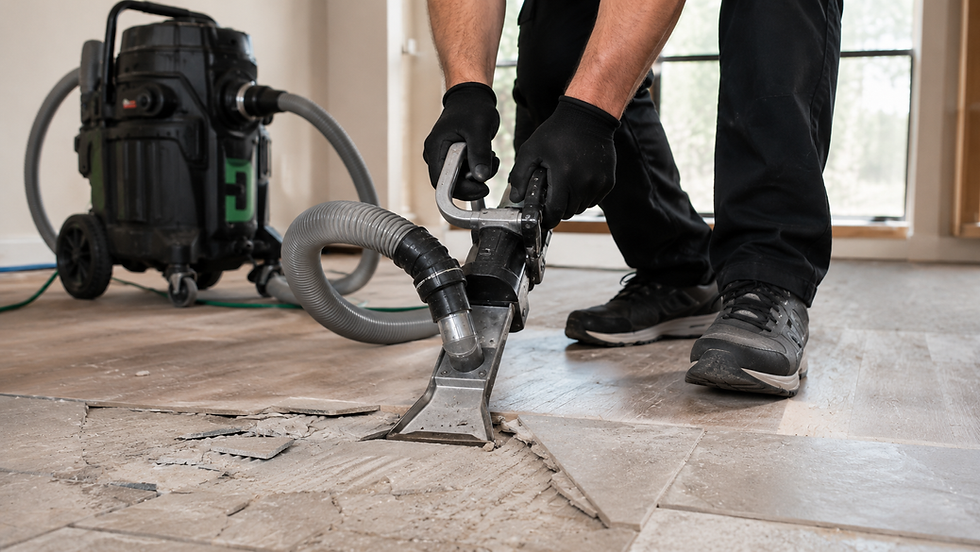
The specific question to ask: is the dust capture system integrated into the removal tool, or is it a separate vacuum running nearby? These are not equivalent systems:
Dust Control Method | How It Works | What's Still Released | Best For |
No dust control | Open demo, nothing captured | All silica dust, freely airborne | Nothing — avoid this |
Plastic sheeting + negative air | Contains dust within zone, filters some | High within containment zone | Unoccupied spaces only |
Shop vac nearby | Catches some dust after airborne | Significant amount escapes into room | Minimal, not occupied homes |
Source-capture equipment | Integrated at tool, captured before airborne | Minimal — captured at point of removal | Occupied homes, any space |
A contractor who answers this question vaguely, or who uses terms like “dustless” without explaining what that means in equipment terms, is worth following up with before you book. “Dustless” is not a regulated standard, so it is important to ask how the dust-control system works, whether capture happens at the removal point, and what documentation is available to support the contractor’s claims.
Confirm Whether Thinset Removal Is in Scope
Once the tile surface is up, there's almost always a layer of thinset mortar bonded to the subfloor underneath. This layer has to come off before new flooring can be installed correctly — new flooring laid over uneven thinset will show high spots, sound hollow in places, and may fail to bond properly over time.

Thinset removal is one of the most commonly excluded items in base tile removal quotes. Ask specifically: is mortar or thinset removal included in the quote, or billed separately? DustFree PNW's dedicated thinset removal service covers this step on jobs where mortar cleanup is the primary challenge remaining after tile is gone.
Ask What Happens to the Debris
Floor tile is heavy — a single room can generate hundreds of pounds of broken tile, mortar fragments, and underlayment scraps. Confirm before signing any quote whether debris collection and haul-away are included or charged separately. Some contractors remove tile but leave the debris staged for the homeowner to arrange disposal. That's a meaningful distinction when you're comparing quotes that look similar in price.
Ask How They Handle Mid-Job Surprises
Tile removal sometimes reveals subfloor conditions that weren't visible before — moisture damage, uneven concrete, unexpected material layers, or signs of mold. A qualified tile removal contractor should stop immediately when these are discovered, notify the homeowner or project manager, explain the options and cost implications, and get written approval before proceeding.
Contractors who handle these discoveries quietly and present them on the final invoice, or who push through without notifying anyone, are a liability on any project. Asking upfront how they handle scope changes is one of the clearest signals of a contractor's professionalism before any work starts.
Ask for References From Similar Jobs
General contractor references don't tell you much about tile removal specifically. Ask for references from tile or flooring demo projects with similar material types and square footage to yours. Specific questions for references: did the crew communicate clearly when anything changed, was the subfloor clean and ready for installation when they finished, and was the dust control method as described before the job?
You can review DustFree PNW's verified reviews across our Central Oregon service areas on our Google Business Profile.
Final Thoughts
The right tile removal contractor answers every question on this list without hesitation and with specific details, not just reassurances. The six questions above — license, insurance, dust control method, thinset scope, debris handling, and mid-job communication — cover the ground that separates a professional tile removal service from one that leaves you with a bigger problem than you started with. Ready to ask them to a crew you can trust? Get a free quote from DustFree PNW.
FAQ
What license should a tile removal contractor have in Oregon?
Oregon tile removal contractors should hold a valid CCB (Construction Contractors Board) license, which is verifiable online through the Oregon CCB database. Always confirm the license is active before booking.
What's the most important question to ask a tile removal contractor?
Ask whether their dust capture system is integrated into the removal tool or a separate vacuum running nearby. This determines how much silica dust actually spreads through your home during the job.
Is thinset removal included in a standard tile removal quote?
Not usually. Thinset removal is frequently excluded from base tile removal pricing and billed separately. Always confirm in writing whether it's included before booking.
What should happen if a tile removal crew discovers subfloor damage?
They should stop, notify you immediately, explain the options and cost impact, and get written approval before continuing. Proceeding without notifying you is a professional red flag.
How do I verify that a tile removal contractor is actually dust-free?
Ask for documentation of independently tested dust-capture performance results. “Dustless” is not a certified standard, so ask specifically whether the vacuum system is integrated into the removal tool itself.
Does DustFree PNW provide tile removal services in Central Oregon?
Yes. DustFree PNW provides professional source-capture tile removal for homeowners and flooring companies throughout Central Oregon. Contact us to get a free quote and documentation of our dust-control process.

Comments