
What's Included in Professional Floor Removal Services
TL;DR: A complete professional floor removal service includes the surface material, adhesive or thinset underneath, debris removal, and a subfloor that's clean and ready for installation. Many quotes only include the first step — understanding the full scope before booking prevents costly surprises mid-project.

Key Takeaways
Floor removal services vary widely in scope — some quotes cover only the visible surface layer, while a complete service covers adhesive, thinset, debris, and subfloor inspection.
Thinset and adhesive removal are separate steps from surface material removal, and they're often quoted or billed separately by contractors who don't include them in the base scope.
Dust control method during removal directly affects how clean the surrounding space stays and how quickly the next phase of a project can start.
A completed floor removal job should leave the subfloor ready for installation with no additional cleanup required before the flooring crew arrives.
Asking specific scope questions before booking is the most reliable way to compare quotes accurately across different contractors.
When a homeowner or contractor calls to book floor removal services, "floor removal" doesn't mean the same thing to every contractor quoting the job. Some companies price only the surface material removal. Others include adhesive or thinset cleanup as part of the base scope. Some handle debris haul-away; others leave the pile for the property owner to deal with. And very few discuss dust control method upfront, even though it affects everything from air quality during the job to how clean the space is when the installation crew arrives.
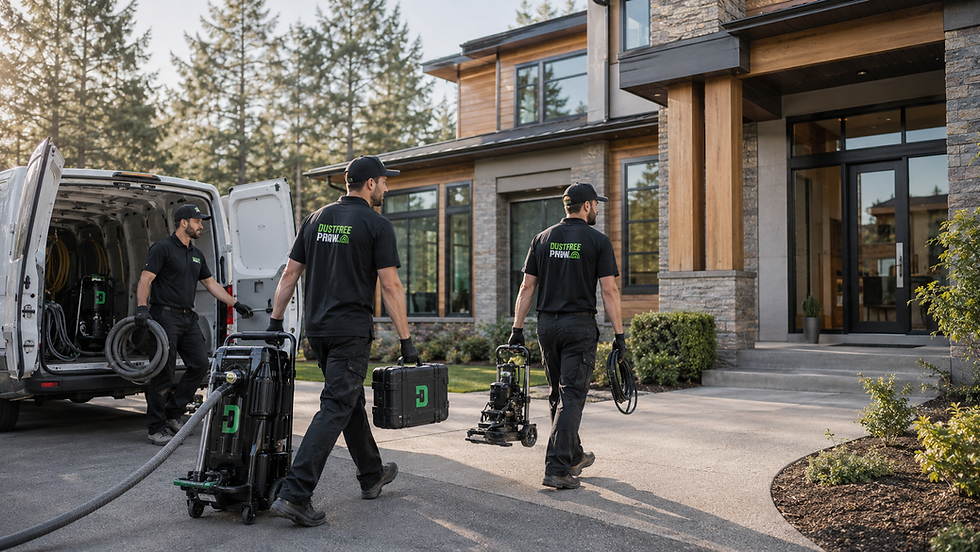
DustFree PNW's flooring removal service covers the full scope outlined in this article. Here's what a complete professional floor removal service should actually include, and what to ask before signing any quote.
The Surface Layer: What Most Services Cover
The most straightforward part of floor removal is lifting the existing surface material. What this looks like depends entirely on the material type:
Tile and stone: chipped and pried up section by section, most dust-intensive material type
Carpet: cut into sections, rolled, pulled up along with tack strips and pad
Vinyl or sheet vinyl: scored and peeled in strips, adhesive often remains
Hardwood or laminate: pried or unlocked depending on installation method
Most contractors include this step in any floor removal quote. The variations in scope start with what comes after it.
What's Often Missing From Basic Floor Removal Quotes
Once the surface material is up, there are typically one or two additional layers that have to come off before a subfloor is ready for new installation. These are the steps most commonly excluded from base-price quotes — and the ones that cause the most friction between homeowners and contractors when they show up on the final invoice.

Material Removed | What's Usually Left Behind | Often Included in Base Quote? |
Ceramic / Porcelain Tile | Thinset mortar bonded to subfloor | Frequently excluded — check explicitly |
Natural Stone | Thick mortar bed, sometimes wire mesh | Frequently excluded |
Sheet Vinyl / VCT | Adhesive residue on concrete | Sometimes included, often not |
Carpet | Tack strips along perimeter, staples | Usually included |
Hardwood (glue-down) | Adhesive on slab | Frequently excluded |
DustFree PNW's dedicated thinset removal service covers the mortar layer specifically for tile and stone jobs where thinset cleanup is the primary challenge after the surface material is gone.
Debris Removal and Haul-Away
Removed flooring generates significant debris that has to leave the property before the space can be used again. Floor tile alone can weigh several pounds per square foot, meaning a single room generates hundreds of pounds of material to dispose of.
Debris haul-away is one of the most common scope variables across floor removal quotes. Some contractors include it in the base price; others charge it as a separate line item; others simply leave the debris staged in the garage or driveway and let the property owner arrange disposal. Always confirm in writing whether haul-away is included before booking.
Dust Control During the Job
Dust control during floor removal is rarely the first question homeowners think to ask, and it's one of the most consequential things to get right. Traditional tile and stone removal can release up to one pound of silica dust per square foot of flooring removed, which is enough to contaminate HVAC systems, coat furniture and cabinetry, and require its own cleanup phase before installation can start.
There are meaningfully different levels of dust control available, and they're not equivalent:
Plastic sheeting and negative air machines reduce spread but don't eliminate dust at the source
Shop-vac setups nearby partially capture dust after it's already airborne
Source-capture equipment captures dust at the point of removal before it becomes airborne.
For occupied homes, short-term rentals, or any space that needs to be usable again quickly, the difference in dust control method directly affects how fast the project can move forward after demo finishes.
Subfloor Inspection at Job Completion
A complete floor removal service includes a subfloor inspection once the surface material and adhesive are fully removed. This is the only point at which hidden conditions — moisture damage, uneven concrete, cracks, or areas that need repair — become visible. A professional crew should flag anything that affects the next installation phase before leaving the site.
What a Complete Floor Removal Service Looks Like at the End
A finished professional floor removal job should leave the subfloor clean, flat, and free of adhesive residue or debris, with no dust on surrounding surfaces, fixtures, or trim. The space should be ready for the installation crew to start without an additional cleanup step in between.

If any of these elements are missing at the end of a job, the service wasn't complete — it was a partial scope delivered as a finished one. That's worth clarifying in the quote phase rather than discovering after the crew has left.
What to Ask Before Booking Floor Removal Services
Before committing to any floor removal quote, confirm these four things in writing: whether thinset or adhesive removal is included, whether debris haul-away is included, what dust control method is used, and whether the quote includes a subfloor inspection at job completion. These four points account for the vast majority of scope disagreements that come up after floor removal jobs, and all of them can be resolved with one clear conversation before the job starts.
DustFree PNW covers all four across our Central Oregon service areas. You can review our work on our Google Business Profile or get a free quote to confirm what's in scope for your project.
Final Thoughts
Professional floor removal services vary more in scope than most homeowners expect when they start getting quotes. Knowing what a complete job should include makes it much easier to compare contractors accurately and avoid the frustration of a partial job delivered at full price. Ready to confirm scope before you book? Get a free quote from DustFree PNW.
FAQ
What does a professional floor removal service typically include?
A complete service covers surface material removal, thinset or adhesive cleanup, debris haul-away, dust control during the job, and a subfloor inspection at completion. Many quotes only include the first step.
Is thinset removal included in a standard floor removal quote?
Not always. Thinset removal is frequently quoted separately or excluded from base floor removal pricing. Always confirm whether it's included before booking.
Does floor removal include cleaning up debris?
It depends on the contractor. Debris haul-away is sometimes included in the base price and sometimes charged separately. Confirming this upfront avoids surprises at invoicing.
Why does dust control matter during floor removal?
Tile and stone removal can release up to one pound of silica dust per square foot, which can spread through HVAC systems and delay the installation phase if it has to be cleaned before the next crew arrives.
How do I know if a floor removal quote is complete?
Ask specifically whether thinset or adhesive removal, debris haul-away, and subfloor inspection are included. A contractor who answers all three clearly is offering a more complete scope than one who gives a single per-square-foot number without detail.
Does DustFree PNW provide complete floor removal services in Central Oregon?
Yes, DustFree PNW covers the full scope including thinset removal, dust-free equipment, debris haul-away, and a clean subfloor ready for installation, serving homeowners and contractors throughout Central Oregon.

Comments