
VCT Tile Removal: What Makes It Different From Ceramic Tile Demo
TL;DR: VCT (Vinyl Composition Tile) removal is a two-stage process involving the vinyl tile layer and the mastic adhesive that remains bonded to the concrete slab underneath. The mastic is almost always the more time-consuming stage, and in older installations it frequently contains asbestos, which changes who can legally perform the removal and in what sequence.

Key Takeaways
VCT removal involves two distinct stages: the vinyl tile layer on top, and the mastic or cut-back adhesive beneath it, which is typically the harder part of the job.
The black cut-back adhesive commonly used in older VCT installations from the 1960s through the early 1980s frequently contains asbestos, and testing before removal is required in Oregon for buildings constructed before 2004.
VCT is most commonly found in commercial spaces including schools, offices, retail stores, medical facilities, and multi-unit residential buildings, though it also appears in older residential basements and utility rooms.
Cut-back mastic is not compatible with most modern flooring adhesives, which means it has to come completely off the concrete slab before new flooring can be installed, not just partially ground down.
A ride-on floor scraper handles large-area VCT removal more efficiently than hand tools and removes a significant portion of the mastic layer with the tile during the pass.
VCT is one of the most common commercial flooring materials in buildings constructed between the 1950s and the 1990s. It shows up in the hallways of older office buildings, schools, medical facilities, and retail spaces throughout Central Oregon. When it is time to replace it, the removal process looks simple from the outside and gets more complicated once the tile comes up and the adhesive layer underneath becomes the main challenge.
DustFree PNW's commercial floor removal service covers VCT tile removal across Central Oregon with proper dust control and full adhesive cleanup. Here is what the process involves and what to verify before any VCT removal job begins.
What VCT Is and Where It Is Found
Vinyl Composition Tile is a rigid, inexpensive floor tile made from limestone aggregate, polyvinyl chloride, and various fillers. It was the dominant commercial flooring material throughout the mid-twentieth century due to its low cost and durability. Unlike ceramic tile, VCT is relatively thin, typically around an eighth of an inch, and comes in 12x12 inch squares. It does not have the same thinset mortar system as ceramic tile. Instead, it is bonded to concrete with pressure-sensitive or contact adhesive applied directly to the slab.
Older VCT, particularly 9x9 inch tiles installed before the mid-1970s, may also contain asbestos fibers in the tile material itself. The 12x12 inch VCT tiles that followed are more commonly asbestos-free in the tile, but the adhesive beneath them is a separate question that often produces a different answer.
The Mastic Layer: Why It Is the Harder Part of the Job
Once VCT tiles are lifted, a layer of adhesive remains bonded to the concrete slab. In older installations, this is typically cut-back adhesive, a dark, asphaltic mastic that was widely used from the 1950s through the early 1980s. Cut-back adhesive bonds chemically with concrete over time, and in older installations it has cured to a near-permanent hardness that resists scraping, chemical solvents, and heat treatment.

Adhesive Type | Era | Color | Asbestos Risk | Removal Method |
Cut-back (asphaltic) mastic | Pre-1984 | Black or dark brown | High — test before removal | Diamond grinding, mechanical scraping |
Tan latex mastic | 1980s to present | Tan or beige | Low to none | Walk-behind scraper, grinding |
Pressure-sensitive adhesive | Post-1990 | Light tan or clear | None | Scraping, may not require grinding |
Cut-back adhesive is not compatible with most modern flooring adhesives. New flooring installed over cut-back mastic will fail to bond correctly and typically delaminates within months. This means the adhesive must come completely off the concrete slab before any new floor covering goes down, not just partially removed or encapsulated. Diamond grinding is the professional standard for cut-back removal and produces a clean, bondable concrete surface without introducing harsh chemical solvents into the concrete pores.
The Asbestos Question in VCT Adhesive
Cut-back mastic from older VCT installations is one of the most commonly found asbestos-containing materials in commercial flooring removal. Oregon DEQ requires an asbestos survey before demolition or renovation activities in any building where asbestos-containing materials may be present. For commercial buildings, this requirement is broader than the residential exception and applies to all pre-renovation work in buildings of a certain age.
If asbestos is confirmed in the cut-back adhesive, a licensed abatement contractor must address that material before standard VCT and mastic removal proceeds. In some cases, encapsulation of the mastic with a cementitious overlay is a permitted alternative to abatement, depending on the project scope and the condition of the adhesive. Confirm the regulatory requirements with Oregon DEQ or a licensed abatement professional before any work begins on suspect material. More information is available on the Oregon DEQ Asbestos Information page.
Equipment for Large-Area VCT Removal
For commercial spaces with large open floor areas, ride-on floor scrapers are the most efficient tool for VCT removal. These machines scrape under the tile at blade level and remove a significant portion of the mastic layer with the tile during the same pass, reducing the grinding time required after the tile is up. Ride-on scrapers are best suited to large open areas without fixtures or tight corners. Perimeter areas, closets, and areas around columns or fixed equipment require hand tools or walk-behind equipment to complete.
For residential VCT applications or smaller commercial spaces, walk-behind and hand scraping equipment with diamond grinders for the mastic layer is the standard approach. DustFree PNW's flooring removal service applies this scope across Central Oregon commercial and residential projects.
What a Complete VCT Removal Looks Like
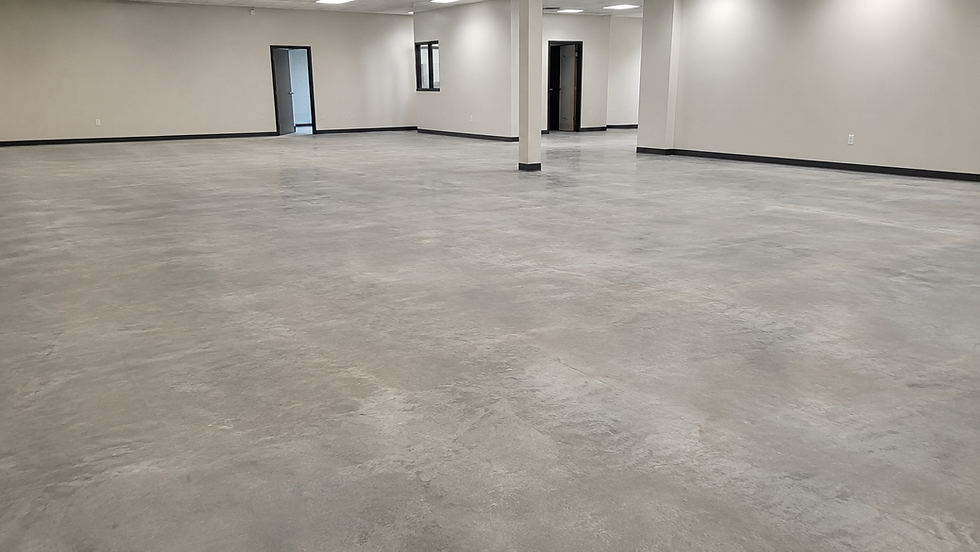
A finished VCT removal leaves the concrete slab clean and free of tile, adhesive residue, and leveling compound, with the surface ready for the flooring installer's adhesive to bond correctly. Any ghosting, the grid pattern left in the concrete from decades of tile installation, is a cosmetic characteristic of the concrete surface itself and cannot be ground away without removing more concrete. It does not affect the adhesive bond for new flooring.
DustFree PNW covers VCT and adhesive removal across our Central Oregon service areas. You can review our commercial work on our Google Business Profile or get a free quote for your project.
Final Thoughts
VCT removal is not just tile removal. The adhesive underneath is where the project's real complexity lives, and in older installations that adhesive changes the regulatory and scope requirements of the entire job. Confirming the adhesive type and testing for asbestos before any demo begins keeps the project on schedule and avoids the far more costly scenario of discovering a regulated material mid-job. Get a free quote from DustFree PNW.
FAQ
What is VCT tile and where is it commonly found?
Vinyl Composition Tile is a thin rigid floor tile made from limestone and PVC that was widely used in commercial spaces from the 1950s through the 1990s. It is common in schools, offices, medical facilities, and older retail buildings.
Is VCT tile removal the same as ceramic tile removal?
No. VCT is thinner and uses mastic adhesive rather than thinset mortar. The mastic layer, particularly older cut-back adhesive, is the primary challenge in VCT removal rather than the tile itself.
Does old VCT adhesive contain asbestos?
Frequently, yes. Black cut-back adhesive used under VCT installed before approximately 1984 is one of the most common sources of asbestos-containing material in commercial flooring removal. Testing before removal is required in Oregon for buildings where this material may be present.
Does cut-back mastic have to be fully removed before new flooring is installed?
Yes. Cut-back adhesive is not compatible with modern flooring adhesives. New flooring installed over cut-back mastic will fail to bond and delaminate. The mastic must come completely off the slab before new installation proceeds.
How is cut-back mastic removed from concrete?
Diamond grinding is the professional standard. It removes the adhesive without introducing chemical solvents into the concrete pores, which would compromise the bond of the new flooring adhesive.
Does DustFree PNW remove VCT tile in Central Oregon?
Yes. DustFree PNW handles VCT tile and mastic removal for commercial and residential projects across Central Oregon. Contact us for a free quote.


Comments