
Saltillo Tile Removal: Why It Is One of the Hardest Tiles to Remove
TL;DR: Saltillo tile, also called Mexican tile or terracotta, is widely considered one of the most challenging tiles to remove. Its handmade clay body shatters into countless small fragments during removal, its porous nature absorbs sealer and mortar deeply, and it is typically installed over a thicker mortar bed than ceramic or porcelain tile. All three factors increase the time, debris volume, and cleanup required compared to a standard tile removal job.
Key Takeaways
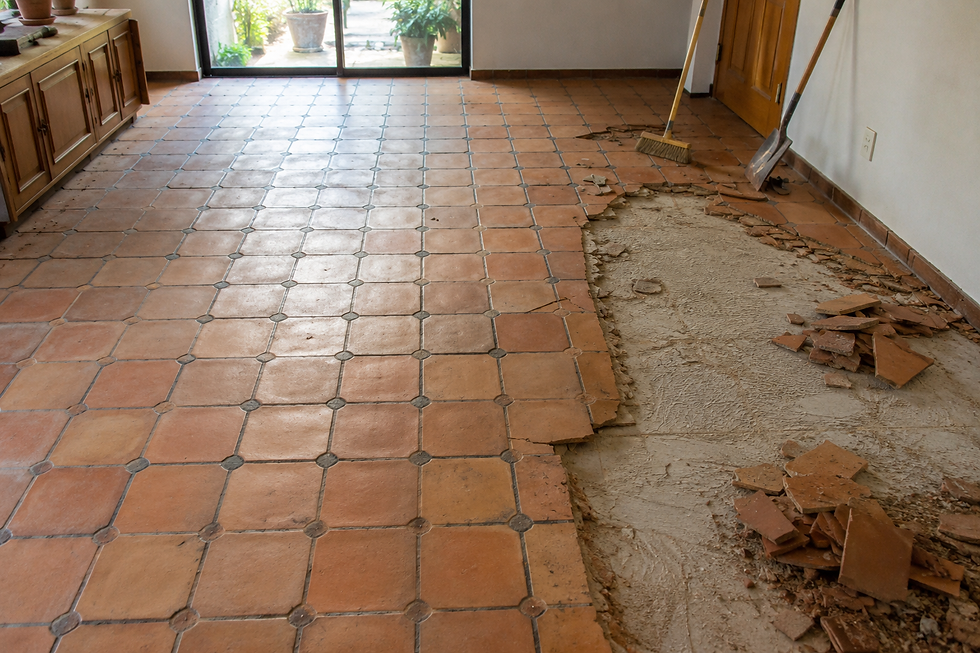
Saltillo tile breaks into many small clay fragments during removal rather than lifting in whole pieces, which roughly doubles or triples the debris volume compared to ceramic tile of the same square footage.
The thick mortar bed typically used under Saltillo installations is often an inch or more deep, significantly more than the standard thinset layer under ceramic or porcelain tile.
Saltillo is handmade and highly porous, meaning it absorbs the sealer applied to its surface into the clay body itself, and this sealer-saturated clay generates dust with additional particulate content during removal.
Older Saltillo installations, particularly those from the 1970s and 1980s, may have multiple layers of sealer built up over decades that add to the removal complexity.
Wide grout joints, typically around one inch on Saltillo installations compared to the standard quarter-inch on ceramic tile, add significantly to the mortar volume that has to be removed after the tile is up.
Saltillo tile was popular in Central Oregon homes built or remodeled from the 1970s through the 1990s, particularly in entryways, kitchens, sunrooms, and open living areas where its warm terracotta tones suited Southwestern or ranch-style interiors. When it is time to replace it, homeowners and contractors quickly discover that Saltillo does not behave like other tile during removal.
DustFree PNW's dust-free tile removal service covers Saltillo and terracotta tile removal across Central Oregon. Here is what makes this material different from ceramic or porcelain and what to expect from the removal process.
What Makes Saltillo Different From Ceramic and Porcelain
Saltillo is a handmade, unglazed terracotta tile fired at lower temperatures than ceramic or porcelain. This lower firing temperature produces a clay body that is softer, more porous, and more irregular in thickness and shape than machine-made tile. These characteristics make it a beautiful and warm flooring material with natural variation in color and texture. They also make it significantly harder to remove cleanly.

Characteristic | Saltillo Tile | Standard Ceramic Tile | Porcelain Tile |
Material | Handmade terracotta clay | Machine-pressed ceramic clay | High-fired dense ceramic |
Body porosity | Very high | Moderate | Very low (near zero) |
Typical mortar depth | 1 inch or more | Quarter inch thinset | Quarter inch thinset |
Grout joint width | Three-quarters to one inch | One-eighth to one-quarter inch | One-sixteenth to one-eighth inch |
Removal behavior | Shatters into many small clay fragments | Chips and pries in sections | Hard to chip; minimal fragmentation |
Debris volume per sq ft | High — fragment volume is significantly greater | Moderate | Low to moderate |
The combination of thick mortar, wide grout joints, and fragmentation during removal means Saltillo jobs generate substantially more debris per square foot than a standard ceramic tile job. The time required for debris collection and mortar cleanup after Saltillo removal is proportionally greater, which is why this tile type typically carries a longer project timeline than the square footage alone would suggest.
The Sealer Layer and How It Affects Removal
Saltillo tile requires sealing to protect its porous clay body from moisture, staining, and wear. Over the decades, many installations have accumulated multiple layers of sealer, sometimes applied annually, sometimes every few years, and in varying product types from topical acrylic to penetrating sealers to epoxy coatings. This accumulated sealer layer adds weight and changes the behavior of the tile during removal.
When Saltillo shatters during removal, the fragments carry the sealer material as part of the clay body. This adds to the dust generated during removal in a way that is different from ceramic tile, since the sealer residue breaks down into additional fine particles during the chipping and chisel process. Source-capture equipment captures this sealer-laden dust at the removal point the same way it captures silica dust from tile and mortar, before it becomes airborne.
The Mortar Bed Under Saltillo
Saltillo was traditionally installed over a thick mortar bed rather than the quarter-inch thinset layer used under ceramic and porcelain. This mortar bed, typically an inch to an inch and a half deep, was necessary to accommodate the natural variation in Saltillo tile thickness from piece to piece. Leveling the floor under Saltillo required a thick, flexible mortar setting system that tile of more uniform thickness did not need.
That thick mortar bed becomes a significant removal task after the tile is up. DustFree PNW's dedicated thinset removal service covers this mortar bed cleanup phase on Saltillo jobs where the depth of the setting material is the primary challenge once the tile fragments are cleared.
What Complete Saltillo Tile Removal Looks Like
A finished Saltillo removal job leaves the subfloor or slab exposed and flat, with all tile fragments, mortar, grout, and sealer residue removed. The wide grout joints of Saltillo installations mean there is more mortar volume between tiles than in a standard ceramic job, and this mortar content has to come off the subfloor as part of the same cleanup phase. The debris volume from a Saltillo job is substantially higher than a comparable square footage of ceramic tile.

DustFree PNW covers Saltillo and terracotta tile removal across our Central Oregon service areas. You can review our work on our Google Business Profile or get a free quote to discuss your Saltillo project.
Final Thoughts
Saltillo tile removal is a longer, higher-debris project than the square footage alone suggests, and the mortar bed cleanup that follows the tile removal is often as demanding as the tile removal itself. Getting the right crew and the right equipment for this specific tile type produces a clean, flat subfloor and a timeline that matches the scope rather than discovering mid-job that a standard ceramic tile estimate dramatically underestimated the actual work. Get a free quote from DustFree PNW.
FAQ
Why is Saltillo tile considered so hard to remove?
Saltillo shatters into many small clay fragments during removal rather than lifting in sections, its mortar bed is typically an inch or more deep, its wide grout joints add more mortar volume, and accumulated sealer layers add complexity to the cleanup.
How is Saltillo tile removal different from ceramic tile removal?
Saltillo generates far more debris per square foot, has a thicker mortar bed, wider grout joints, and a porous clay body that absorbs sealer. All of these factors make removal more time-consuming than ceramic tile of the same square footage.
How thick is the mortar under Saltillo tile?
Typically an inch to an inch and a half, compared to the quarter-inch thinset layer used under ceramic and porcelain tile. This thickness accommodated the natural variation in Saltillo tile thickness during installation.
Does Saltillo removal generate a lot of dust?
Yes. The clay body, mortar bed, and accumulated sealer layers all generate dust during removal. Source-capture equipment captures this dust at the removal point before it spreads through the room.
Does a Saltillo removal quote include mortar bed cleanup?
A complete scope should include it. The thick mortar bed under Saltillo has to come off before new flooring can go down, and this phase is often where the most time is spent on a Saltillo job. Confirm it is in scope before booking.
Does DustFree PNW remove Saltillo tile in Central Oregon?
Yes. DustFree PNW handles Saltillo and terracotta tile removal including mortar bed cleanup across Central Oregon. Contact us for a free quote.


Comments