
Removing Bamboo and Cork Flooring

Removing Bamboo and Cork Flooring
TL;DR: Glued-down bamboo and cork flooring are consistently among the most stubborn materials to remove, since the adhesives used for both often cure into a bond so tenacious that boards shred rather than lift cleanly, forcing installers to cut the material into smaller sections just to make removal manageable. Floating bamboo or cork installations, by contrast, come up considerably faster, closer to a standard click-lock floor removal than the labor-intensive process a glued installation requires.
Key Takeaways
Glued bamboo and cork installations bond with unusual tenacity, often causing boards to shred or break apart rather than lift cleanly during removal.
Cutting the flooring into smaller sections with a saw, then removing each piece individually, is a genuinely effective technique when standard prying doesn't work.
Bamboo installed over an existing hardwood floor creates a particularly high-risk removal scenario, since the original hardwood underneath is likely to be damaged in the process.
Floating, click-lock bamboo and cork installations avoid this entire adhesive challenge, unlocking board by board without any bond to break.
Testing a small, inconspicuous section before starting full removal reveals how stubborn a specific installation's adhesive actually is before committing to a timeline or technique.
Bamboo and cork share a genuine removal challenge distinct from standard hardwood or tile, since both materials are frequently installed with adhesive directly to a concrete slab or plywood subfloor, and the specific glues commonly used for these installations bond with unusual tenacity. Understanding what actually works, and what a crew should expect going in, prevents a straightforward-looking removal from becoming an unexpectedly difficult, time-consuming project.
DustFree PNW provides bamboo and cork flooring removal across Central Oregon. Here is why these materials behave differently during removal, and the techniques that genuinely work.
Why Glued Bamboo and Cork Resist Standard Removal Techniques

Installation Method | Removal Difficulty | Technique That Works |
Floating (click-lock, no adhesive) | Low, similar to standard engineered flooring | Unlock boards sequentially, no scraping needed |
Glue-down over concrete | High, adhesive bonds tenaciously | Cutting boards into smaller sections, pry bar with mallet, careful adhesive scraping |
Glue-down over existing wood flooring | Very high, risk of damaging material beneath | Full assessment of what's underneath before committing to removal method |
Nail-down (less common for bamboo/cork) | Moderate, similar to standard hardwood | Standard board-by-board prying and fastener removal |
Contractors who have documented their own bamboo removal projects consistently describe the same experience: boards that come up in one piece are the exception rather than the rule when a glue-down installation is involved, with much of the material instead breaking apart, shredding, or requiring the floor to be cut into progressively smaller pieces before removal becomes manageable at all. This isn't a sign that something went wrong with the removal attempt. It reflects a genuine, well-documented characteristic of how these specific adhesives bond and release.
Why Cutting the Material Into Sections Actually Works
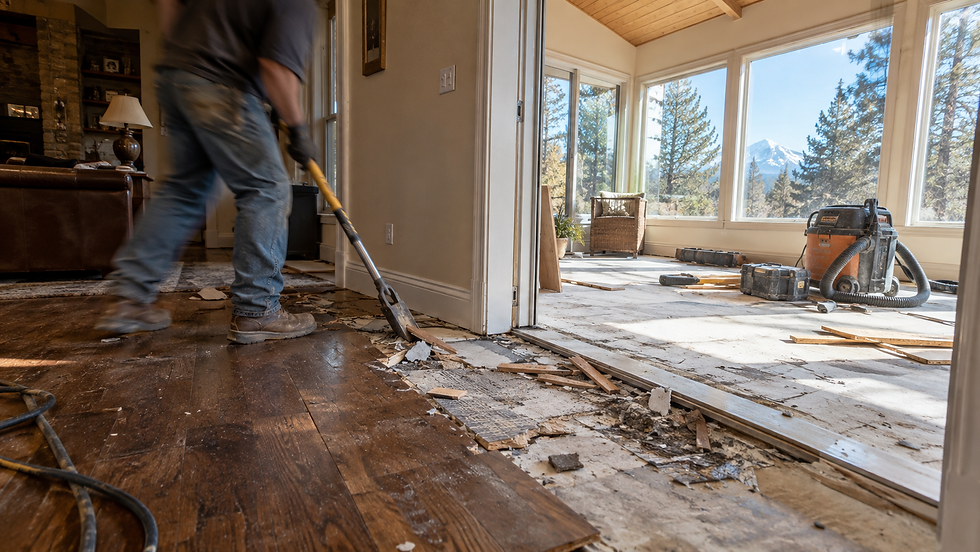
Experienced flooring professionals removing difficult glue-down bamboo consistently recommend a specific approach when standard prying isn't working: cutting the flooring into smaller sections using a track saw or circular saw, then removing each smaller piece individually rather than attempting to lift large sections intact. This technique, counterintuitive to someone expecting to pry up full boards, genuinely reduces the leverage and force needed for each individual removal attempt, making an otherwise exhausting process considerably more manageable, particularly when combined with proper dust extraction given the cutting involved.
Why Pry Bars and a Mallet Outperform Standard Scraping Tools
For sections of glued bamboo that do release without cutting, forum accounts from professional installers describe using a pry bar combined with a mallet or small sledgehammer as the combination that actually works, rather than relying on a standard floor scraper alone. This more forceful approach reflects how genuinely different bamboo and cork adhesive bonds behave compared to standard vinyl or tile mastic, requiring more aggressive leverage to break the bond rather than the more controlled sliding motion that works for other flooring types.
What Happens When Bamboo Is Installed Over Existing Flooring
A particularly difficult removal scenario occurs when glued bamboo was installed directly over an existing hardwood floor rather than over bare subfloor, a combination that professional installers specifically flag as creating serious risk to the original hardwood underneath during removal. In these cases, a full assessment of what's beneath the bamboo, and a genuine expectation that the original flooring may need replacement rather than preservation, should happen before committing to any specific removal approach, since attempting to save both layers often isn't realistic given how aggressively the adhesive bonds the two materials together.
Why Adhesive Residue Removal Deserves Its Own Separate Step
Even once bamboo or cork boards themselves are cleared, adhesive residue left behind on the subfloor frequently requires a dedicated removal step using a commercial adhesive remover product, applied and allowed to sit for a period before the softened residue can be scraped away. This residue removal step is genuinely separate from removing the flooring material itself, and skipping it or rushing through it risks leaving a subfloor that isn't actually clean or flat enough for whatever new flooring comes next.
Why Cork Presents a Similar but Distinct Challenge
Cork flooring, when installed with adhesive directly to a wood subfloor, presents removal difficulty broadly similar to glued bamboo, with homeowners and contractors alike describing large-area glued cork removal as a genuinely tough, labor-intensive project regardless of technique used. Cork's more porous, softer material structure compared to bamboo means it can be somewhat more prone to tearing or crumbling during removal rather than shredding in larger fragments, a distinction worth anticipating when planning debris cleanup and disposal for a cork-specific removal project.
Why Floating Installations Remain the More Removal-Friendly Choice
Both bamboo and cork are available in floating, click-lock installation formats that avoid this entire adhesive removal challenge, since a floating floor simply unlocks board by board without any bond to a subfloor that needs to be broken. Homeowners planning a future bamboo or cork installation who want to preserve easier removal as an option down the line benefit from choosing this installation method specifically, even though glue-down installations do offer certain stability advantages that some homeowners prioritize over future removal convenience.
Why Dust Control Matters More With Cutting-Based Removal
When a bamboo or cork removal project genuinely requires cutting the material into sections, given how stubbornly it resists standard prying, this cutting step generates considerably more dust and fine debris than a straightforward pull-up removal would. Source-capture dust control equipment matters even more in this scenario, since the combination of saw cutting and adhesive residue creates a genuinely dustier work environment than removing a floating floor or a standard nail-down installation, protecting both the crew and the surrounding home from the additional particulate this more aggressive technique produces.
Setting Realistic Timeline Expectations for Difficult Removal Projects
Given the documented difficulty of glued bamboo and cork removal, quoting a project timeline based on standard flooring removal rates risks a significant underestimate once the actual work begins. A crew that has previously handled this specific removal challenge can set more realistic expectations upfront, accounting for the genuine possibility that a portion of the floor will require the slower cutting-and-prying approach rather than assuming every board will lift as cleanly as a best-case scenario would suggest. Communicating this uncertainty honestly with a homeowner before work begins, rather than discovering and explaining it partway through, sets the right expectations from the start.
Why Testing a Small Section First Genuinely Helps
Before committing to a removal timeline or technique for an entire room of glued bamboo or cork, testing a small, inconspicuous section, a closet or an area that will be covered by new cabinetry, gives a genuine preview of how stubborn that specific installation's adhesive actually is. Some glue-down installations release more readily than others depending on the specific adhesive product used, application thickness, and how long ago the flooring was installed, and this quick test avoids committing to an aggressive cutting-based approach for a floor that might actually lift more cooperatively than the worst-case scenario would suggest.
What Complete Bamboo and Cork Removal Delivers

A completed bamboo or cork removal project delivers a subfloor genuinely cleared of both the flooring material and any adhesive residue left behind, flat and ready for new flooring, regardless of how labor-intensive the specific removal scenario turned out to be. This thoroughness matters directly for whatever comes next, since residual adhesive or uneven patches left behind can compromise a new installation's finish or bond.
DustFree PNW removes bamboo and cork flooring across our Central Oregon service areas, matched to the specific installation method each project involves. You can review our work on our Google Business Profile or get a free quote for your project.
Final Thoughts
Glued-down bamboo and cork flooring are among the more genuinely stubborn materials to remove, often requiring cutting boards into smaller sections and using more forceful pry bar and mallet technique than standard flooring removal calls for. Understanding this difficulty upfront, rather than expecting a straightforward removal, helps set realistic timelines and technique expectations for the project. Get a free quote from DustFree PNW.
FAQ
Why is glued-down bamboo so difficult to remove?
The adhesives commonly used for bamboo installation bond with unusual tenacity, often causing boards to shred or break apart rather than lift cleanly, unlike standard flooring adhesives.
Is floating bamboo or cork easier to remove than glued installation?
Yes, considerably. Floating installations unlock board by board without any adhesive bond to break, making removal much faster than a glue-down installation.
What technique works for removing stubborn glued bamboo?
Cutting the flooring into smaller sections with a saw before removal, combined with a pry bar and mallet for sections that do release, is the approach experienced installers consistently recommend.
Is it risky to remove bamboo that was installed over existing hardwood?
Yes. This combination is specifically flagged by professionals as high-risk for damaging the original hardwood underneath, and a full assessment should happen before committing to a removal approach.
Does adhesive residue need its own removal step after boards are cleared?
Yes. Adhesive remover applied and allowed to sit before scraping is typically needed to fully clear residue and prepare the subfloor for new flooring.
Is cork flooring removal similar to bamboo removal?
Broadly similar in difficulty, though cork's more porous structure can make it more prone to tearing or crumbling during removal rather than shredding in larger fragments.
Does cutting-based removal create more dust than standard removal?
Yes. The combination of saw cutting and adhesive residue creates a considerably dustier environment than removing a floating floor, making source-capture dust control especially important for this technique.
Should I test a small section before committing to a full bamboo or cork removal plan?
Yes. Testing an inconspicuous area first reveals how stubborn that specific installation's adhesive actually is, since some glue-down installations release more readily than others depending on the product and application.
Does DustFree PNW remove glued-down bamboo and cork flooring in Central Oregon?
Yes. DustFree PNW removes bamboo and cork flooring across Central Oregon, matched to whichever installation method the project involves. Contact us for a free quote.

Comments