
HOA and Condo Approval Process for Flooring Demo
TL;DR: The HOA condo approval process for flooring demo often requires formal approval before changing hard-surface flooring in condos or multi-family units. HOAs may request sound-rating documentation showing the new flooring assembly meets required Impact Insulation Class (IIC) and Sound Transmission Class (STC) standards, often 50 or higher depending on building requirements. Getting approval and documentation in place before demolition begins can help prevent delays, disputes, fines, or costly flooring changes later.

Key Takeaways
Sound transmission is the primary reason HOAs regulate flooring changes, since replacing carpet with hard-surface materials increases both airborne and impact noise transmitted to units below.
Most jurisdictions following the International Building Code require a minimum Impact Insulation Class and Sound Transmission Class rating of 50 for hard-surface flooring in multi-family buildings with shared floor-ceiling assemblies.
Many HOAs set their own requirements above the base code minimum, sometimes requiring an IIC rating of 55 or 60, along with specific documentation like lab test results or a notarized affidavit.
Approval packets typically include product details, specified underlayment, installation method (floating versus glue-down, since this affects sound transmission independent of the finish material), and manufacturer documentation.
Disputes over flooring compliance can become costly and contentious after installation, making it far more efficient to secure documented approval before demo and installation begin rather than after a complaint arises.
Replacing carpet with tile, hardwood, or another hard-surface flooring material in a condo or multi-family unit is rarely as simple as choosing a new floor and scheduling the work. For most HOAs, this type of change triggers a formal approval process rooted in a specific, practical concern: hard-surface flooring transmits significantly more sound to the units below than carpet does, and unresolved noise complaints between neighbors are one of the most common and contentious disputes an HOA board has to manage.
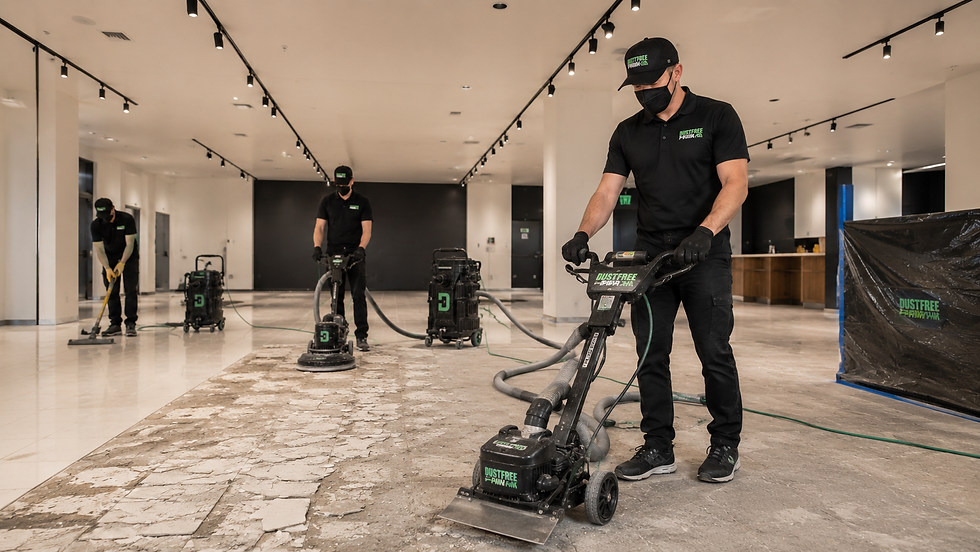
DustFree PNW's interior demolition service works with condo owners across Central Oregon navigating this approval process before flooring demo begins. Here is what the HOA approval process typically involves and how to prepare for it.
Why HOAs Regulate Flooring Changes in the First Place
HOA governing documents, including the Covenants, Conditions, and Restrictions along with bylaws and architectural guidelines, commonly include specific language addressing flooring changes in units with shared floor-ceiling assemblies. This regulation exists because unapproved flooring changes are consistently cited as a leading source of noise complaints in multi-level condominium buildings, and HOA boards carry a legal responsibility to address these nuisances or risk facing litigation and dispute costs. A board's authority to require approval, and to set specific conditions on that approval, is typically grounded directly in these governing documents.
Understanding IIC and STC Ratings

Rating | What It Measures | Typical Minimum Required |
IIC (Impact Insulation Class) | How well a floor-ceiling assembly blocks impact noise, such as footsteps | 50 under base building code; some HOAs require 55 or 60 |
STC (Sound Transmission Class) | How well an assembly blocks airborne sound, such as voices or music | 50 under base building code; some HOAs require higher |
The International Building Code, adopted with variations by most jurisdictions, specifies that a design assembly must achieve an IIC and STC rating of not less than 50 for hard-surface flooring replacing carpet in multi-family buildings with shared floor-ceiling assemblies. This is a code minimum, not necessarily the ceiling. Many HOAs, particularly in buildings where noise complaints have historically been a problem, set requirements above this baseline, sometimes requiring a rating of 55 or 60, along with specific supporting documentation such as manufacturer lab test results or a notarized affidavit confirming compliance.
What Approval Packets Typically Require
A complete HOA approval submission for a flooring change generally includes several specific pieces of documentation: product details covering the brand, thickness, and specifications of the new flooring material; the specified underlayment system, since the underlayment is often what actually delivers the acoustic performance rather than the finish flooring alone; and confirmation of the installation method, since floating versus glue-down installation changes sound transmission characteristics independent of which finish material is chosen. Many HOAs specify installation method requirements directly in their governing documents for exactly this reason.
Providing complete documentation upfront, rather than a partial submission that triggers back-and-forth requests for additional information, is the most effective way to move an approval through the board's review process efficiently. Working with a flooring contractor experienced in HOA-regulated buildings, who can propose a tested assembly with documented lab results already in hand, typically accelerates this process considerably compared to submitting a generic flooring plan and hoping it satisfies the board's specific requirements.
Why Skipping Approval Creates Real Risk
Proceeding with a flooring change without securing HOA approval first creates a genuine risk of disputes, fines, and even forced removal of newly installed flooring if a downstairs neighbor later complains about noise. Documented cases exist where HOA boards have issued ongoing monthly fines to owners with non-compliant flooring, sometimes escalating to formal requirements that the owner remove sections of flooring for sound testing at their own expense, even in situations complicated by prior ownership or missing installation records. These disputes are considerably more disruptive and costly than the upfront time investment of securing proper approval and documentation before any demo work begins.
Where the Approval Process Fits in Project Timing
Because HOA approval, and in many jurisdictions a building permit specifically tied to the sound rating documentation, needs to be secured before flooring changes proceed, this approval process should be treated as an early step in project planning, well before scheduling any demo work. Attempting to secure approval after demo has already begun, or worse, after new flooring is already installed, puts the homeowner in a significantly weaker negotiating position and risks having to redo work that has already been completed.
What a Smooth HOA-Approved Flooring Project Looks Like

A well-managed HOA-regulated flooring project secures written board approval and any required building permit before demo begins, uses a documented flooring and underlayment assembly that meets or exceeds the HOA's specific IIC and STC requirements, and retains copies of all approval documentation for future reference, since ownership changes and property sales can otherwise leave a subsequent owner without proof of compliance years later.
DustFree PNW works with condo owners and property managers across our Central Oregon service areas to coordinate demo timing around HOA approval requirements. You can review our work on our Google Business Profile or get a free quote for your project.
Final Thoughts
Navigating HOA approval before a condo flooring demo begins protects owners from disputes, fines, and the far more disruptive scenario of removing newly installed flooring after the fact. Understanding IIC and STC requirements, preparing a complete documentation packet upfront, and securing approval before scheduling any demo work are the steps that keep a condo flooring project moving smoothly from start to finish. Get a free quote from DustFree PNW.
FAQ
Do I Need HOA Condo Approval for a Flooring Demo? Understanding the Approval Process
In most communities, yes, particularly when replacing carpet with hard-surface materials in a unit with a shared floor-ceiling assembly. Check your HOA's governing documents for specific requirements before starting any demo.
What are IIC and STC ratings for condo flooring?
IIC measures how well a floor blocks impact noise like footsteps, and STC measures airborne sound transmission. Most jurisdictions require a minimum rating of 50 for hard-surface flooring in multi-family buildings.
What documentation does an HOA typically require for flooring approval?
Product details, specified underlayment, installation method, and manufacturer lab test results or a notarized affidavit confirming the assembly meets the required sound rating.
What happens if I install flooring without HOA approval?
You risk fines, disputes with neighbors over noise complaints, and potentially being required to remove and replace the flooring at your own expense if it does not meet the HOA's sound transmission requirements.
When should HOA approval be secured relative to demo scheduling?
Before any demo work begins. Securing approval and any required permits early in project planning avoids the risk of having to redo completed work if approval is denied afterward.
Does DustFree PNW work with condo owners navigating HOA approval in Central Oregon?
Yes. DustFree PNW coordinates demo scheduling around HOA approval requirements for condo owners across Central Oregon. Contact us for a free quote.


Comments