
Fireplace Tile Removal: What Makes It Different From Floor Tile
TL;DR: Fireplace tile removal involves three distinct areas, each with different substrates, installation methods, and angles: the hearth floor, the surround wall panels, and in some cases the firebox face. Each area requires a different technique, and all of them are compressed into a small, confined space that makes dust management more challenging than a standard floor removal job.

Key Takeaways
Fireplace tile removal covers the hearth floor, the wall surround panels on either side and above the firebox opening, and sometimes the firebox face itself, each with different substrates and removal approaches.
Fireplace surrounds are often installed over drywall, cement board, or brick, and the substrate behind the tile determines how much wall repair is needed after removal.
The hearth floor tile is usually installed on a concrete or masonry slab with thinset, similar to a floor installation, and requires mortar cleanup after the tile is up.
Working in a confined space around a fireplace opening creates awkward angles that make grout scoring and prying more difficult than on open floor or wall surfaces.
The fireplace opening must be covered or sealed during tile removal to prevent silica dust from entering the firebox and potentially distributing through the home's HVAC system if the flue connects to any forced-air system.
Fireplace tile removal is one of the most requested interior demo tasks in Central Oregon home remodels, as homeowners update the style of older fireplace surrounds that feature dated tile from previous decades. It is also one of the more technically demanding tile removal scenarios despite the relatively small square footage involved, because the work happens in multiple planes and multiple substrate types in a compressed area.
DustFree PNW's dust-free tile removal service covers fireplace surround and hearth tile removal as part of interior demolition and remodel prep across Central Oregon. Here is what each area of a fireplace tile removal involves and what to plan for in the surrounding space.
The Three Fireplace Tile Areas and What Each Involves
Most fireplace tile remodels involve some combination of three distinct areas, each with different substrates and removal requirements.

Area | Typical Substrate | Typical Adhesive | Special Considerations |
Hearth floor | Concrete slab or masonry platform | Thinset mortar | Requires mortar cleanup after tile removal; similar to floor tile removal |
Wall surround panels | Drywall, cement board, or exposed brick | Mastic or thinset depending on era | Drywall damage expected; cement board more tolerant; brick requires more care |
Firebox face (if tiled) | Refractory brick, metal surround, or masonry | High-heat mortar or mastic | High-heat adhesives can be harder to break; check for asbestos in older installations |
Not all fireplace tile remodels include the firebox face. Many existing fireplace faces are unglazed brick or metal that remain in place when only the decorative surround tile is being updated. The firebox face area uses high-temperature masonry materials that are not the same as the decorative tile on the surrounding panels. If the firebox face tile is being removed, high-heat mortar that has bonded to refractory brick over years of heating cycles can be significantly harder to break than standard thinset on drywall or concrete.
The Hearth Floor: Most Similar to Standard Tile Removal
The hearth floor, the tiled platform that extends out from the firebox onto the room floor, is typically installed over concrete or masonry with thinset mortar. The removal process is similar to floor tile removal anywhere else in the home: score the grout, chisel under the tiles, lift the tile fragments, then grind or scrape the mortar residue from the slab.
The difference from a standard floor removal is the confined geometry. The hearth floor is bounded on three or four sides by the fireplace structure, baseboard transitions, or flooring transitions, which limits the working angles for both the chisel and the grout scoring tool. Careful score-first technique before any prying is especially important at these boundaries to avoid damaging the adjacent flooring or trim.
The Wall Surround: The Most Variable Substrate
Fireplace surround tile is typically installed on one of three substrates depending on the age of the installation and the construction approach used: standard drywall, cement board, or directly on the existing brick or masonry of the fireplace structure. The substrate determines what is revealed when the tile comes off and how much repair is needed before new tile can go up.
Drywall behind surround tile behaves the same as any wall tile removal: grout scoring first, prying at a low angle, and some paper tearing is expected and normal. Cement board behind surround tile is more tolerant and typically produces cleaner releases with less substrate damage. Tile installed directly over brick requires more forceful removal and may leave significant mortar residue on the brick face that requires grinding or wire brushing before new tile or another finish can go up.
Dust Management in a Fireplace Tile Removal
The fireplace opening creates a specific dust management challenge: the firebox connects to the flue, and if the damper is open or damaged, silica dust from tile removal can enter the flue and in some cases distribute to adjacent areas through the HVAC connection if the system is forced air. The fireplace opening should be covered with sealed plastic before any tile removal begins.
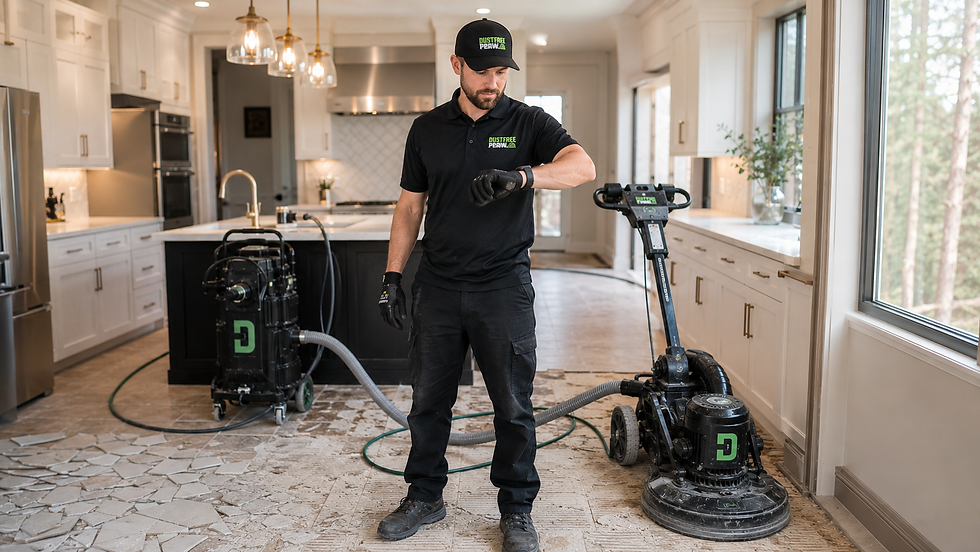
The confined working space around a fireplace also means that dust generated during tile removal has fewer exit paths and concentrates faster than on an open floor. Source-capture equipment that captures dust at the tool head is particularly valuable in this confined-space scenario because it prevents the concentration that would occur with proximity vacuum approaches in a tight area.
What Fireplace Tile Removal Looks Like When Complete
A complete fireplace tile removal leaves the hearth floor cleaned to bare substrate, the surround wall panels cleared of tile with adhesive residue assessed and communicated for repair, and the firebox opening uncovered and inspected after work is complete. Any drywall damage on the surround panels is documented and the repair scope is confirmed before the installation crew arrives.

DustFree PNW covers fireplace surround and hearth tile removal across our Central Oregon service areas. You can review our work on our Google Business Profile or get a free quote for your fireplace remodel demo.
Final Thoughts
Fireplace tile removal is a contained, technically precise job that covers multiple substrates and angles in a small footprint. The confined geometry and the proximity to the fireplace opening make dust control and careful technique more important here than on an equivalent square footage of open floor tile. Getting it done right leaves a clean substrate ready for whatever the new fireplace design calls for. Get a free quote from DustFree PNW.
FAQ
What areas of a fireplace typically have tile that needs to be removed?
The hearth floor, the wall surround panels on either side and above the firebox opening, and sometimes the firebox face itself. Each area has a different substrate and requires a slightly different removal approach.
What substrate is behind fireplace surround tile?
It depends on the age and construction of the installation. Common substrates include drywall, cement board, or directly on the existing brick or masonry of the fireplace structure. The substrate determines how much repair is needed after removal.
Why does the fireplace opening need to be covered during tile removal?
The firebox connects to the flue. If the damper is open, silica dust from tile removal can enter the flue and potentially reach other areas of the home. Sealing the opening before demo begins prevents this.
Is fireplace hearth tile removal the same as floor tile removal?
Similar, but more confined. The hearth floor is bounded on multiple sides by adjacent surfaces that limit working angles. Score-first technique is especially important at boundaries to avoid damaging adjacent flooring or trim.
Does fireplace tile removal damage the drywall behind the surround?
On surround panels installed over drywall, some paper tearing is expected and normal. This is planned for as a drywall repair phase before new tile installation begins.
Does DustFree PNW remove fireplace tile in Central Oregon?
Yes. DustFree PNW handles fireplace surround and hearth tile removal with source-capture dust control across Central Oregon. Contact us for a free quote.

Comments