
Does Dust-Free Tile Removal Really Work?
TL;DR: Yes, dust-free tile removal genuinely works when it uses true source-capture equipment, a vacuum system integrated directly into the demolition tool that captures silica dust the instant it is created. However, capture effectiveness varies significantly between contractors, and no method captures 100 percent of dust generated. The honest answer is that dust-free removal dramatically reduces airborne silica compared to traditional methods, but the specific equipment design, not the marketing label a company uses, is what actually determines how well it works.

Key Takeaways
True source-capture equipment, with a vacuum integrated at the tool head, genuinely captures the vast majority of silica dust generated during tile removal, a documented and verifiable engineering result.
No dust-free method captures 100 percent of dust generated during removal, and any claim of absolute zero dust should be treated with skepticism.
The terms "dustless" and "dust-free" are used inconsistently across the industry, with some methods reducing visible dust without achieving the near-total capture that properly engineered source-capture systems deliver.
A true HEPA filter is capable of trapping 99.97 percent of airborne particles at a specified size, but filtration alone does not guarantee that dust reaches the filter in the first place if the surrounding equipment is not properly sealed and designed.
Asking a contractor for independent air quality test results, rather than accepting a self-reported capture percentage, is the most reliable way to verify a dust-free claim before booking.
Dust-free tile removal is a genuine engineering achievement when done correctly, but the term itself has become inconsistently used across the tile removal industry, which makes the question "does it really work" a fair one to ask before booking any project. The honest answer requires separating the underlying physics of source-capture dust control, which is well documented and verifiable, from the marketing language different companies use to describe their specific process.
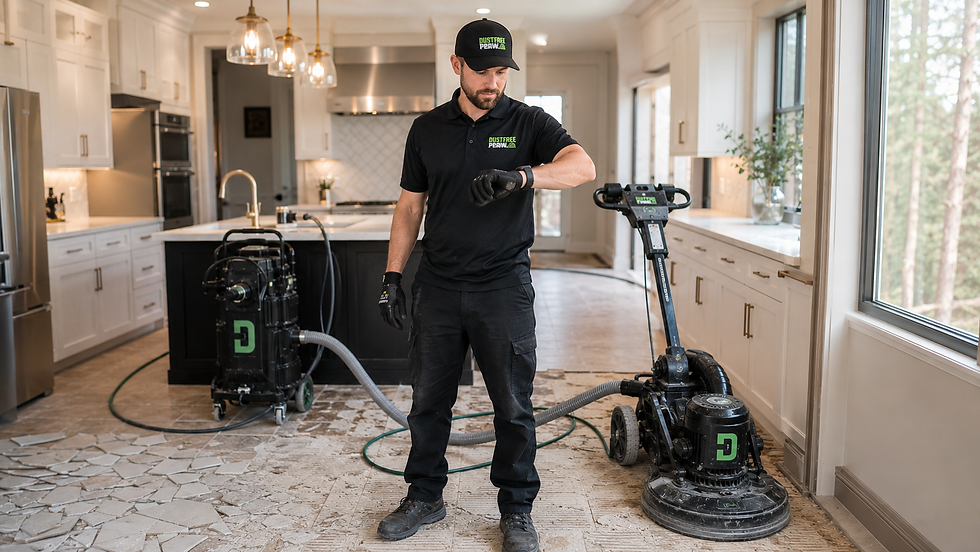
DustFree PNW uses properly engineered source-capture equipment across every tile and flooring removal project in Central Oregon. Here is what actually determines whether dust-free tile removal works and how to verify a contractor's claims before booking.
Why Capture Rate, Not Marketing Language, Is What Matters

Term Used | What It Typically Means | Verification Needed |
"Dustless" | Marketing term with no consistent, standardized performance benchmark behind it industry-wide | Ask specifically what equipment is used and request test data |
"Virtually dust-free" | Reduces visible dust significantly compared to traditional methods, but does not claim near-total capture | Confirm whether this meets or falls short of your expectations for a truly clean process |
"Dust-free" with tool-integrated capture | Vacuum shroud built directly into the demolition tool, capturing dust within inches of creation | Verify the vacuum is genuinely integrated at the tool, not simply running nearby |
Independently tested capture rate | A specific percentage verified through third-party air quality testing rather than self-reported | Request the actual test documentation, not just a stated number |
Some tile removal companies rely on shop vacuums, standard air handlers, or a nearby vacuum positioned close to the work area, and describe this setup as "dustless" or "almost dust-free" because the visible dust cloud looks reduced compared to a completely uncontrolled hammer-and-chisel approach. This is a meaningfully different engineering outcome than a vacuum system integrated directly at the tool head, which captures fine particulate within inches of where it is generated, before it has any real opportunity to disperse into the room's air at all.
Why Even the Best Systems Do Not Capture 100 Percent
Any claim of completely dust-free removal, meaning zero dust whatsoever, should be treated with healthy skepticism. Removing tile involves chipping, breaking, and grinding materials that release fine particulate, and even the most effective source-capture systems available capture the vast majority of that dust rather than literally all of it. A properly engineered system consistently captures well above 99 percent of generated dust, which represents a dramatic and measurable reduction compared to traditional, uncontrolled methods, even though it does not claim absolute perfection.
The math here matters for understanding real-world impact. On a project generating several hundred pounds of dust and debris, even a small remaining percentage represents pounds of fine silica particulate that were not captured. This is why the specific capture percentage a system achieves genuinely matters, rather than treating "dust-free" as a binary label where any method marketed under that name is presumed equally effective.
What a True HEPA Standard Actually Means
A true HEPA filter, as defined in industry and regulatory standards, is capable of trapping 99.97 percent of airborne particles at a specified minimum size. This is a meaningful, measurable filtration benchmark. However, a HEPA filter rating describes what happens to dust once it reaches the filter, not whether the surrounding equipment design actually delivers that dust to the filter in the first place. A vacuum system with a genuinely sealed housing, properly fitted hoses, and a tool-integrated shroud delivers dust to the filter far more reliably than a general-purpose vacuum with a HEPA filter added as an upgrade, where dust can escape around loose seals and connections before ever reaching the filtration stage.
Why Confined Areas Present Additional Equipment Limitations
Beyond the capture technology itself, physical space constraints affect how well any system can be deployed on a real project. Some tile removal equipment, particularly larger ride-on style machines, does not perform well in tight residential spaces like bathrooms, narrow hallways, pantries, or closets, and using equipment poorly matched to a confined space can risk damage to walls, baseboards, or cabinetry in addition to reduced dust capture effectiveness. This is part of why a contractor's equipment selection for a specific project scope, not just their general dust-free claims, matters when evaluating whether a system will actually perform well in your specific home.
What Genuine Effectiveness Looks Like in Your Home

Properly effective dust-free tile removal delivers a work area, and adjacent rooms, that show no measurable dust accumulation on surfaces after the project is complete, an HVAC system that does not require servicing as a result of the job, and a subfloor left clean and flat with the debris hauled away. The practical test of whether dust-free removal really worked is simple: run a finger along a surface in an adjacent room the day after the project, and there should be no fine grit or film present.
DustFree PNW uses properly engineered, tool-integrated source-capture equipment across our Central Oregon service areas. You can review our work on our Google Business Profile or get a free quote for your project.
Final Thoughts
Dust-free tile removal genuinely works when the underlying equipment is properly engineered with tool-integrated source capture, but the term itself is used loosely enough across the industry that the label alone does not guarantee the result. Asking specifically about equipment design, requesting verification rather than accepting a self-reported percentage, and understanding that no method achieves absolute perfection are the steps that separate a genuinely effective process from a marketing claim. Get a free quote from DustFree PNW.
FAQ
Does Dust-Free Tile Removal Really Work to Reduce Dust?
Yes, significantly, when true source-capture equipment with a tool-integrated vacuum shroud is used. This captures the vast majority of silica dust at the point of creation, a dramatic improvement over traditional uncontrolled methods.
Can any tile removal method capture 100 percent of dust?
No. Even the most effective source-capture systems available capture the vast majority of generated dust rather than literally all of it. Any claim of absolute zero dust should be treated with skepticism.
Is a HEPA filter enough to guarantee dust-free removal?
Not by itself. A HEPA filter describes filtration performance once dust reaches it, but the surrounding equipment design, seals, and tool integration determine whether dust actually reaches the filter in the first place.
What is the difference between "dustless" and "dust-free"?
These terms are used inconsistently across the industry. Some methods described as dustless reduce visible dust without achieving the near-total capture that a properly engineered, tool-integrated system delivers.
How can I verify a contractor's dust-free claims?
Ask what specific equipment is used, whether the vacuum is integrated directly into the demolition tool, and request any independent air quality test documentation rather than accepting a self-reported capture percentage.
Does DustFree PNW provide genuinely effective dust-free tile removal in Central Oregon?
Yes. DustFree PNW uses properly engineered, tool-integrated source-capture equipment across all tile removal projects in Central Oregon. Contact us for a free quote.


Comments