
Can I Stay in My Home During Dust-Free Tile Removal?
TL;DR: In most cases, yes. Because dust-free source-capture equipment prevents silica dust from entering the home's air in the first place, adjacent rooms typically remain clean and usable throughout a single-room tile removal project. The main exceptions are jobs involving confirmed asbestos or lead-based materials, where a responsible contractor will recommend leaving during the remediation itself, and very large multi-room projects where noise, access, and daily disruption may make temporary relocation more comfortable even though it is not strictly required for safety.

Key Takeaways
For a standard single-room or single-bathroom tile removal using dust-free source-capture equipment, staying home is typically both safe and practical for most households.
If a home built before 1980 has confirmed asbestos-containing materials, or lead paint is being disturbed, a responsible contractor will recommend leaving during that specific remediation phase, regardless of the dust control method used.
Whether staying home makes sense also depends on whether basic amenities, particularly a working bathroom and kitchen, remain accessible throughout the project.
Job fatigue, the cumulative stress of living around ongoing construction, becomes a more significant factor for projects lasting multiple days or weeks rather than a single-day tile removal appointment.
Since most residential tile removal projects using dust-free equipment complete within a single day, the disruption window for staying home is typically brief and well-defined rather than an extended, open-ended situation.
Whether to stay home during a tile removal project is a genuinely reasonable question, and the honest answer depends on a combination of factors: the dust control method being used, whether any hazardous materials are confirmed present, the scope of the project, and how much daily disruption a particular household is comfortable managing.
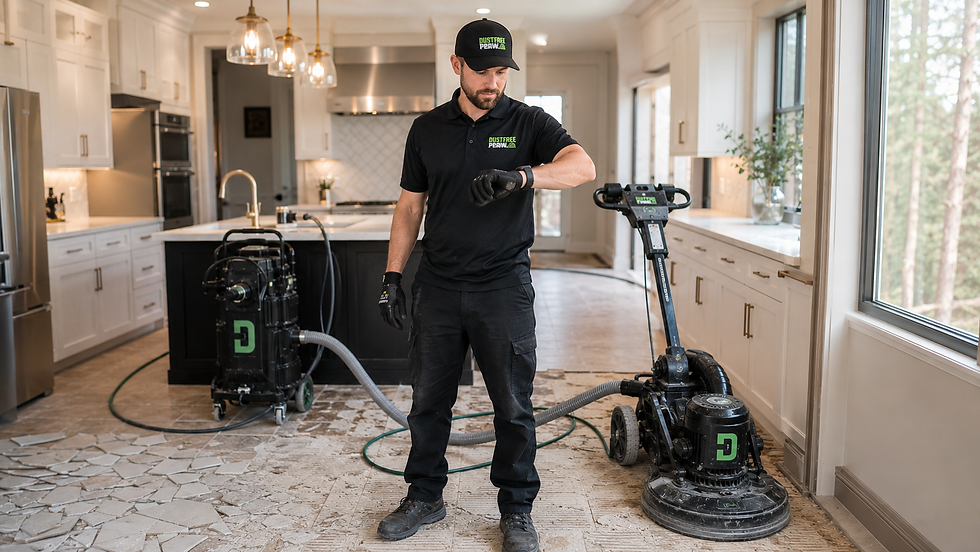
DustFree PNW's dust-free tile removal service uses source-capture equipment specifically designed to keep homes livable throughout most residential projects in Central Oregon. Here is what determines whether staying home makes sense for a specific project.
When Staying Home Works Well

Factor | Favors Staying Home | Favors Temporary Relocation |
Dust control method | True source-capture equipment integrated at the tool | Traditional demo without dust control |
Hazardous materials | None confirmed present | Confirmed asbestos or lead-based materials being disturbed |
Project scope | Single room or bathroom, typically completed in a day | Whole-house, multi-week renovation affecting essential amenities |
Amenity access | Kitchen and at least one bathroom remain fully usable | No working bathroom or kitchen access during the project |
Household sensitivity | Tolerance for a defined noise window during the day | Household members with heightened noise sensitivity or health considerations |
For a typical single-bathroom or single-room tile removal project using true dust-free equipment, most of these factors line up in favor of staying home. The dust risk is genuinely minimized by source-capture technology, no hazardous materials are typically involved in a straightforward modern tile installation, the scope is contained to one area, and the rest of the home's amenities remain accessible throughout.
The Asbestos and Lead Exception
If a home was built before approximately 1980 and testing confirms asbestos-containing materials, or if lead-based paint is being disturbed as part of the project scope, this changes the calculation regardless of what dust control method is otherwise used. Any ethical contractor handling confirmed asbestos or lead remediation will recommend that occupants leave the home during that specific work, since these materials carry distinct regulatory and health considerations separate from the standard silica dust question that applies to modern tile removal. This exception applies specifically to the remediation phase itself, not necessarily to the entire remodel timeline surrounding it.
Why Project Scope Matters More Than People Expect
A single-day, single-room tile removal project is a fundamentally different experience from a multi-week whole-house renovation, even beyond the dust question specifically. Living around ongoing construction for an extended period introduces what contractors sometimes call job fatigue, a cumulative stress that builds when a household is repeatedly navigating noise, disruption, and altered routines day after day. For a contained, single-day tile project, this factor is largely irrelevant since the disruption window is brief and well-defined. For larger, longer projects, it becomes a genuinely important consideration in deciding whether staying home is the right choice, separate from any pure safety calculation.
Setting Up a Comfortable Base While the Work Happens

For households staying home during a tile removal project, choosing one protected part of the home as a comfortable base, away from the active work zone, helps make the day considerably more manageable. This might mean spending the day in a living room or home office on the opposite side of the house from the work zone, keeping the door to the work area closed throughout the project, and planning around the expected noise window rather than trying to conduct video calls or focused work immediately adjacent to the active demolition.
What to Confirm Before Deciding to Stay
Before committing to staying home during a specific project, confirming a few details with the contractor removes most of the uncertainty. Ask whether the equipment being used is true source-capture, with a vacuum integrated at the tool head, rather than a nearby shop vacuum. Confirm whether the home requires asbestos testing given its age, and if so, whether results are back before the project is scheduled. And ask for a realistic timeline estimate, so the household can plan around the specific hours the noise and activity will be most intense.
What a Livable Demo Day Looks Like
A properly executed dust-free tile removal project, when staying home, means adjacent rooms remain clean and usable throughout, the home's kitchen and at least one bathroom stay accessible, and the noise and activity are contained to a predictable window during the working day. By the time the crew leaves, the work zone should be clean, and the rest of the home should show no measurable dust impact from the project.
DustFree PNW uses source-capture equipment designed to keep homes livable during projects across our Central Oregon service areas. You can review our work on our Google Business Profile or get a free quote for your project.
Final Thoughts
Staying home during dust-free tile removal is genuinely possible and often the reasonable choice for most single-room, single-day projects, provided no confirmed asbestos or lead materials are involved. Confirming the dust control method, testing for hazardous materials in older homes, and setting up a comfortable base away from the work zone are the practical steps that make staying home a comfortable choice rather than a stressful gamble. Get a free quote from DustFree PNW.
FAQ
Can I stay in my home during dust-free tile removal?
Yes, in most cases, for a single-room project using true source-capture equipment. The main exception is when confirmed asbestos or lead-based materials are being disturbed, in which case leaving during that phase is recommended.
Do I need to leave for a single-bathroom tile removal project?
Usually not, if dust-free equipment is used and the home does not have confirmed hazardous materials. Most single-day, single-room projects allow the rest of the home to remain fully usable.
Why would a contractor recommend leaving during tile removal?
If a home built before approximately 1980 has confirmed asbestos or lead-based materials being disturbed, ethical contractors recommend leaving during that specific remediation phase due to the distinct health considerations involved.
Does the size of the project affect whether I should stay home?
Yes. A single-day, single-room project is very different from a multi-week whole-house renovation. Larger projects introduce cumulative disruption, sometimes called job fatigue, that makes temporary relocation more appealing even when not required for safety.
What should I confirm before deciding to stay home during a demo project?
Confirm the dust control equipment is true source-capture, whether asbestos testing is needed for an older home, and get a realistic timeline so you can plan around the noisiest part of the day.
Does DustFree PNW use equipment that allows staying home during projects in Central Oregon?
Yes. DustFree PNW uses source-capture equipment designed to keep homes livable during most residential tile and flooring projects across Central Oregon. Contact us for a free quote.


Comments