
Thinset Removal in Central Oregon: The Most Overlooked Step in Tile Demo

Thinset Removal in Central Oregon: The Most Overlooked Step in Tile Demo
When most homeowners think about tile removal, they think about the tile. They calculate square footage and get quotes for breaking up the ceramic and hauling it out.
They're often surprised, sometimes frustrated, when the job takes longer than expected and costs more than the initial quote suggested. The reason is almost always the same. Nobody talked about the thinset.
What Is Thinset and Why Does It Matter?
Thinset mortar is the cement-based adhesive used to bond tile to a subfloor or wall. Unlike tile adhesive mastic, a paste adhesive used for lighter-duty applications, thinset is a cementitious material mixed with water and Portland cement.
Once cured, it bonds aggressively to both the tile and the substrate beneath it. When the tile is removed, thinset typically remains on the subfloor.
Sometimes it's a thin layer. Sometimes it's a thick bonded mass, depending on the installation method, the age of the installation, and the type of tile that was originally set.
Why Thinset Removal Is Often Harder Than the Tile Itself
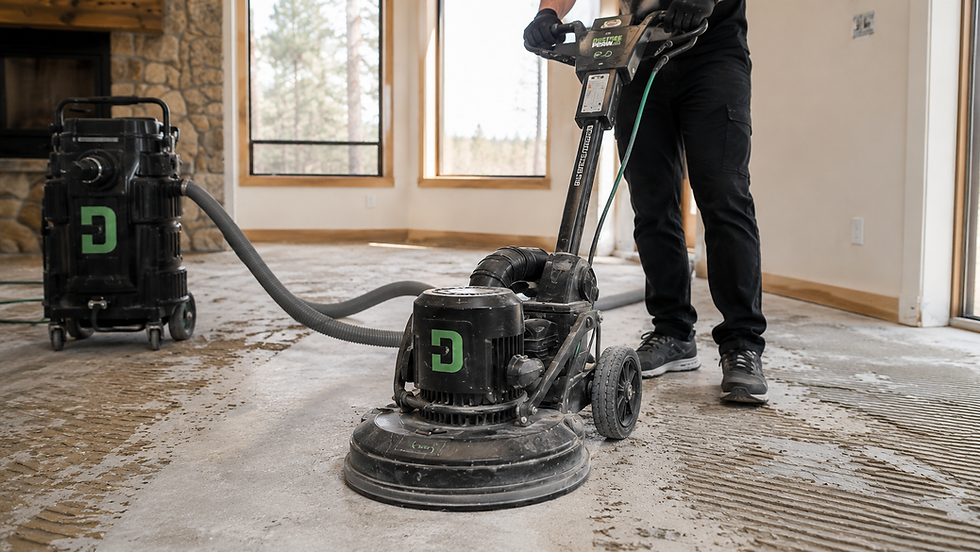
Breaking ceramic or porcelain tile is relatively fast work. Removing the thinset that remains on a concrete slab after tile demo is often slower and harder to predict from a quoting perspective.
Old thinset that has been on a slab for 10, 15, or 20 years bonds with the concrete at a molecular level. It cannot simply be scraped off. It requires grinding.
The depth of the thinset layer, the age of the bond, and whether the original installation included a mortar bed all affect how long removal takes. A job that looks simple by square footage can double in labor cost if the thinset is old or thick.
Thinset Is the Biggest Silica Dust Source in Tile Demo
Portland cement, the binding agent in thinset, contains crystalline silica. When thinset is ground from a concrete subfloor, the combination of cement and concrete creates some of the highest silica dust concentrations of any step in tile removal.
This is the phase where OSHA's silica standard is most critically relevant. Grinding creates fine, respirable silica particulate at a higher rate than chiseling the tile itself.
You can review the full federal standard on OSHA's silica safety page → Traditional thinset grinding without source-capture dust control is a significant health hazard for anyone in or near the work area.
How DustFree PNW Handles Thinset

DustFree PNW assesses thinset condition and depth during every free quote. We quote thinset removal as a separate line item because it varies significantly from job to job.
Our thinset grinding uses the same integrated HEPA filtration approach as our tile removal. Grinding tools connect directly to HEPA filtration, so silica dust is captured at the grinder head before it enters the room air.
The result is a subfloor that's clean, level, and ready for flooring installation, without any of the air quality events that traditional thinset grinding creates. Get a thinset removal quote →
What This Means for Your Quote
If you're getting quotes for a tile removal project anywhere in Bend, Redmond, or Sisters, ask specifically how thinset is priced before you compare numbers side by side.
A quote that only covers tile breaking, without addressing thinset, isn't really a complete quote for the job you're about to undertake.
DustFree PNW's reviews and service area details are available on our Google Business Profile → if you'd like to see how other Central Oregon projects have gone.
Frequently Asked Questions
Why is thinset removal in Central Oregon often more involved than expected?
Thinset bonds at a molecular level with concrete over time and requires grinding rather than simple scraping. Depth and age of the bond both affect the labor required.
Does my subfloor need to be level after thinset removal?
Yes. Flooring installers require a subfloor within manufacturer-specified flatness tolerances. DustFree PNW's thinset grinding achieves the surface preparation necessary for most flooring types.
Is thinset always quoted separately?
At DustFree PNW, thinset assessment is included in every free quote and priced separately from tile removal, since scope can vary. The full cost is in your initial quote, not a demo-day surprise.
What if I have a mortar bed installation?
Some older tile installations, especially in wet areas, were set over a thicker mortar bed. This is a more significant undertaking than standard thinset removal and is assessed during your free quote.
Can thinset removal damage my subfloor?
Properly calibrated grinding equipment removes thinset without damaging a sound concrete subfloor. Our crew flags any pre-existing subfloor issues during the assessment, before grinding begins.
Final Thoughts
Most tile removal quotes leave out the most important number, the thinset. It's often harder to remove than the tile, and it's the biggest silica dust source in the entire project.
Get a quote that accounts for it from the start. Get a thinset removal quote from DustFree PNW →


Comments