
OSHA Silica Dust Regulations: What Oregon Contractors Must Know in 2026

OSHA Silica Dust Regulations - What Oregon Contractors Must Know in 2026
If you are a contractor in Oregon doing tile removal without active dust control, you may already be in violation of federal law.
This is not a gray area.
OSHA’s respirable crystalline silica standard is enforceable, specific, and applies to tile and floor removal work in both residential and commercial construction. When flooring materials like tile, thinset, mortar, grout, stone, or concrete are removed, they can release respirable crystalline silica dust into the air. Without proper dust control, that exposure can put your crew, your customers, and your business at risk.
This guide breaks down what the OSHA Silica Dust Regulations actually require, how Oregon enforces silica safety standards, and how partnering with a DustRam certified subcontractor helps keep your crew and your business compliant.
In This Guide
1. OSHA's Respirable Crystalline Silica Standard
2. What It Requires for Tile Removal Jobs
3. OR-OSHA vs Federal OSHA
4. Penalties for Non-Compliance
5. How DustRam Certification Addresses Compliance
6. FAQ
OSHA's Respirable Crystalline Silica Standard (29 CFR 1926.1153)
OSHA's construction silica standard took effect in 2017 and has been fully enforced since 2018. It sets a permissible exposure limit (PEL) of 50 micrograms of respirable crystalline silica per cubic meter of air as an 8-hour time-weighted average. That limit is 50% lower than the previous standard. The regulation also requires an action level (AL) of 25 µg/m³ at which point employers must begin monitoring and implementing controls.
For tile removal specifically, OSHA has identified this as one of the highest-risk activities in construction. The standard allows contractors to use Table 1 a list of prescribed engineering controls for specific tasks in lieu of air monitoring. For handheld power tools used to remove tile and grout: a HEPA vacuum with integrated dust collection is required. That is exactly what DustRam certified equipment provides.
What the Standard Requires for Tile Removal Jobs
Under the silica standard, contractors performing tile and floor removal must: use engineering controls (wet methods or HEPA-filter vacuum systems) to limit silica exposure; provide workers with respirators when engineering controls alone cannot reduce exposure below the PEL; establish and maintain a written exposure control plan; offer medical surveillance to workers with 30 or more days per year of silica exposure; and provide training to workers on silica hazards and control measures.
These are not optional. They apply to every job, including residential remodeling projects.
OR-OSHA vs Federal OSHA - What's Different in Oregon
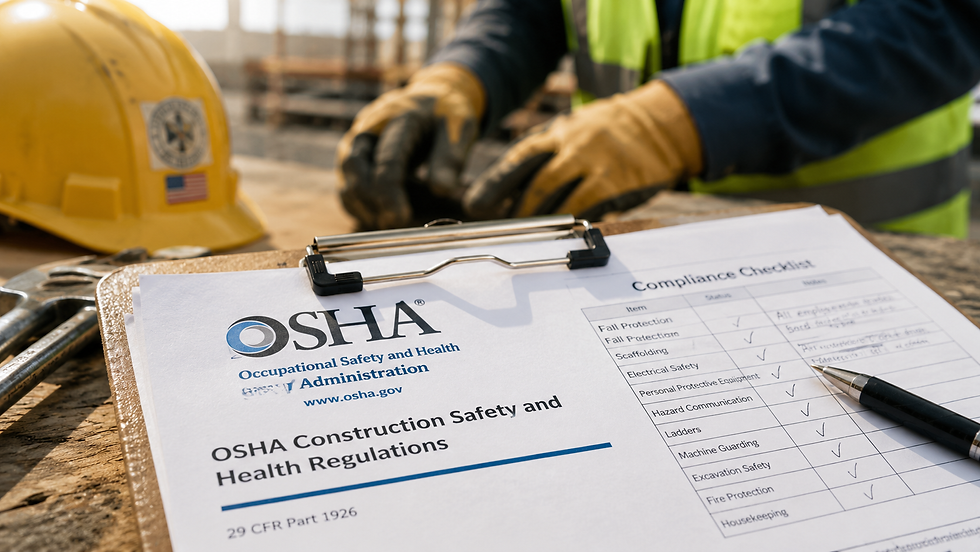
Oregon operates its own OSHA program (OR-OSHA) under a federal State Plan.
OR-OSHA must maintain standards at least as stringent as federal OSHA. In practice, OR-OSHA has adopted the federal silica standard and enforces it across all Oregon industries including residential construction. Oregon contractors cannot argue that federal OSHA doesn't apply OR-OSHA does, and it mirrors the federal requirements precisely. You can review OR-OSHA's enforcement guidelines directly at osha.oregon.gov.
Penalties for Non-Compliance
OSHA penalties for serious silica violations can reach $16,131 per violation. Willful or repeated violations can reach $161,323 per violation. Beyond fines, non-compliance exposes contractors to workers' compensation liability, civil suits from workers who develop silicosis or related conditions, and potential loss of licensing if OR-OSHA recommends action to the CCB.
How DustRam Certification Addresses Compliance
When you subcontract floor removal to DustFree PNW, you are working with a DustRam certified crew using equipment that meets and exceeds OSHA's Table 1 requirements for tile removal. Our equipment captures over 99% of silica dust at the source using integrated HEPA filtration the exact engineering control OSHA prescribes for this task. This protects your crew, your client's home, and your business from compliance exposure.
Frequently Asked Questions
Does OSHA's silica standard apply to residential remodeling?
Yes. The construction silica standard (29 CFR 1926.1153) applies to all construction work, including residential remodeling, regardless of project size or setting.
What counts as an acceptable engineering control for tile removal?
OSHA's Table 1 requires a HEPA-filter vacuum system integrated with the removal tool for handheld power tools used in tile and grout removal. Wet methods are also acceptable. General-area vacuums or shop vacs alone do not meet the standard.
Can I be fined even if no worker gets sick?
Yes. OSHA enforces the standard based on exposure potential and whether required controls are in place, not solely on whether a worker has been diagnosed with silicosis. Non-compliant work practices can result in citations and fines during any routine inspection or complaint-based investigation.
Does working with DustFree PNW satisfy my silica compliance obligation?
When DustFree PNW performs the floor removal on your project, we are the employer responsible for silica compliance on the demo portion of the work. We use DustRam certified equipment that meets OSHA's Table 1 requirements. We recommend discussing compliance documentation with your attorney for multi-contractor projects.


Comments