
Dust-Free Demo Services in Central Oregon: What Contractors Should Expect
TL;DR: Professional demo services should include a pre-job site walkthrough, dust-free removal equipment, debris haul-away, and a subfloor that's ready for the next trade the same day. Contractors and flooring companies evaluating a demo subcontractor should expect all four, not just the demo itself.

Key Takeaways
Professional demo services start with a site evaluation, not a crew showing up and starting to chip tile on day one.
Dust-free demo services should include debris removal and haul-away as part of the job, not a separate add-on charge discovered later.
A demo subcontractor's equipment and dust-control method directly affects how fast the next trade can start work.
Contractors and flooring companies should ask for documentation and a written scope before booking, the same way a homeowner would.
Subfloor condition issues discovered during demo should be communicated immediately, with options and cost impact explained before work continues.
When a contractor or flooring company brings in a demo subcontractor, "demo services" can mean very different things depending on who you hire. Some crews show up, remove the flooring, and leave the debris and dust cleanup for someone else. Others handle the full scope, from initial walkthrough to a clean, ready-to-install subfloor. Knowing the difference before booking a subcontractor saves a project schedule, not just a cleanup bill.
DustFree PNW provides contractor support across Central Oregon, working as a demo subcontractor for flooring companies, remodelers, and general contractors. This article covers what a complete demo services scope should actually include, based on the questions we hear most often from contractors comparing subcontractors.
What a Site Walkthrough Should Cover
A professional demo job starts before any tool touches the floor. A proper site evaluation identifies the existing flooring material, what's underneath it, access points for equipment, and any conditions that could affect timeline or cost, such as suspected asbestos in older flooring or unusual subfloor conditions.

This step also sets expectations for staging, debris removal logistics, and any coordination needed with other trades already scheduled on-site. Skipping this step is usually how a demo job ends up with surprise costs partway through, since issues that should have been caught upfront instead get discovered mid-demo.
What's Actually Included in Dust-Free Demo Services
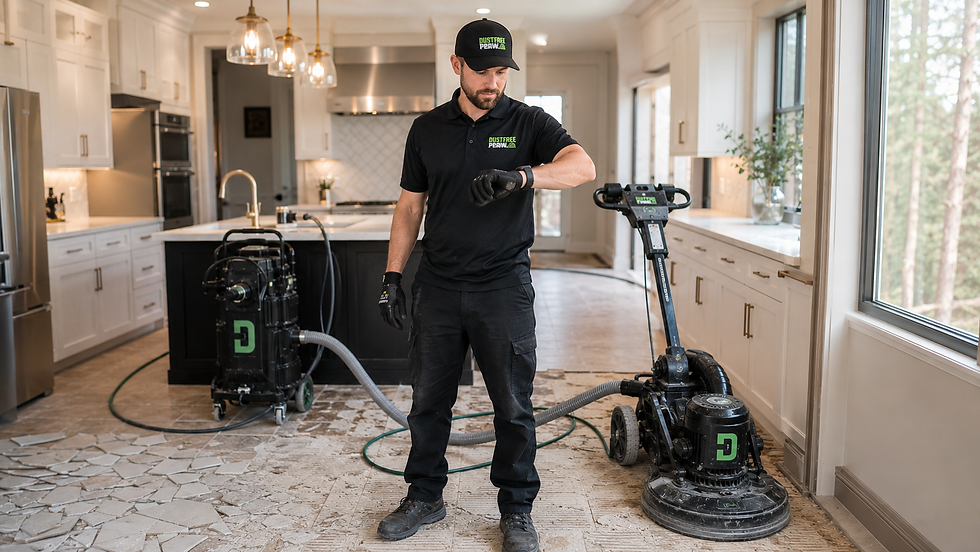
A complete demo services scope covers more than just removing the old flooring. For contractors evaluating a subcontractor, the core scope should include:
Removal of the existing flooring material, down to bare subfloor or slab
Thinset, mortar, or adhesive removal where applicable, not just the surface material
Dust-free or source-capture equipment, not standard demolition tools with no dust control
Debris collection and haul-away, included as part of the job rather than billed separately
A subfloor that's flat, clean, and ready for the next installation phase
If any of these are missing from a quote, that's worth clarifying before the job starts, not after. A subcontractor who removes tile but leaves thinset behind, or who removes flooring but not the resulting debris, is shifting cost and time back onto the contractor managing the overall project.
Why Dust Control Affects Your Project Timeline
Traditional demo can release up to one pound of silica dust per square foot of flooring removed. On an occupied job site, or one where other trades are scheduled to start immediately after demo, that dust translates directly into lost time. Containment setup, negative air machines, and extended cleanup all add days that a tight installation schedule can't always absorb.
Professional source-capture demo equipment controls dust at the point of removal instead of relying on plastic sheeting and post-job cleanup. For contractors managing multiple trades on a schedule, that difference can often determine whether flooring installation can begin the same day demolition wraps or has to wait.
How Subfloor Issues Should Be Handled Mid-Job
It's common for demo to reveal subfloor issues that weren't visible before the old flooring came up, things like moisture damage, uneven concrete, or deteriorated underlayment. A professional demo subcontractor should flag these issues immediately, explain the options, and confirm any cost or timeline impact before continuing, rather than handling it quietly and presenting a surprise on the invoice.
This kind of clear communication is one of the easiest ways to evaluate a demo subcontractor before the first job. A contractor who explains scope changes clearly during a walkthrough is more likely to handle a mid-job surprise the same way.
What Happens After Demo Wraps
A finished demo job should leave a clean, flat, debris-free subfloor ready for the next trade, with no lingering dust on surrounding surfaces, cabinetry, or trim. For commercial spaces, this also means coordinating around business hours or off-hours scheduling to minimize disruption, something our commercial floor removal service is built specifically to handle.

For flooring companies and remodelers, that handoff point is where a good demo subcontractor either saves the schedule or costs it. A site that's truly ready for installation means crews can start without an extra cleaning or prep step in between.
Questions to Ask Before Booking a Demo Subcontractor
Ask what is included in the base scope versus what is billed separately, whether dust-capture equipment is integrated into the removal tools or simply a separate vacuum running nearby, and whether debris haul-away is included in the job. If dust control matters for the specific project, especially in occupied homes or sensitive commercial spaces, ask for documentation of dust-capture performance. Our dust-free tile removal page explains the standard this type of documentation should support.
FAQ
What's included in professional dust-free demo services?
A complete scope includes flooring removal down to subfloor, thinset or adhesive removal, dust-free equipment, debris haul-away, and a subfloor ready for the next installation phase.
How does a site walkthrough affect the demo quote?
A walkthrough identifies material type, access conditions, and any complications like suspected asbestos or subfloor damage, which helps avoid surprise costs once the job starts.
Does demo services pricing usually include debris removal?
It depends on the subcontractor. Some include haul-away as part of the base scope, while others bill it separately. Confirming this upfront avoids confusion at invoicing.
What happens if subfloor damage is found during demo?
A professional demo crew should flag the issue immediately, explain the repair options, and confirm any cost or timeline impact with the contractor before continuing the job.
Can demo services be scheduled around an occupied home or active business?
Yes. Dust-free demo equipment makes this easier since it doesn't require the containment setup traditional demo needs, and scheduling can often be coordinated around business hours for commercial spaces.
Does DustFree PNW provide demo services for contractors and flooring companies in Central Oregon?
Yes. DustFree PNW partners with contractors, remodelers, and flooring companies throughout Central Oregon as a demo subcontractor. You can review our reviews on Google Business Profile or contact us to discuss your next project.
Final Thoughts
Demo services should mean more than just removing old flooring. A complete scope protects your project timeline, your client's experience, and your bottom line. Looking for a demo subcontractor who handles the full scope? Get a free quote from DustFree PNW.


Comments