
Commercial Demolition in Central Oregon: A Property Manager's Guide
TL;DR: For property managers and business owners, "commercial demolition" usually means interior floor and surface removal ahead of a tenant improvement or remodel, not structural teardown. DustFree PNW handles this scope with dust-free equipment that minimizes disruption to occupied buildings.
Key Takeaways
"Commercial demolition" covers a wide range, from full structural teardown to interior floor and surface removal. Most property managers and business owners are dealing with the latter.
Interior commercial demolition for flooring, fixtures, and finishes can usually happen without taking a building offline, especially with dust-free equipment.
Scheduling around business hours is one of the biggest factors in minimizing revenue impact for an active retail, office, or restaurant space.
Dust control matters more in commercial settings than residential ones, since HVAC systems often serve multiple tenants or large open floor plans.
A finished commercial demo job should leave a clean, level subfloor ready for the next trade, without an extra cleaning step in between.
"Commercial demolition" is a broad term that covers very different scopes of work. For a developer planning to level a building, it means heavy machinery and structural teardown. For a property manager updating a retail space, an office, or a restaurant, it almost always means something narrower: removing old flooring, fixtures, and finishes from inside a building whose structure and exterior shell are staying exactly where they are.
DustFree PNW works in that second category, providing commercial floor removal for businesses and property managers across Central Oregon. This guide covers what that process actually looks like, what affects scheduling and cost, and what property managers should expect from a demo crew working in an occupied or partially occupied building.
What "Commercial Demolition" Usually Means for a Property Manager
When a property manager says they need commercial demolition, they're typically talking about interior demolition or selective demolition, the removal of flooring, drywall, ceiling tiles, and fixtures to prepare a space for a tenant improvement or remodel. This is different from full structural demolition, which involves taking down load-bearing elements or the entire building.
Interior commercial demolition is common ahead of office reconfigurations, retail buildouts, and restaurant renovations. The building's frame, roof, and exterior stay intact while the interior is cleared down to a usable shell, ready for the next phase of construction or installation.
Why Flooring Removal Is Often the First Step
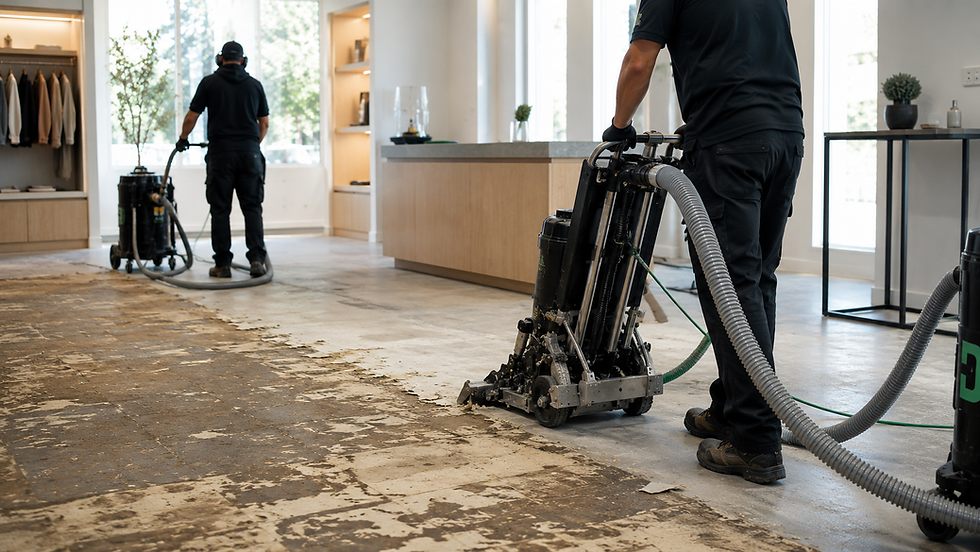
In most commercial remodel projects, flooring removal happens early, before new electrical, plumbing, or layout changes are finalized. Old tile, VCT, carpet, or vinyl needs to come up cleanly, with the adhesive and underlayment removed, so the subfloor is level and ready for whatever installation follows.
For commercial spaces, this step also has to account for shared systems. HVAC returns, electrical conduit, and plumbing often run beneath or alongside commercial flooring, which means the removal process needs more care than a typical residential job, even when the scope itself is similar.
Scheduling Around an Active Business
For property managers and business owners, the real constraint on commercial demolition usually isn't the work itself, it's fitting that work around hours of operation. A retail store, restaurant, or office can rarely afford to close completely for a multi-day demo job.

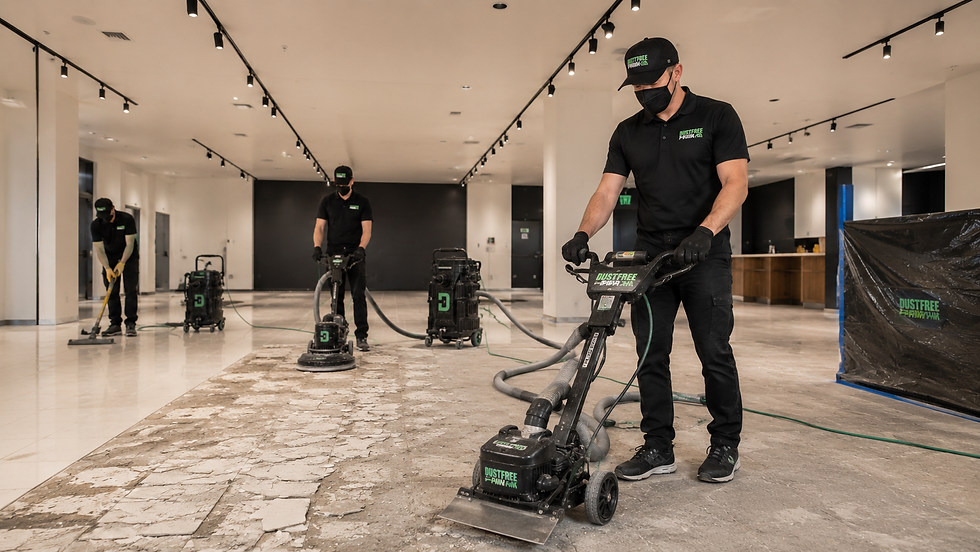
Dust-free demo equipment makes after-hours or overnight scheduling more practical, since there's no need for extended containment setup or teardown the next morning. A demo crew using source-capture equipment can often complete a section overnight and have it ready before the business reopens, something that's much harder to coordinate with traditional demo methods that require plastic sheeting and negative air machines left running.
Why Dust Control Matters More in Commercial Buildings
Traditional demo can release up to one pound of silica dust per square foot of flooring removed. In a commercial building, that dust often has a bigger reach than it would in a single-family home, especially in buildings with shared HVAC systems serving multiple tenants or large open floor plans with minimal interior walls.
For property managers, dust that spreads beyond the work zone can mean complaints from neighboring tenants, contaminated HVAC systems serving spaces that aren't even part of the renovation, and extra cleaning costs that weren't part of the original project budget. Dust-free, source-capture equipment keeps that risk contained to the actual work area.
What a Finished Commercial Demo Job Should Look Like
A completed commercial flooring demo should leave a clean, level, debris-free subfloor, with no residual dust on fixtures, walls, or equipment outside the work zone. For spaces moving straight into a tenant improvement build-out, that clean handoff point determines whether the next trade can start immediately or needs an extra prep day first.

DustFree PNW also works directly with contractors managing the broader renovation, providing contractor support as a demo subcontractor on commercial projects throughout Central Oregon.
What to Ask Before Hiring a Commercial Demo Crew
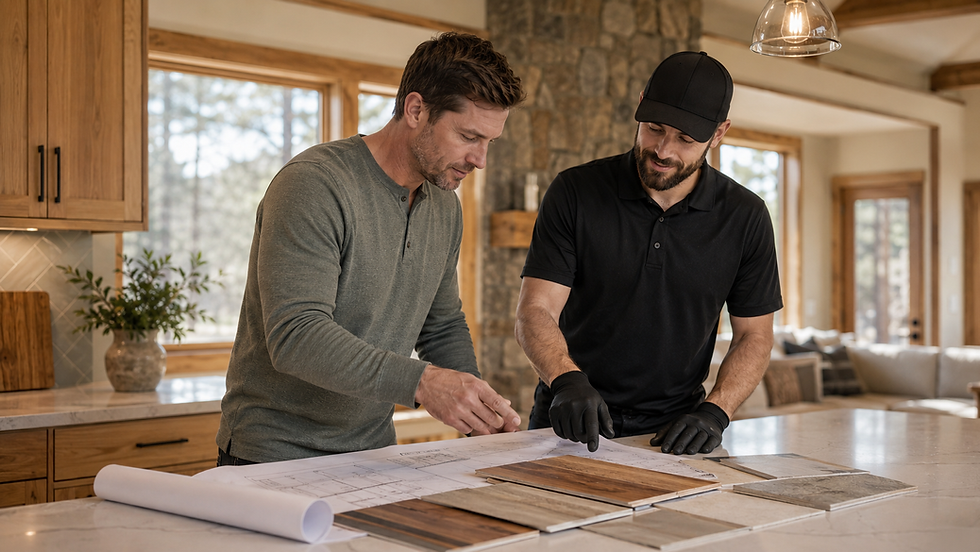
Ask whether the crew can work after hours or in phases to minimize disruption, what dust control equipment they use, and whether debris removal and haul-away are included in the scope. For multi-tenant buildings, ask how they'll prevent dust from reaching shared HVAC systems or neighboring spaces. Our dust-free tile removal page covers the source-capture equipment standard this process is built around.
FAQ
What does commercial demolition usually involve for a property manager?
Most property managers are dealing with interior or selective demolition, removing flooring, fixtures, and finishes ahead of a remodel, rather than full structural teardown.
Can commercial demolition be done without closing the business?
Often, yes. Dust-free equipment and after-hours or phased scheduling make it possible to demo sections of a space without a full closure in many cases.
Why does dust control matter more in commercial buildings than homes?
Commercial buildings often have shared HVAC systems and large open floor plans, which means uncontrolled dust can spread further and affect more tenants or areas than in a single-family home.
Is flooring removal usually the first step in a commercial remodel?
Yes. Flooring is typically removed early so the subfloor is ready for any electrical, plumbing, or layout changes before new flooring or finishes go in.
Does DustFree PNW work with property managers and businesses across Central Oregon?
Yes. DustFree PNW provides dust-free commercial floor removal throughout our Central Oregon service areas. You can review our reviews on Google Business Profile or contact us to discuss your project.
Final Thoughts
For most property managers, commercial demolition means a careful, scheduled removal of flooring and finishes, not a wrecking ball. The right crew protects your tenants, your timeline, and your building's systems throughout the process. Planning a commercial remodel? Get a free quote from DustFree PNW.

Comments